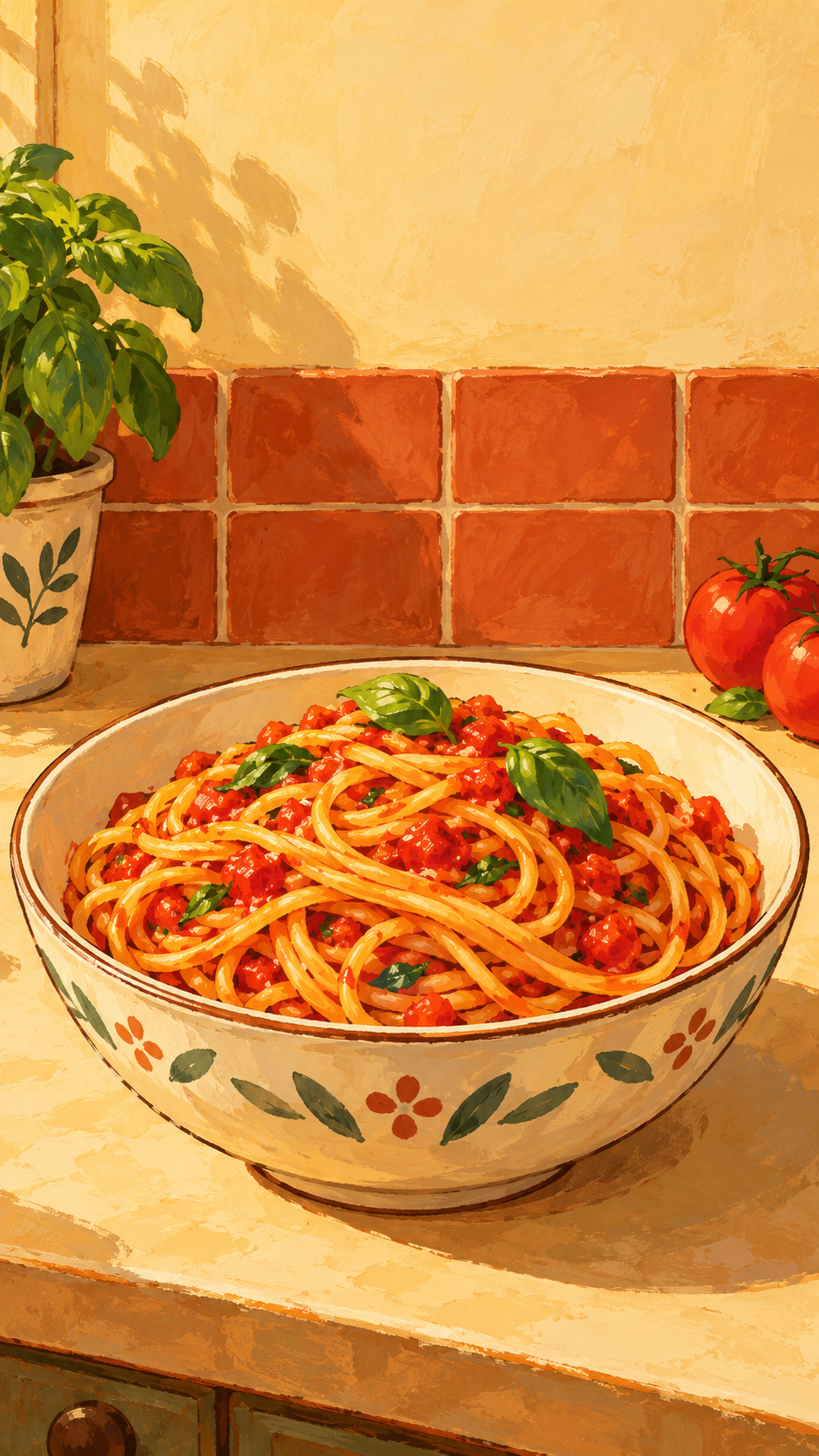
Set up the sauce and pasta together
Put the pasta pot on first, then begin the sauce in a skillet wide enough to toss the spaghetti. Lightly crushing the garlic releases its flavor while leaving pieces you can remove later. Keep the oil over medium-low heat: if the garlic begins to darken quickly, lower the heat before adding the tomatoes. Burnt garlic gives the whole small pan of sauce a bitter edge.
Stir the tomatoes around the bottom of the skillet during the gentle simmer. The aim is a slightly thicker sauce, not a dry paste. Keep the pasta package nearby because strand thickness changes the boiling time. The recipe’s 30-minute estimate assumes the pasta cooks while the sauce simmers.
Use pasta water as an adjustment
Before draining, scoop out the measured 1/2 cup cooking water with a heat-safe cup or ladle. Add it to the sauce one tablespoon at a time while tossing. The right stopping point is a coating on the strands with no watery puddle beneath them. You may use only part of the reserved water; adding it all automatically can undo the thickening from the simmer.
If the sauce is still watery, toss briefly over low heat before adding more water. If the strands stick together and the sauce looks tight, add another spoonful. Taste only once the spaghetti and sauce are combined, since salted pasta water changes the seasoning.
Cook two portions or a larger pan
For four portions, use the doubled quantities described in the recipe note and a larger skillet. Cook the pasta to its package guidance rather than doubling the boiling time. Tear the basil near the end so it is distributed through the finished sauce. Serve from warm bowls promptly; a simple tomato sauce thickens as the pasta sits.
Refrigerate leftovers promptly in a shallow covered container. Reheat until hot throughout, loosening the sauce with a small splash of water as needed. The fresh bowl has the best strand texture, so make the amount you expect to serve when possible.
Serving reference
FDA guidance on chilling and serving food explains the handling principles behind the leftover notes.