Ingredients and equipment
Makes four first-course portions. Estimated preparation: 10 minutes; cooking: 25 minutes; total: about 35 minutes. This includes the short off-heat pause.
- 320 g dried spaghetti
- 160 g Pecorino Romano, finely grated
- 3 g black peppercorns, coarsely crushed
- 2 litres water for boiling pasta, plus up to 300 ml boiling water if needed
- 8 g fine salt
We may earn a commission from purchases through these links. Amazon search links open comparison results; check the selected item’s suitability.
Use a wide 4–5 litre saucepan, a 30 cm sauté pan, a large mixing bowl, fine grater, whisk, tongs, ladle and measuring jug. Ordinary suitable equipment is enough; no special pasta machine is needed.
Method
- Put the measured 2 litres water in the saucepan, cover and bring to a boil. Meanwhile, grate the cheese into the mixing bowl. Crush the pepper in a mortar or beneath a heavy pan; it should have small irregular pieces rather than a fine dust.
- Add the salt and spaghetti to the boiling water. As the submerged ends soften, gently ease the strands into the pan without snapping them. Stir frequently, especially at first: the smaller quantity of water concentrates starch but makes sticking more likely. If the pasta is no longer freely moving in liquid, add a little of the extra boiling water.
- Toast the pepper in the dry sauté pan over low heat for about 1 minute, shaking the pan until fragrant. Do not let it smoke. Take the pan off the heat. After the spaghetti has boiled for 5 minutes, ladle out 250 ml of its cloudy cooking water. Add 100 ml to the pepper pan; leave the remainder in the jug to cool slightly.
- When the pasta is 2 minutes short of the package time, transfer it with tongs to the pepper pan. Set over medium heat and turn the strands in the liquid for 1–2 minutes. Add further cooking water as needed, 30 ml at a time. Taste: the centre should retain a gentle bite but no chalkiness.
- Whisk about 90 ml of the reserved, slightly cooled water into the cheese, adding it gradually to make a thick cream. Remove the pasta pan from the burner and wait about 1 minute, tossing so the sizzling stops. Add the cheese cream and toss thoroughly off the heat.
- Use small additions of reserved water to loosen the sauce until it evenly coats the pasta. A track drawn through the sauce should close slowly. Serve immediately in four bowls. If the sauce tightens while dividing, stir in another spoonful of water rather than returning it to a high flame.
Keep the cheese away from bubbling heat
Finely grate the Pecorino before the pasta is ready. This gives you time to concentrate on the final mixing. The cheese and slightly cooled cooking water should form a thick cream in the bowl; do not pour cheese directly into a pan that is still sizzling.
The recipe asks for two separate adjustments: first finish the nearly cooked pasta in pepper water, then take it off the heat before adding cheese. The one-minute pause is part of the method. Continue tossing as the sizzling stops, and use small additions of reserved water to loosen the finished sauce.
A sauce that tightens while you divide the portions needs another spoonful of water, not a return to high heat. The aim is a coating that clings to the strands. Pre-grated cheese with anti-caking ingredients is a poor choice for this method; grate a piece finely yourself.
The 250 ml reserved water is divided across the pepper pan, cheese cream and final adjustments. Begin with 100 ml in the pepper pan and about 90 ml in the cheese cream; the rest is available for adjustment. Additional cooking water can be taken from the pot as needed. The extra 300 ml boiling water listed with the ingredients is only for keeping the pasta moving if the pot becomes too dry; it is not all added to the sauce.
Portions and serving
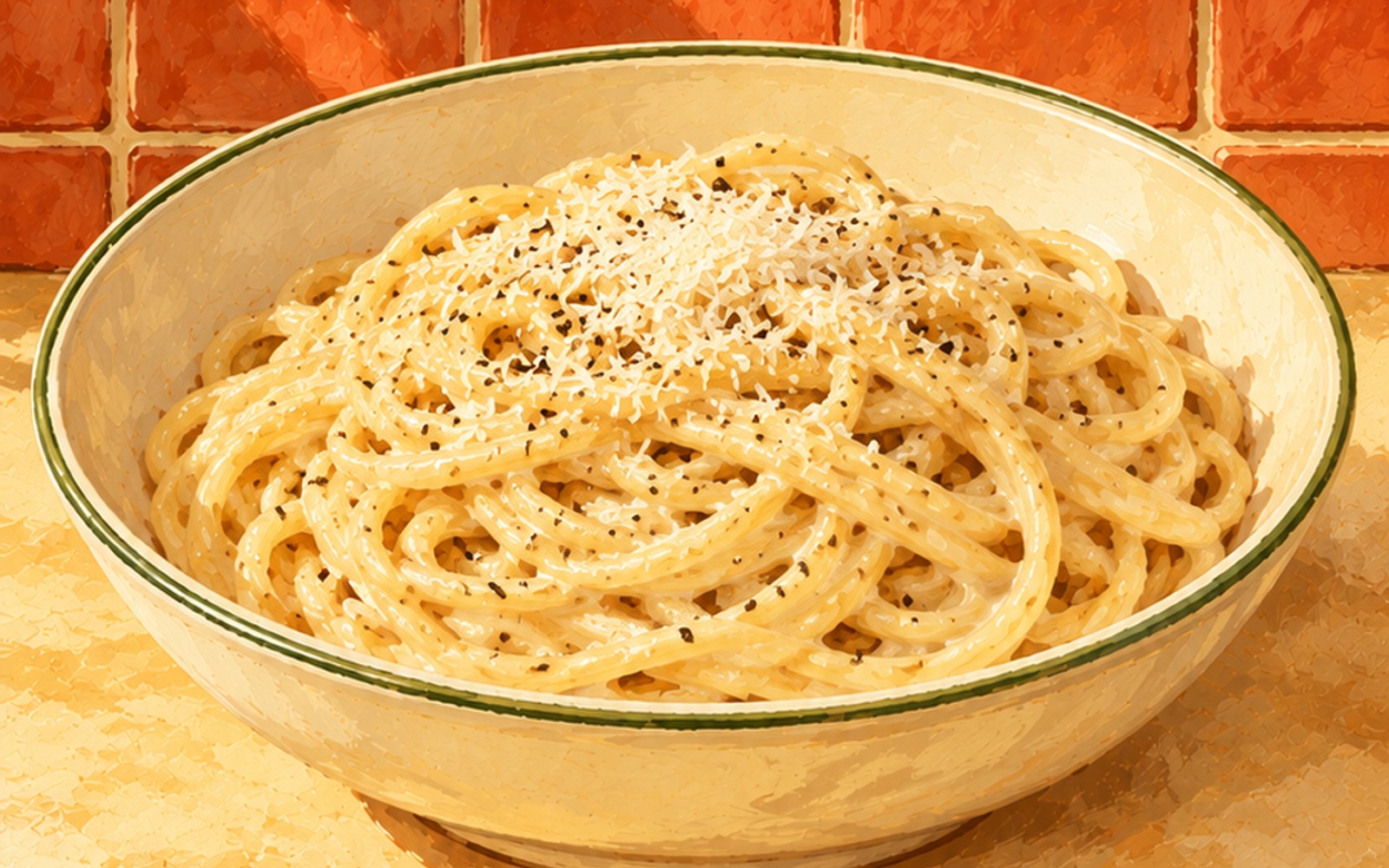
The book specifies four first-course portions. One illustrated bowl does not represent the entire batch or establish a measured serving weight. Serve immediately; the sauce is easiest to enjoy while freshly mixed. Tender salad leaves with a light dressing are the book’s suggested accompaniment.
This recipe contains wheat and milk. Pecorino Romano may use animal rennet, so check the actual cheese if vegetarian suitability matters. No cream, butter, garlic or herb garnish is part of this formula.
Recipe source: TAVOLA, P02. The original metric quantities and method are preserved. Timings are estimates; this article has not had a separate kitchen test. The food image is an AI-generated illustration.
Choose the pasta dinner that fits your table
For a smaller batch written for two, compare penne alla vodka or the tomato-based spaghetti in our dinners for two collection. This Cacio e Pepe makes four first-course portions; those serving labels describe different meals, so choose the batch before shopping.