Ridged penne, tomato paste, cream and Parmesan make a coral-colored sauce for two. The vodka is a measured part of the sauce, and reserved pasta water helps it coat the tubes. Start the pasta water while preparing the shallot so the two jobs overlap.
Penne alla vodka for two
Yield: 2 portions. Estimated total time: 30 minutes. Equipment: a pasta pot, skillet, colander, liquid measure and stirring utensil.
Recipe note: this is a new Fondfolk recipe-development formula, not a kitchen-tested result. Timing is estimated and depends on your pasta package, pan and stove.
Ingredients
- 200 g dry penne
- 1 tbsp olive oil
- 1 small shallot, finely minced
- 2 garlic cloves, finely minced
- 2 tbsp tomato paste
- 30 ml vodka
- 120 ml heavy cream
- 30 g finely grated Parmesan
- ¼ tsp fine salt, plus salt for the pasta water
- Black pepper, to taste
- 120 ml reserved pasta water; use as needed
- A few basil leaves, optional
Method
- Cook the penne in boiling salted water according to the package instructions until just tender. Before draining, reserve 120 ml of the cooking water.
- Meanwhile, warm the olive oil in a skillet over medium-low heat. Add the shallot and cook for 4–5 minutes until softened. Add the garlic and stir for 30 seconds. Stir in the tomato paste and cook for 2 minutes without scorching.
- Take the pan off the heat and add the measured vodka away from any flame. Return the pan to a gentle simmer for 2 minutes. Stir in the cream and ¼ tsp fine salt; simmer gently for 2–3 minutes.
- Add the drained pasta to the sauce. Toss over low heat, adding reserved pasta water 1 tbsp at a time as needed until the sauce coats the penne. Take off the heat and stir in the Parmesan. Finish with black pepper and optional basil, taste for salt and serve.
Build the sauce in stages
Finely mince the shallot and garlic before the oil heats. The shallot gets the longer softening stage; the garlic follows briefly. Keep medium-low heat rather than rushing the tomato paste over a hot burner. If the pan seems to be scorching, lower the heat before continuing.
Measure the vodka separately. Remove the pan from heat before adding it, away from any flame, then return to the gentle simmer specified in the method. This is not a flambé recipe. The written cooking time does not establish that the finished dish is alcohol-free.
After adding cream, use a gentle simmer rather than a hard boil. The pasta and Parmesan still need to be incorporated, so resist thickening the sauce into a stiff paste before the penne reaches the skillet.
Reserve water before draining
The 120 ml is an amount to reserve, not an instruction to add it all. Start with one tablespoon during the final toss and add more only as needed. Stop when the sauce coats the pasta rather than collecting as a thin puddle underneath it.
Some optional equipment links below are paid links. We may earn a commission from qualifying purchases. As an Amazon Associate, Fondfolk earns from qualifying purchases. Suitable tools you already own are enough.
A glass measuring cup can hold the reserved pasta water and help measure the liquids separately. Keep glass away from direct flame and follow its care instructions.
A cookware-compatible spatula helps stir the tomato paste and cream and scrape the skillet as you toss. Check the utensil’s heat limits; do not leave it in the pan.
Use the fine surface of a box grater for the Parmesan, keeping fingers clear of the sharp surface. Add the measured cheese off heat as the recipe directs, rather than using an extra handful to compensate for too much water.
Keep the finish simple
Taste after the Parmesan goes in before adding more salt. The pasta cooking water and cheese both contribute seasoning. Black pepper and a few optional basil leaves finish the bowl without hiding the smooth tomato-cream sauce.
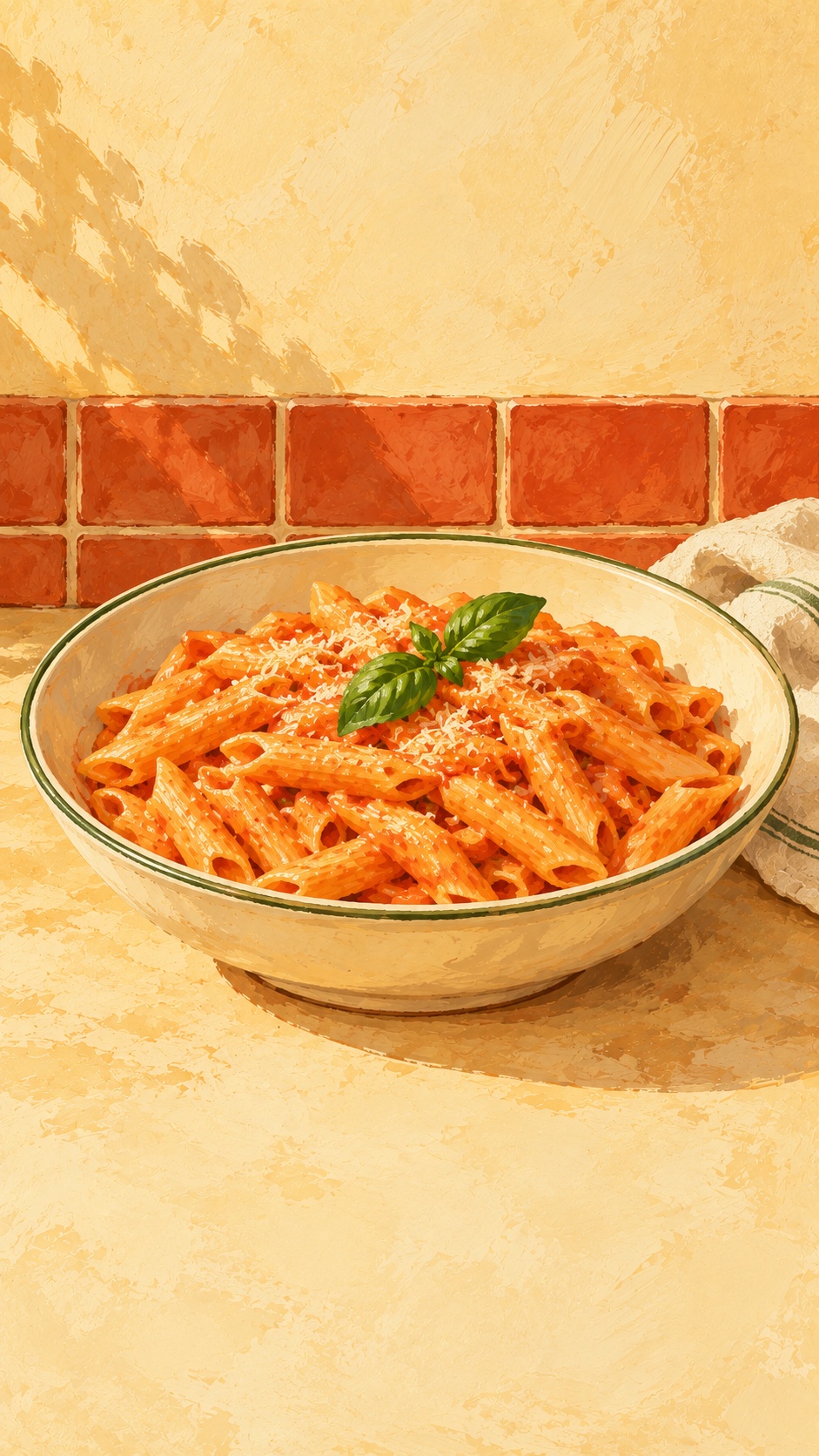
The illustrated bowl shows the pasta with optional basil and Parmesan. It does not represent measured kitchen testing. For another tomato-sauce dinner, try Spaghetti al pomodoro, which uses crushed tomatoes, garlic and basil instead of this cream sauce.