A guest asks what they can do just as you are draining potatoes. A child wants to help with dinner, but the nearest job involves a hot pan. Set out a few small tasks before the kitchen fills: napkins at the table, herbs beside a cool mixing bowl, washed greens ready to tear. Each helper should know what to do, where to do it and who to ask when they finish.
Choose jobs by the person's demonstrated skills and the supervision you can give. A preschooler folding napkins, a school-age child measuring an ingredient and a teenager following a familiar recipe need different arrangements. Age is a starting point, not permission to handle heat or blades.
This article contains affiliate links. Fondfolk may earn a commission if you buy through them. As an Amazon Associate I earn from qualifying purchases.
Give the helper a place and a finish line
Keep the main cooking route clear, especially between the stove, sink and serving counter. Put seated activities at a table away from hot dishes. Bring the task to a child's comfortable height instead of asking them to reach across the counter.
Set out only the tools and ingredients for that job. “Put one folded napkin at each of these six places” has a visible ending. “Help set the table” can send someone searching through the knife drawer while you are distracted.
For a child, name the supervising adult. That person stays with the activity rather than also being responsible for pulling a heavy casserole from the oven. If nobody is available to supervise a food task, use a table activity nearby and save the cooking job for another time.
Station one: napkins, place cards and empty bowls
This is a good first assignment for a young helper who can follow one simple instruction. Put out the number of napkins you need and show one fold. They can match each napkin to a place setting while an adult carries plates, glasses and cutlery.
A child who enjoys drawing can make place cards on folded paper. Give them the guest names, let them choose a small leaf or pumpkin drawing, and have an adult confirm the names before placing them. Keep decorations away from food-contact surfaces and leave small loose embellishments out of the setup for young children.
An adult guest can turn the same area into a useful serving station: arrange empty bowls, set a serving spoon beside each and place a note naming its dish. Reserve heavy or breakable pieces for someone who can handle them comfortably. When the food is ready, you will know which bowl is waiting for the carrots.
Station two: wash produce, then tear the greens
Choose a helper who can follow directions at the sink with an adult beside them. Clear away dishes and raw-food equipment first. Give them one kind of produce and a clean place to put it, rather than a sink full of vegetables and utensils.
FDA recommends rinsing produce under plain running water, including before peeling or cutting it. Soap and produce washes are unnecessary. An adult can demonstrate rubbing an apple gently under the water, then drying it with a clean towel. Keep any trimming or cutting with the adult.
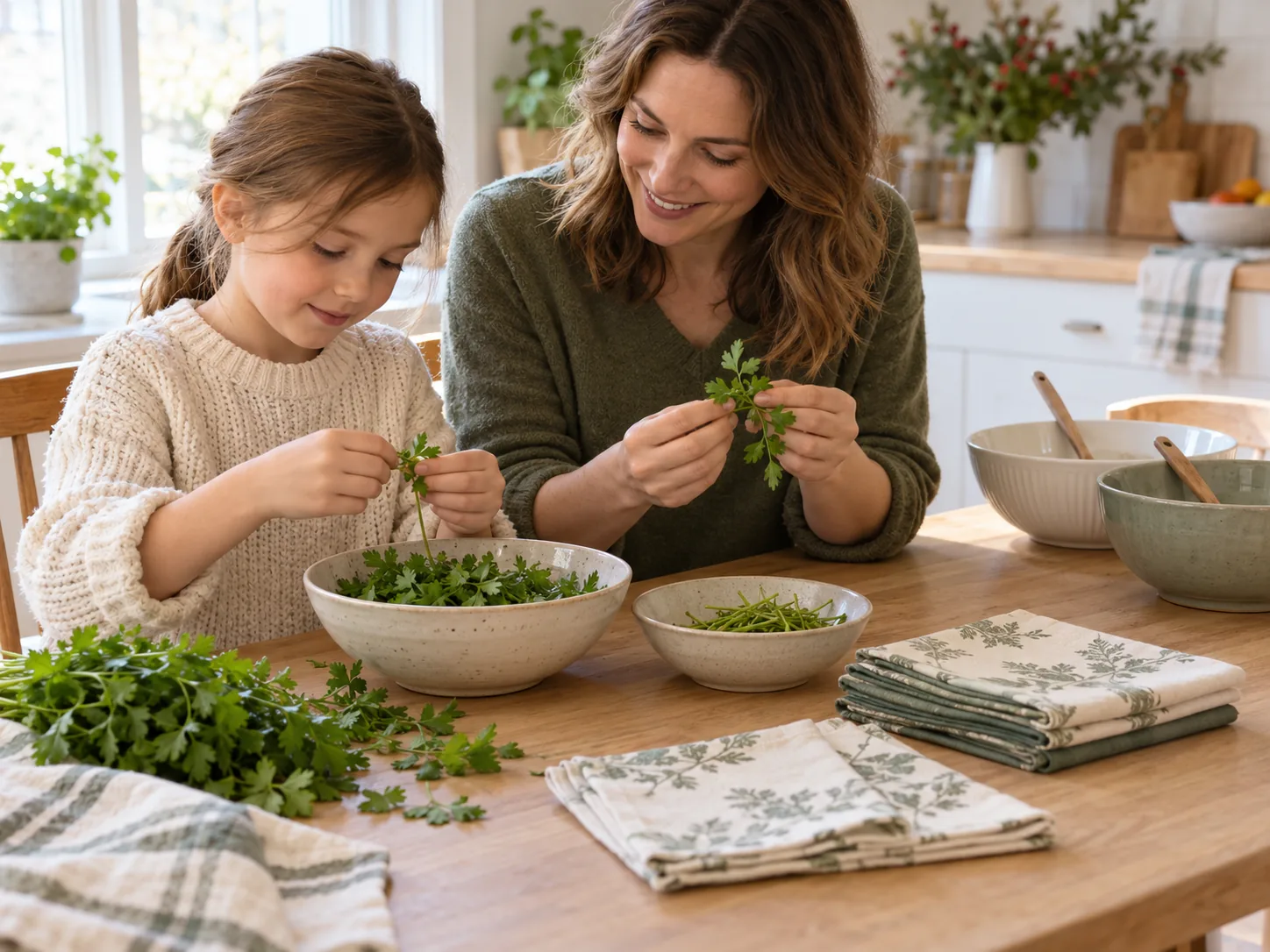
At the table, a supervised helper can tear washed lettuce into a bowl or pull parsley leaves from stems. Show the size you want and put a second bowl beside them for stems. This job ends when the prepared bunch is finished; it does not need to expand into chopping.
Keep the greens chilled after preparation until you need them. Do not use rinsing raw poultry as a helper task: FoodSafety.gov advises against washing raw meat and poultry because it can spread germs.
Station three: measure one ingredient at a time
For a child who reads measures and can pour with control, place the recipe beside a small bowl. An adult points to the ingredient and amount; the helper measures it; both confirm it before it goes into the main bowl. Keep salt, baking soda and baking powder in their labeled containers until needed so similar-looking ingredients stay distinct.
A set of Simply Gourmet measuring cups and spoons can serve this station. Choose the specific measure before handing it over, and use the recipe's measuring method rather than guessing that every ingredient should be packed into the cup.
For a first job, measure oats for a topping or sugar for a recipe the adult is making. Keep the rest of the ingredients out of reach until their turn. If the recipe uses weights, the helper can read the display while the adult adds the ingredient; do not invent a cup conversion to fit the activity.
Raw flour needs care even before eggs enter the bowl. FDA says not to taste raw flour, dough or batter, or give children raw dough for play. Skip flour-based crafts at the food station, and never offer the uncooked spoon as a reward.
Station four: stir a cool mixture with an adult
A helper who can keep a bowl steady can stir a cold dressing or another cool mixture from your chosen recipe. Put the bowl on a stable surface, demonstrate slow strokes and keep it away from the edge. Use a bowl with enough room that stirring does not send the ingredients over the rim.
I recommend the OXO silicone spatula set for stirring and scraping; the adult should choose the utensil the helper can control comfortably. These are ordinary kitchen tools, so the task and supervision still need to fit the child.
Give an older, experienced helper the full small job only after reading the recipe together: gather the ingredients, measure, stir, then tell the adult it is ready. An adult handles any knife preparation and approves the finished mixture before serving. This station does not include reaching into a hot saucepan or carrying a filled bowl through the cooking area.
If ingredients affect a guest's allergy requirements, keep that preparation with the adult responsible for the agreed meal. Do not ask a child to judge whether an ingredient or a shared utensil is suitable.
Give adult guests the jobs that interrupt you
Someone can receive arriving dishes, read the ingredient cards and put each contribution in its agreed refrigerator or holding space. Give that person your list of arriving dishes so “Where does this go?” has an answer without calling across the stove.
Another guest can refill water, gather serving utensils or wash the cool preparation bowls as they become available. Say which tools must remain at the stove and keep sharp knives out of a sink of hidden utensils. Ask before assigning lifting, prolonged standing or a task requiring close reading; a seated guest can sort place cards or match serving utensils just as usefully.
An experienced cook can take ownership of one named dish. Tell them its recipe, serving time and any dietary requirements, then agree who controls the oven. Use your cooking timeline for the meal's timing; the helper stations should support that plan.
Keep the boundaries clear as dinner gets closer
Before handling food, everyone washes hands with soap and water for at least 20 seconds, then dries them with a clean towel. Repeat after handling raw ingredients, using the bathroom, touching pets, coughing or blowing a nose. A quick wipe on an apron does not replace washing.
Keep raw meat and its board away from the ready-to-eat stations. FoodSafety.gov recommends separate equipment for raw and cooked food and washing equipment with hot, soapy water after use. Adults handle the raw meat, sharp knives, hot trays, boiling water and final temperature checks in this holiday setup.
The American Academy of Pediatrics advises keeping sharp tools out of young children's reach, turning pot handles toward the back and knowing where children are before carrying hot liquid. Finish the children's food tasks before the busiest transfer from oven to table. Their last assignment can be putting their place cards out while an adult clears the tools.
When the napkins are folded and the parsley is picked, let those jobs be finished. A small contribution that reaches the table is enough: someone can point to the salad or the place cards and know exactly what they helped make.
Use a task card instead of repeated instructions
Write the job, its location and its finish line on a small card. For example: put six napkins at the six places, then tell me when they are done. Keep the card beside the materials so the helper does not have to cross the cooking route to check what comes next. One clear task is easier to supervise than a general invitation to help with everything.
For a food task, point to the actual recipe line and keep the measured ingredient in its own bowl until it has been checked. Once a spoonful of salt has gone into a large mixture, a mistaken measure is much harder to resolve. Confirmation before combining is a useful habit for adult helpers too.
Plan the handover as well as the job
Tell the helper where the finished work should go and what they should leave untouched. A bowl of torn greens can remain at its station while an adult decides when to dress it; a tray of empty glasses should not be carried across a hot oven door. The handover is part of the task, not a detail to improvise when someone finishes early.
Keep one easy non-food assignment in reserve if the kitchen becomes too busy to supervise another cooking job. Folding a place card or matching containers with their lids still contributes to the meal. Changing the assignment when conditions change is more useful than trying to preserve a complicated station plan at the busiest moment.