1. Zucchini Mummies
8 zucchini boats • estimated 35 minutes.
Ingredients
- 4 small zucchini, about 600 g total
- 1 tsp olive oil
- 1/4 tsp fine salt
- 1/2 cup (120 ml) thick marinara sauce
- 100 g low-moisture mozzarella, cut into 24 thin strips
- 4 pitted black olives, sliced into 16 rings
Method
- Heat the oven to 400°F / 200°C. Line a baking sheet with parchment. Rinse and dry the zucchini, trim the ends and halve lengthwise. Scoop a shallow channel from each half without cutting through its bottom.
- Arrange the eight halves cut-side up. Brush with the measured olive oil and sprinkle with salt. Bake for 10 minutes.
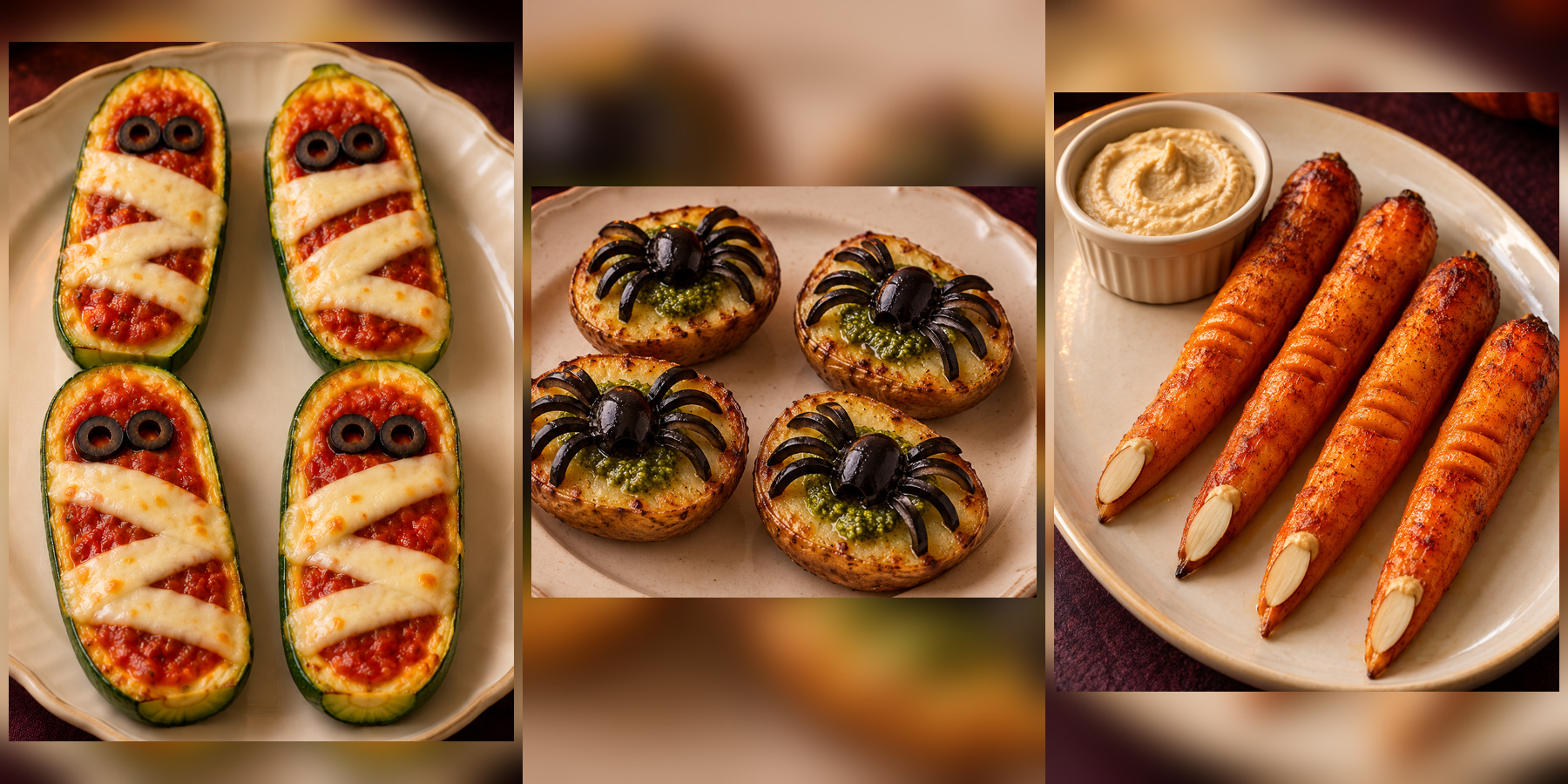
- Spoon 1 tablespoon marinara into each boat. Lay three mozzarella strips diagonally across each, leaving a small face gap near one end. Return to the oven for 8–10 minutes, until the zucchini is tender and the cheese has melted.
- Rest for 3 minutes. Add two black-olive rings to each face gap and serve warm. Use care when moving the soft boats from the tray.
Keep the sauce thick and the channel shallow
A small amount of sauce is enough: the half-cup divides into eight tablespoons, one for each boat. Leave zucchini beneath the filling so the boat holds together. Low-moisture mozzarella cut into strips is easier to place as bandages than wet mozzarella balls. Three strips per boat uses all twenty-four pieces. Put the olive rings on after the brief rest so the faces stay distinct.
2. Olive-Spider Potatoes
12 potato bites • estimated 45 minutes.
Ingredients
- 6 small potatoes, about 400 g total, halved lengthwise
- 1 tbsp olive oil
- 1/4 tsp fine salt
- 3 tbsp prepared basil pesto
- 18 pitted black olives
Method
- Heat the oven to 400°F / 200°C. Wash and dry the potatoes, then halve lengthwise. Toss with olive oil and salt and arrange cut-side down on a parchment-lined tray.
- Roast for 25–30 minutes, until a fork enters the centers easily. Larger halves may take longer. Turn cut-side up and rest for 3 minutes.
- While they roast, halve 6 olives lengthwise to make 12 spider bodies. Halve the remaining 12 olives, then cut each half into four thin curved strips to make 96 legs.
- Spread 3/4 teaspoon pesto over each potato half. Add one olive body and eight legs, four on each side. Serve warm.
Count the legs before assembling
Eighteen olives supply the entire decoration, with no hidden extra handful. Six olives give twelve half-olive bodies. The other twelve give twenty-four halves, and four strips from each half give ninety-six legs: twelve spiders with eight legs each. Keep the strips in a separate small dish while the potatoes roast. A thin pesto smear holds the pieces without covering the golden potato surface.
3. Roasted Carrot Fingers
8 carrot fingers • estimated 40 minutes.
Ingredients
- 8 medium carrots, about 500 g total
- 1 tbsp olive oil
- 1/2 tsp smoked paprika
- 1/4 tsp fine salt
- 1/4 cup (60 ml) thick hummus, divided
- 8 sliced almonds
Method
- Heat the oven to 400°F / 200°C. Wash, peel and trim the carrots, keeping each whole. Cut a few shallow knuckle lines across the middle without cutting through the carrot.
- Toss with olive oil, smoked paprika and salt. Spread on a parchment-lined tray with space between them. Roast for 25–30 minutes, turning halfway, until tender; thick carrots can need longer.
- Rest for 3 minutes. Reserve 1 teaspoon of the measured hummus. Use a tiny dab from that teaspoon to attach one sliced-almond nail near each tapered tip.
- Serve warm with the remaining hummus for dipping. Keep any hummus not being served refrigerated.
Add the almond nails after roasting
Choose carrots of similar thickness so they soften at roughly the same time. The shallow lines suggest knuckles without weakening the fingers. Add the nails after the three-minute rest; the small hummus dabs hold them in place and are taken from the quarter-cup already listed. The rest is the dipping portion, rather than an extra unmeasured bowl of hummus.
Plan the trays before heating the oven
All three recipes use 400°F / 200°C, but they still need room to roast. A crowded tray can trap moisture, so use separate trays or cook in batches when necessary. Do not assume a single tray holds the full collection.
Start potatoes and carrots first if you have suitable oven space. While they cook, prepare the zucchini and cut the olive pieces. Keep each tray’s own timing and tenderness check; a hot oven does not make differently sized vegetables finish simultaneously. Assemble the potato spiders and carrot nails after the short rests, then serve the mummies while the cheese is soft.
The estimated times include ordinary preparation and the waits described in each recipe. Allow extra time for a crowded oven, unusually thick vegetables or slower decorating. Tenderness matters more than the first minute shown on the timer.
Portions, labels and advance preparation
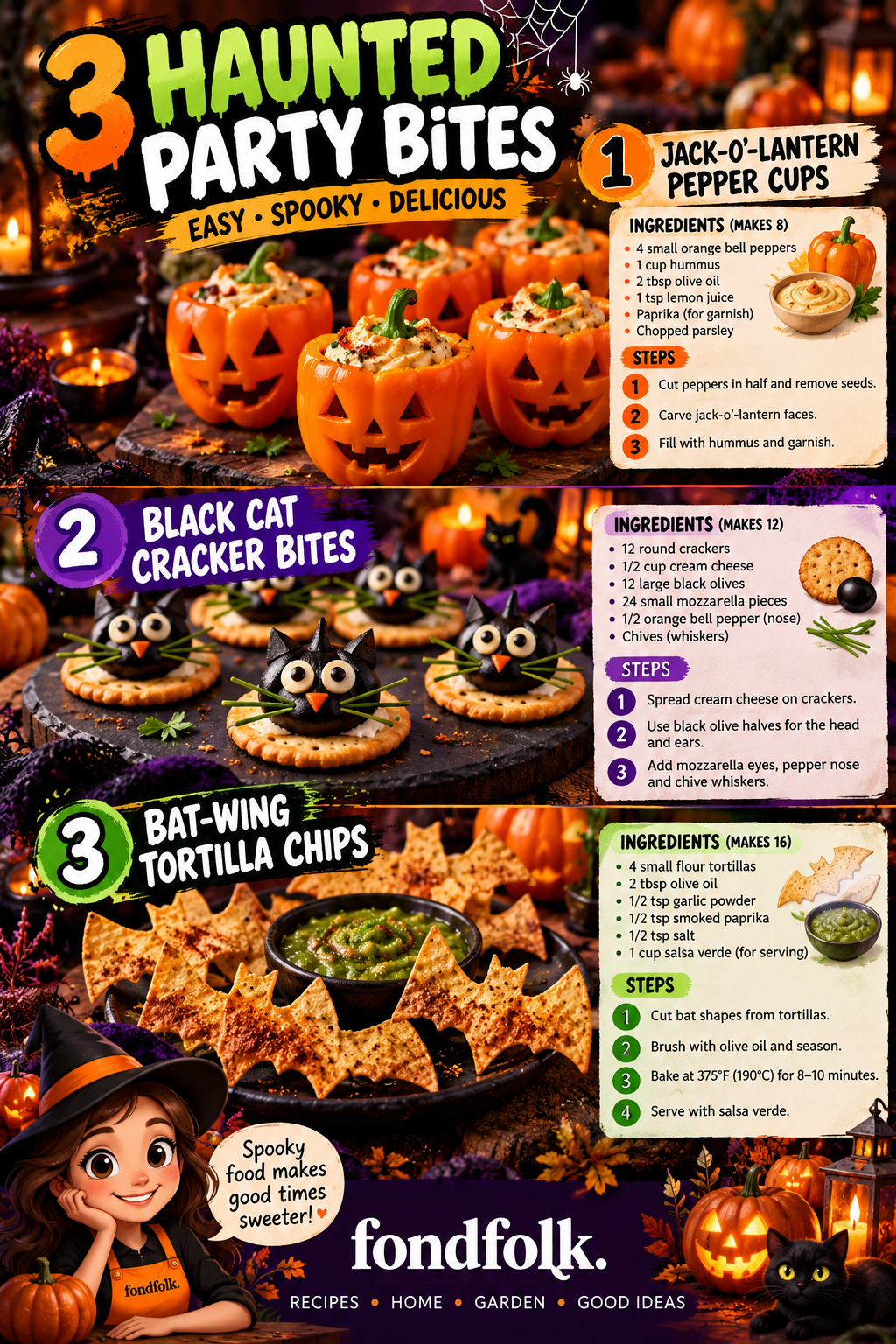
The full recipes make eight zucchini boats, twelve potato bites and eight carrot fingers. These are different portions, not a promise to feed twenty-eight people. The pin and article photographs show four pieces of each recipe, rather than each complete batch.
You can measure the seasonings, cut the mozzarella and prepare the olive decorations earlier. Keep perishable ingredients covered and refrigerated, then roast near serving time. Plate gently so the olive legs and almond nails stay in place.
Check the actual ingredient packages for guests: mozzarella contains milk; prepared pesto may contain milk and nuts; hummus often contains sesame; the carrot nails are almonds. Do not promise an allergy-free result based on the dish name. If a guest cannot have an ingredient, make a separately planned suitable dish and avoid sharing contaminated utensils.
Keep preparation clean and serving time short
Rinse vegetables under plain running water before cutting and peeling, then dry them with a clean towel. Keep hands, boards and utensils clean. Serve the bites in small batches; keep unused hummus and other perishable ingredients refrigerated.
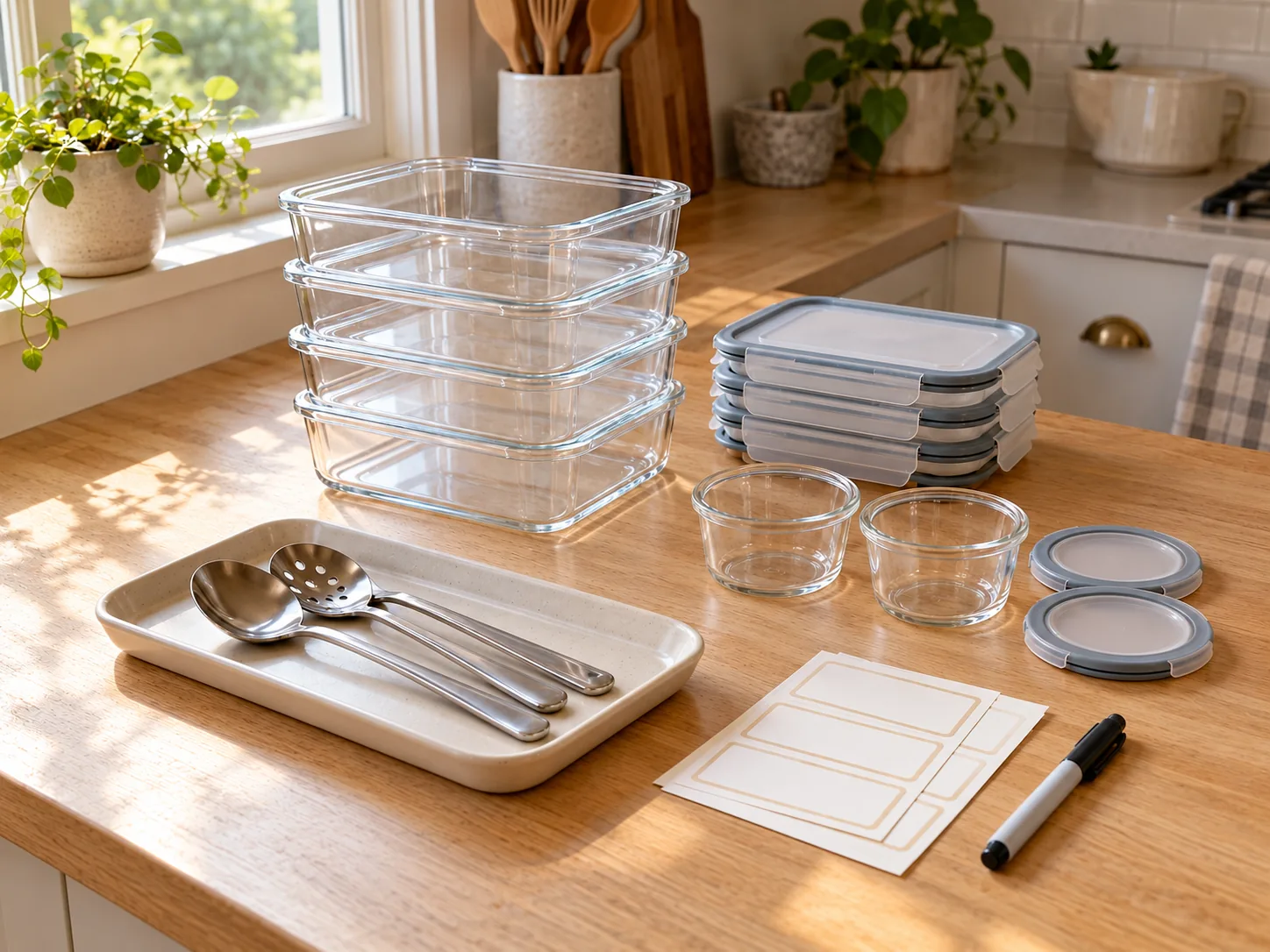
Refrigerate cooked leftovers promptly in shallow containers. Keep the refrigerator at 40°F / 4°C or below, and discard perishable food left without temperature control for more than two hours, or one hour when the surroundings exceed 90°F / 32°C.
CDC: preventing food poisoning — refrigeration and serving limits.
FDA: cleaning fruits and vegetables — washing produce before preparation.