The last spoonful of gravy needs a container with a lid, and the person taking it home needs to know when it was made. Set out those containers and labels before the meal. After dinner, you can portion the food, return it to the refrigerator and hand over a chilled package when each guest leaves.
Keep the station stocked with empty containers, not rows of filled boxes waiting by the door. The food stays under temperature control; the containers, spoons and marker can wait on the counter.
This article contains affiliate links. As an Amazon Associate, Fondfolk earns from qualifying purchases.
Give the containers a place before dinner
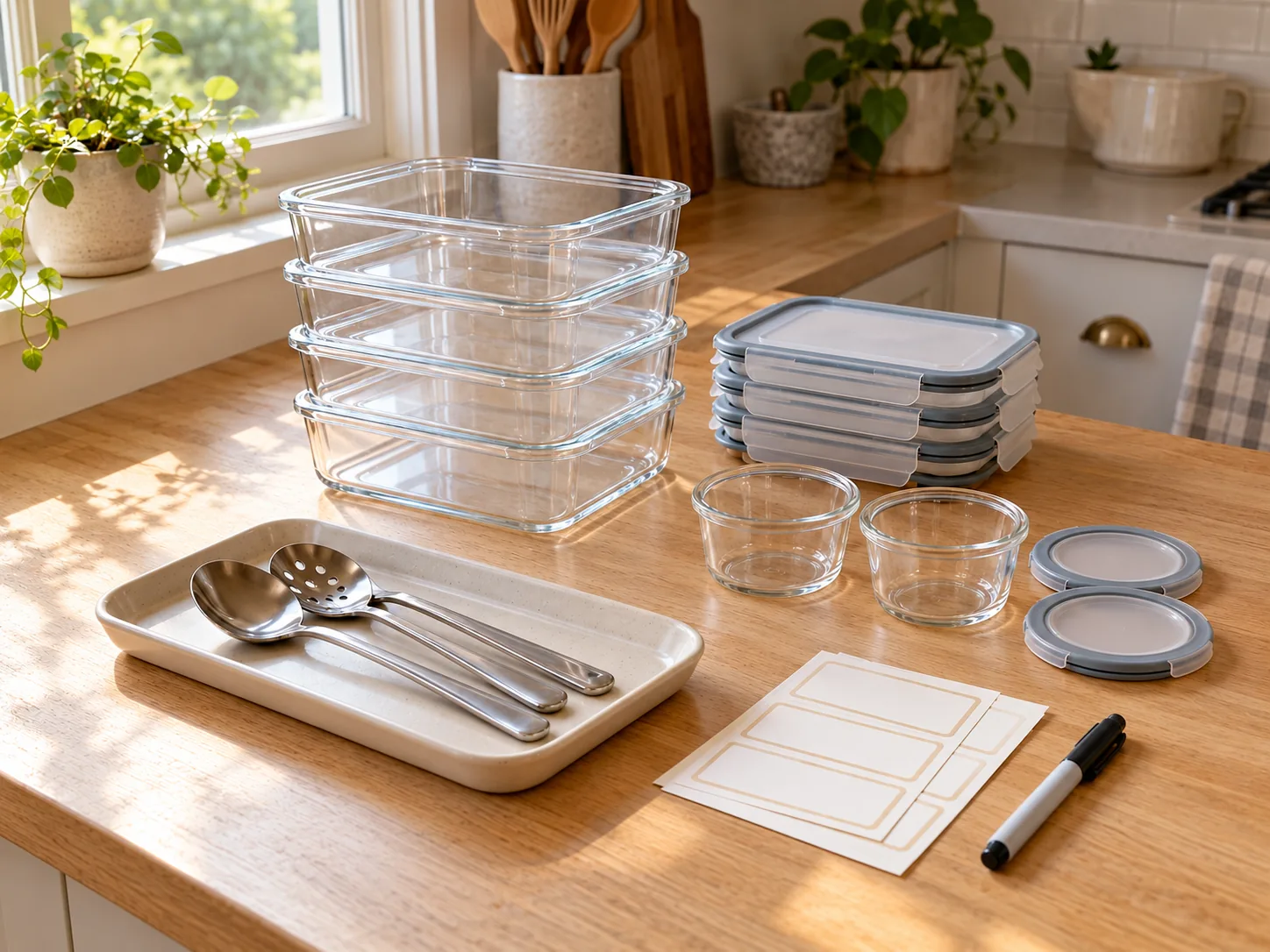
Clear a section of counter away from dirty plates, raw-food preparation and the drinks queue. Match each clean container with its lid now. A stack of round lids will not help when the remaining boxes are rectangular.
Set out shallow containers for main dishes, smaller ones for sauces, clean portioning utensils, labels and a pen that writes on them. Keep a clean tray nearby for moving several portions into the refrigerator. Ask guests who want leftovers to bring clean containers and a cooler with ice or frozen packs.
Leave room on a refrigerator shelf for the portions. Our holiday refrigerator guide helps arrange that space before the groceries arrive. If the fridge cannot accommodate the food with air circulating around it, reduce the amount you plan to save or arrange additional refrigerated space before cooking.
Choose portions people actually want. Someone who asks for turkey and cranberry sauce does not need a second dinner loaded with every side. Pack a larger slice of vegetable casserole for the household sharing it and smaller servings for guests taking home lunch.
Decide what is suitable to send
Reserve any planned take-home portions before the food goes onto the table, then chill them promptly. Mississippi State University Extension recommends setting aside the next meal's portion before serving. That also gives you a clearer handling history than a serving dish passed around all evening.
Food from the serving table still needs its time and temperature accounted for. According to FDA's buffet guidance, keep cold food at 40°F or below and hot food at 140°F or above. Refrigerate perishables promptly, within two hours, or one hour if exposed to temperatures above 90°F. Discard food left out longer without those temperature controls.
Count the buffet, packing and journey together when food is outside safe hot or cold holding. Moving it to a new container does not start another two-hour allowance. If you cannot establish how long a dish has been out, do not send it home for somebody else to resolve. Keep food from individual diners' plates out of the shared take-home supply.
Portion first, then chill promptly
Use clean utensils to divide turkey, potatoes and other cooked dishes into small, shallow portions. Slice or divide large pieces of cooked meat, and put gravy in its own shallow container. A deep, densely filled box is not the same cooling arrangement as several smaller portions.
FoodSafety.gov confirms that hot food can go directly into the refrigerator. Use containers suitable for the food's temperature, and leave room for cold air to circulate. Do not leave the food on the counter until it reaches room temperature or wait for all the washing-up to be finished.
I recommend Rubbermaid Brilliance Glass containers for portions that are already chilled. Follow the manufacturer's glass-care instructions: avoid sudden temperature changes, let hot glass cool before refrigeration, and let it become comfortable to touch before attaching its plastic lid. Do not put a hot glass dish on ice or a cold, wet surface.
For hot leftovers, use shallow containers whose instructions permit prompt refrigeration. The glass-care requirement is not a reason to leave food sitting out. Once the food is chilled, transfer it with clean utensils if a different take-home container is needed.
Keep gravy separate from a crisp-topped casserole, and pack salad dressing separately from greens. The three-part refrigerator storage guide explains those texture choices. A guest can combine the portions at home without finding every item covered in the same sauce.
Label the food while its history is clear
Write the dish name and original cooking date, not just the date you packed it. For a dish made ahead, “packed Friday” does not tell the recipient whether it was cooked on Thursday or Tuesday.
Use the FoodSafety.gov cold-storage chart for the actual food. Cooked meat and poultry, soups and stews generally have a three-to-four-day refrigerated storage window at 40°F or below, provided they were handled safely. Follow a shorter applicable recipe or product instruction. Freeze suitable portions promptly if they will not be eaten within that window.
Copy this onto a label or a card that travels with the container:
Dish: ____________________
Originally cooked/prepared: ____________________
Ingredients or ingredient-card reference: ____________________
Keep refrigerated at 40°F or below.
Eat or freeze by: ____________________
If reheating: Heat leftovers to 165°F throughout. Bring soups, sauces and gravy to a rolling boil.
Container note: Transfer to suitable cookware before reheating unless this container's instructions permit the method.
For example, turkey cooked on Thursday, November 26, and promptly chilled could carry a Sunday, November 29, eat-or-freeze date as a conservative three-day plan. That example assumes safe handling throughout. A side cooked earlier needs its own earlier date; do not copy the turkey's label onto everything.
Keep ingredient information attached to the actual dish. Include additions such as butter stirred into potatoes or nuts sprinkled over a salad. Record the ingredients, but do not treat a home-kitchen label as an allergy-safety guarantee.
Pack the journey when the guest is leaving
Move chilled portions from the refrigerator into a cooler with ice or frozen packs immediately before departure. USDA's potluck guidance calls for cold food to remain at 40°F or below during transport. A snug lid limits spills; it does not provide refrigeration.
I recommend the Kona reusable cooler ice pack where its size fits alongside the food. Prepare and freeze it fully according to the instructions for the exact pack. Use enough ice or packs to maintain the required food temperature; one pack is not a promised holding time. Start with chilled food rather than asking the cooler to chill a hot casserole.
Keep containers upright and secure so they cannot slide or strike one another. Put small sauce containers where their lids will not be crushed. Keep the cooler closed, go directly home and refrigerate the food on arrival.
If a guest cannot maintain cold storage during the journey, keep the perishable leftovers yourself. Before handing over the bag, point out the date and the storage note. The best part of tomorrow's lunch should be opening the container, not trying to remember what someone said beside the front door.
Offer a portion that fits the journey
Ask how long the guest expects to travel and whether they have cold storage available before filling containers. A small package that can stay properly chilled is more useful than several boxes with no suitable transport. Keep the take-home food refrigerated until departure rather than setting all the packages beside the door early.
Label each component separately when its history or reheating needs differ. A box of gravy should not depend on the label on a neighboring box of turkey. Include the original cooking date, even when that means explaining that part of the meal was prepared earlier.
Give the recipient a short handover
Tell the guest what the food is, that it needs to remain cold and where the storage or reheating note is written. Ask them to put it away promptly on arrival. A container that seals well protects against leaks; it does not show whether the food has remained safely chilled.
Keep a record of what you retained too. The host’s leftovers need the same original-date labels as the guest portions. When several versions of a dish were served, preserve their ingredient information rather than combining them into one anonymous container. Accurate small portions make tomorrow’s meal easier to choose.