The turkey needs a tray, the cream needs a shelf, and the cranberry sauce is still in a saucepan twice its size. Before the holiday groceries arrive, give the largest items a place and move food you already have into a plan for the next few meals. A clear shelf is useful only if the fridge can keep everything properly cold.
Start with the actual menu and the containers that will hold it. A pie in a tall carrier takes up different space from a pie on a plate, and a turkey sitting in a leak-catching tray needs more room than its wrapper suggests. Those are the measurements that matter when the door closes.
This article contains affiliate links. As an Amazon Associate, Fondfolk earns from qualifying purchases.
Make sure the space is cold enough
Keep the refrigerator at 40°F or below and the freezer at 0°F or below. Use an appliance thermometer to monitor them; a numbered control dial is not a temperature reading. FDA's refrigerator guidance also advises against overpacking because cold air needs room to circulate.
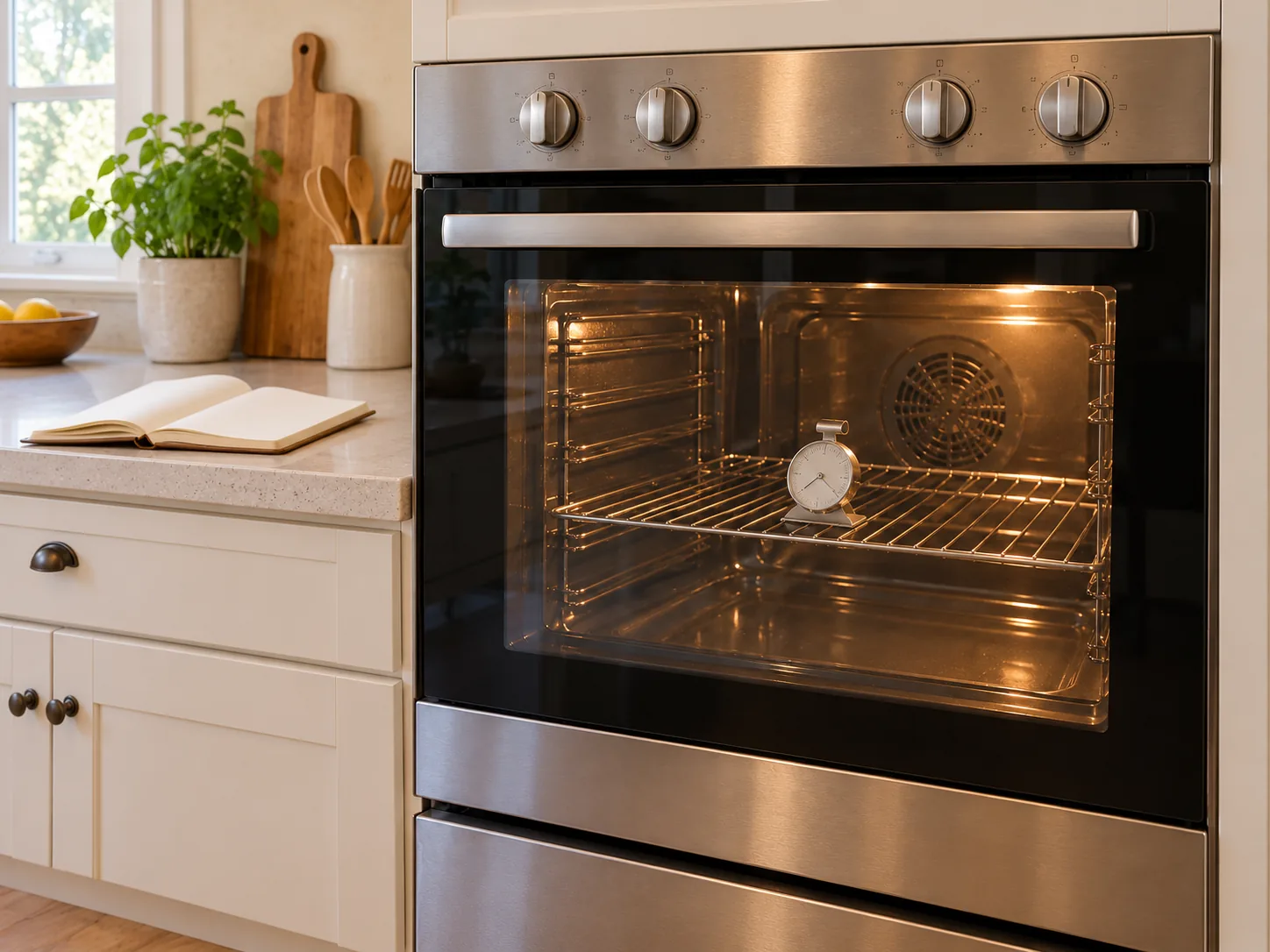
An instant-read cooking thermometer has a different job. It can measure food at a particular moment, but it does not replace an appliance thermometer left in the fridge. Put the latter where you can read it, following its instructions, and look again after the holiday shop has been put away and the fridge has settled.
If the appliance cannot maintain the right temperature, address that before adding a turkey and several days of ingredients.
Empty space starts with dinner this week
Look through the fridge before writing the shopping list. Put the food that is still safe to use into specific meals: the half cabbage into dinner, the open yogurt into breakfast, the remaining cooked vegetables into a meal within their storage window. Keep their original dates. Moving food into a new container does not make it newly prepared.
Discard food you know has been stored too long or handled unsafely. Do not taste an uncertain leftover to decide whether it belongs on the holiday menu. FDA notes that harmful bacteria can be present without an obvious change in smell or appearance in its food-storage guidance.
Then remove only what genuinely does not need refrigeration. An unopened drink that its label permits you to store at room temperature can wait elsewhere until serving day. A jar marked “refrigerate after opening” stays cold, even if it would make a convenient gap on the shelf.
Reserve the largest footprint first
Measure the shelf's usable width, depth and height, including the space needed to slide a dish in and lift it out. Check the refrigerator manual before moving shelves or loading a particularly heavy item.
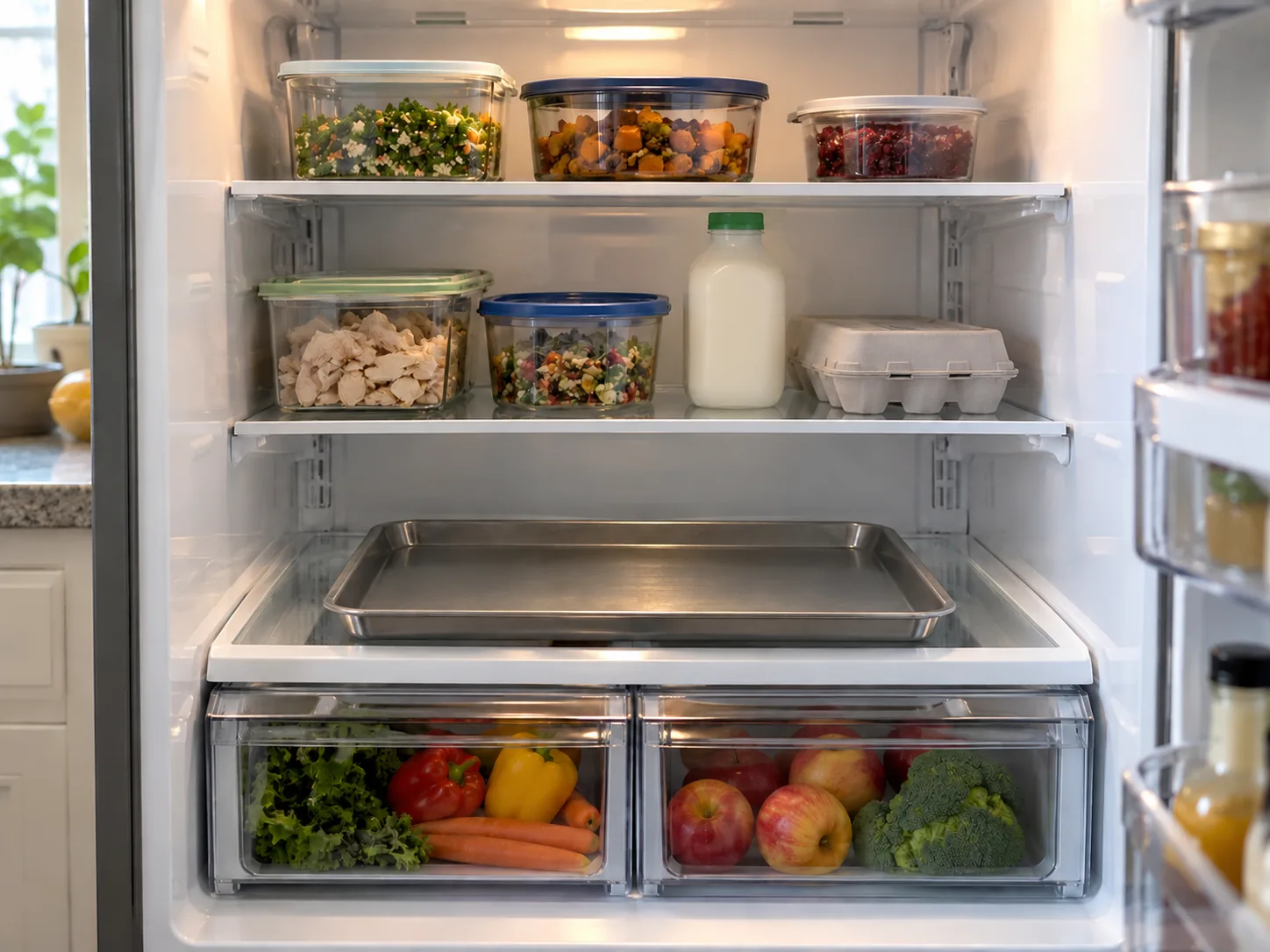
For raw turkey or other raw meat, reserve a lower position beneath ready-to-eat food and use a container or rimmed tray that can catch leaks. Keep the meat securely wrapped or contained. USDA's refrigerator advice calls for containers that prevent raw juices from dripping onto other food. The salad greens should never depend on a turkey wrapper staying perfectly dry above them.
A small placement list makes the rest of the space easier to assign:
| Food or task | Space to reserve |
|---|---|
| Raw turkey or roast | Lower shelf position, including its leak-catching tray |
| Prepared foods eaten without further cooking | Covered containers protected from raw-food drips |
| Milk, cream and eggs | Accessible refrigerated space; keep eggs in their carton inside the fridge |
| A make-ahead casserole | Its full covered dish, including handles and lid |
| Finished-meal leftovers | Space for smaller shallow containers after dinner |
If two large dishes need the same shelf on the same day, change the preparation schedule or the menu now. Add that change to your cooking timeline alongside the oven jobs.
Clean the shelf without warming the food
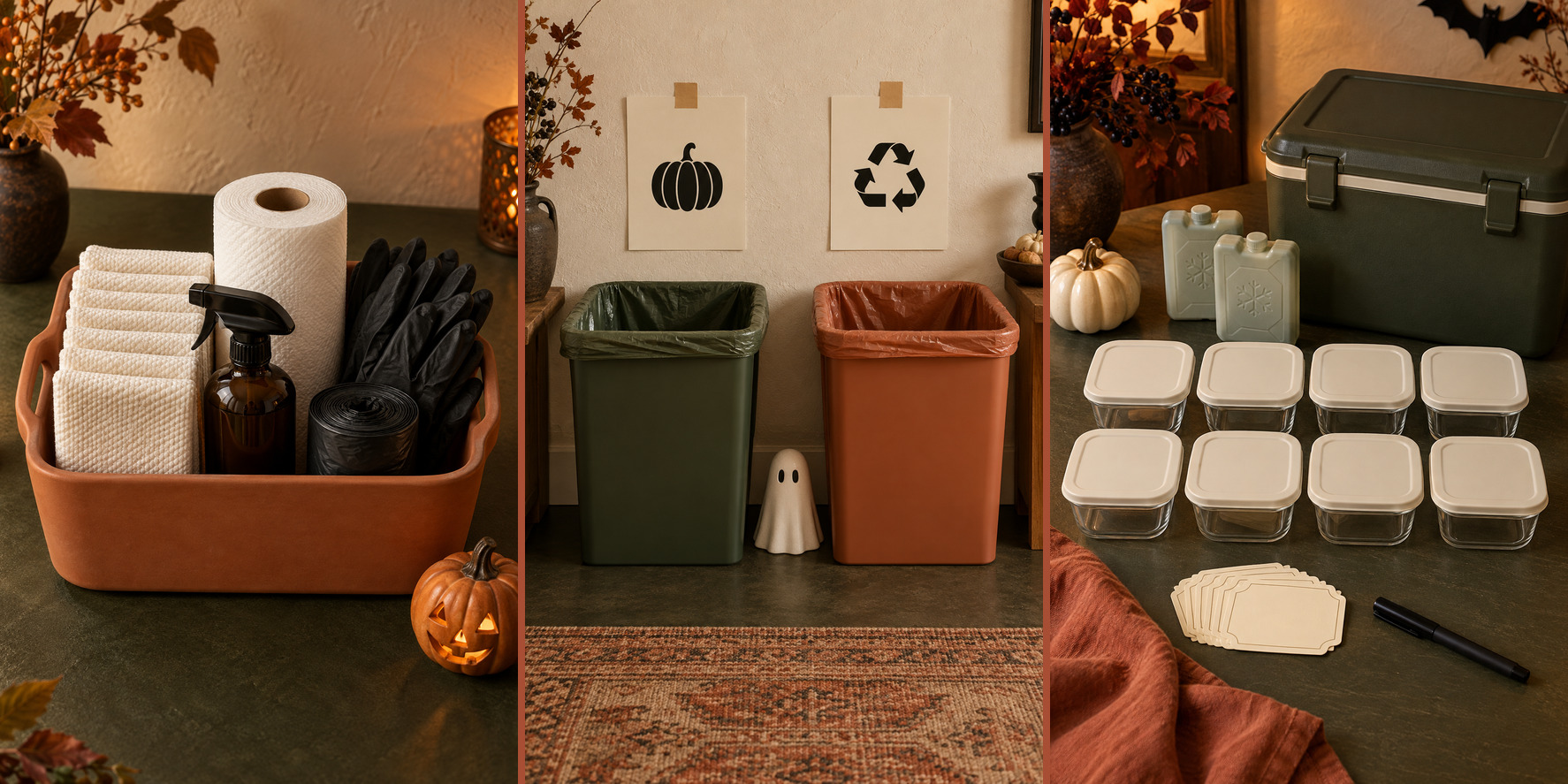
Work on one area at a time, keeping the rest of the food refrigerated. For a longer clean, have a cooler with enough ice or frozen packs to keep perishables at 40°F or below. The kitchen counter is not an extra cold shelf while you wash every drawer.
Clean spills promptly and follow the appliance's cleaning instructions. Wash removable parts as directed, rinse and dry them before replacing. Do not put a cold glass shelf straight under hot water: CDC's refrigerator-cleaning instructions warn that it can crack. Let the glass reach room temperature first while the food stays cold elsewhere.
Keep the time perishables spend without temperature control under two hours in total, or one hour if the surrounding temperature is above 90°F. Cleaning, sorting and putting things back all count toward that time.
Choose containers for the food you have
A little sauce does not need to occupy a large mixing bowl. Transfer already-chilled food into a clean, covered container of a suitable size, preserving its name and original preparation or opening date. Put the label where you can read it without dismantling a stack.
I recommend Rubbermaid Brilliance glass containers for a reusable cold-storage option. Choose the sizes that fit your shelves and use them according to their care instructions. Here, they are holding already-cold food; do not pour very hot food into chilled glass. Existing sound containers with matching lids can do the same storage job.
Stack only containers designed to sit securely together. Leave access to the food you will use next, and keep the refrigerator's vents clear according to its manual. A tower that must be rebuilt every time someone reaches for milk creates work all week.
Give overflow a real destination
If drinks are taking the space needed for perishable ingredients, move them to a separate drinks cooler for the gathering. Keep any food that requires refrigeration in controlled cold storage; a porch or garage is not a substitute simply because November feels chilly.
When a cooler is part of the plan, pack chilled food with ice or frozen gel packs and maintain 40°F or below. Insulation alone does not establish that temperature. USDA's potluck guidance uses the same cold-food limit during transport. If a guest is bringing a dish, agree on its transport and storage plan in advance.
Reserve space for after dinner, too. Keep suitable shallow containers and their lids ready so leftovers can be refrigerated promptly. Do not fill every newly cleared gap with another make-ahead dish. Before you leave for the shop, the fridge should have a place for the raw ingredients, a protected place for prepared food and room for what comes back from the table.
Measure the spaces that will disappear first
Before shopping, place an empty tray where the largest raw item will be stored and check that it can remain level. Try the intended covered containers on the other shelves too. The volume printed on a container does not describe its handles, rim or lid, and those are often what prevent the refrigerator door from closing. Leave air circulation space rather than fitting every surface like a packed suitcase.
A simple sketch can help another person put groceries away correctly. Mark the raw-food tray and the ready-to-eat shelf, then identify one space reserved for the first cooked dish that will need chilling. That last space is easy to lose if every new purchase is unpacked before cooking begins.
Clear space by assigning food a meal
Give existing food a definite near-term use instead of moving it into smaller containers without a plan. A half-used vegetable can belong to tonight’s soup; a portion of cooked food can be tomorrow’s lunch if it is still within its safe storage window. Relabeling or reheating does not restart that window.
Do the final refrigerator check after the groceries are loaded. Confirm the thermometer reading and make sure the door closes fully. If the quantity cannot be stored cold and separated appropriately, reduce the purchase or make another shopping trip. A smaller menu is easier to manage than ingredients that arrived before there was a safe place for them.