Ask about the person before the ingredients
Who taught them to make it? When did it usually appear on the table? Was it an everyday dinner, something made for visitors, or a dish someone always requested? A few ordinary details can say more than a polished introduction.
Write the memory in the cook’s own words if they’re comfortable sharing it. You don’t need a dramatic story. A particular kitchen, a school-night routine or a small change made over the years can be enough.
Watch the parts they don’t think to explain
Ask what size pan they use, how small they cut the ingredients, and what the food looks or feels like when it’s ready. Note the heat setting and approximate timing, but also the clues they look for.
If they measure with a cup from the cupboard, measure that cup once. If they say ‘a handful,’ ask them to put the amount into a measuring cup or onto a scale before it goes into the pan. Keep the familiar phrase alongside the measurement if you like.
Separate the original from your changes
Keep a copy of the version you were given. Add substitutions and your own notes underneath, with a date. That way a quicker weeknight adaptation doesn’t quietly replace the recipe you wanted to remember.
When you cook from your written version, note any instruction that made you stop and guess. Ask about it, revise the wording, and record how many people the finished dish actually fed in your kitchen.
Capture one ordinary cooking session
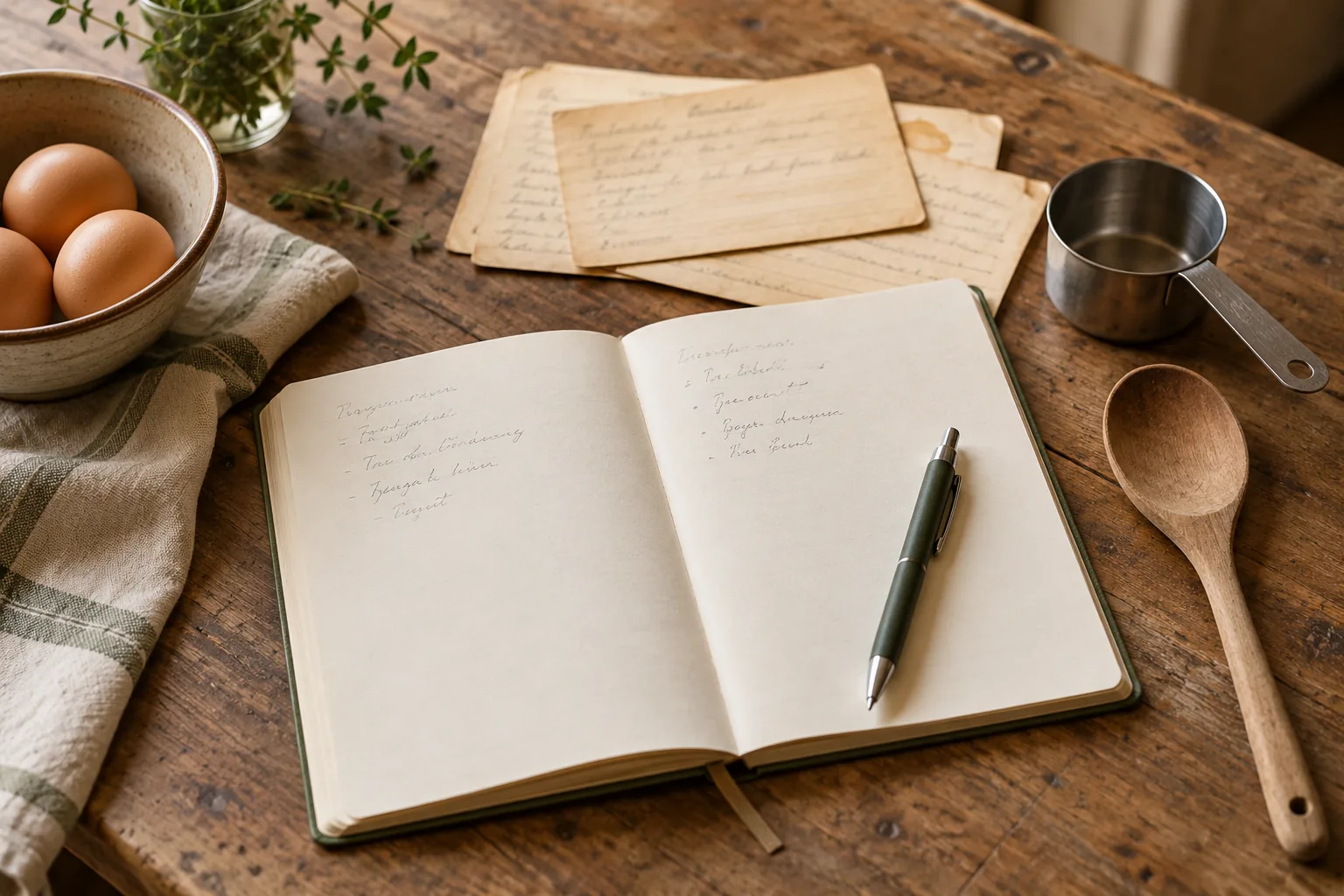
Ask to watch a batch the person was already going to make. Arrive with a notebook, a pen and permission to ask small questions. Recording audio or taking photographs can be helpful, but ask first and agree on who will receive the recording. A private family note does not need to become a public video.
Record the sequence while it happens. An ingredient list written at the end may omit the oil already in the pan or the water added to loosen a sauce. When the cook adds something, note what it was, approximately when it went in and what prompted the addition.
Keep questions neutral. “What are you looking for now?” usually gets a more useful answer than “Is that done after ten minutes?” The first question leaves room for a clue you did not know to ask about. The second can accidentally turn your guess into the written instruction.
When a measurement is missing, mark it as missing. Write “pan diameter to confirm” or “amount of water not recorded” instead of filling the gap with a plausible number. A visible question can be answered later; an invented measurement looks settled and is much harder for the next cook to spot.
Translate a familiar phrase into a usable instruction
| What the cook says | What to ask | What to record |
|---|---|---|
| “Use the usual pan.” | Which pan, and how wide and deep is it? | Pan material, dimensions and whether a lid is used. |
| “Add a little water.” | How much this time, and what should change? | Measured addition and the consistency being sought. |
| “Cook until it is ready.” | What changes in texture or appearance? | The observed cue, approximate time and relevant safety check. |
| “Enough for everyone.” | How many people, and with which side dishes? | Observed yield and the way it was served. |
Keep both versions when the phrase matters to your family. You might write the familiar wording in quotation marks and put the measured instruction underneath. That preserves the person’s voice without making a new cook guess what a particular cup, handful or low flame means.
Separate a sensory clue from a safety check. A family description of how chicken looks when it is ready can be worth recording, but it should not replace a thermometer check. FoodSafety.gov lists 165°F for poultry and reheated leftovers. Check current safe cooking guidance when turning an old note into a method someone else will use.
Make the second copy easier to cook from
Move the ingredients into the order they are used. If the same ingredient appears twice, identify the divided amounts clearly. Keep the total on the ingredient list and explain which part belongs in which step. Put any soaking, thawing or cooling requirement before the cook reaches a step that depends on it.
Have another willing family member read the draft without your explanation. Ask them to underline the moments where they would have to stop and ask a question. This is a clarity check, not proof that the recipe has been cooked successfully. Return unanswered questions to the original cook before presenting them as definite instructions.
Save the original photograph or scan alongside a dated, readable transcription. Name both files with the dish and the person who shared it, where they have agreed to that credit. Keep a second copy somewhere separate from the device you use in the kitchen. If an edit changes the recipe, label it as an adaptation rather than overwriting the original.
Decide what you want to share
A recipe can stay within your family, or you can choose to share it more widely. Ask before including another person’s full name, photograph or personal story. Credit the person who shared it and be clear about what you changed.
Have a recipe you would like to submit? Email us at contact@fondfolk.org with your recipe and a brief story. We’ll review it and confirm permission and credit with you before anything is published.