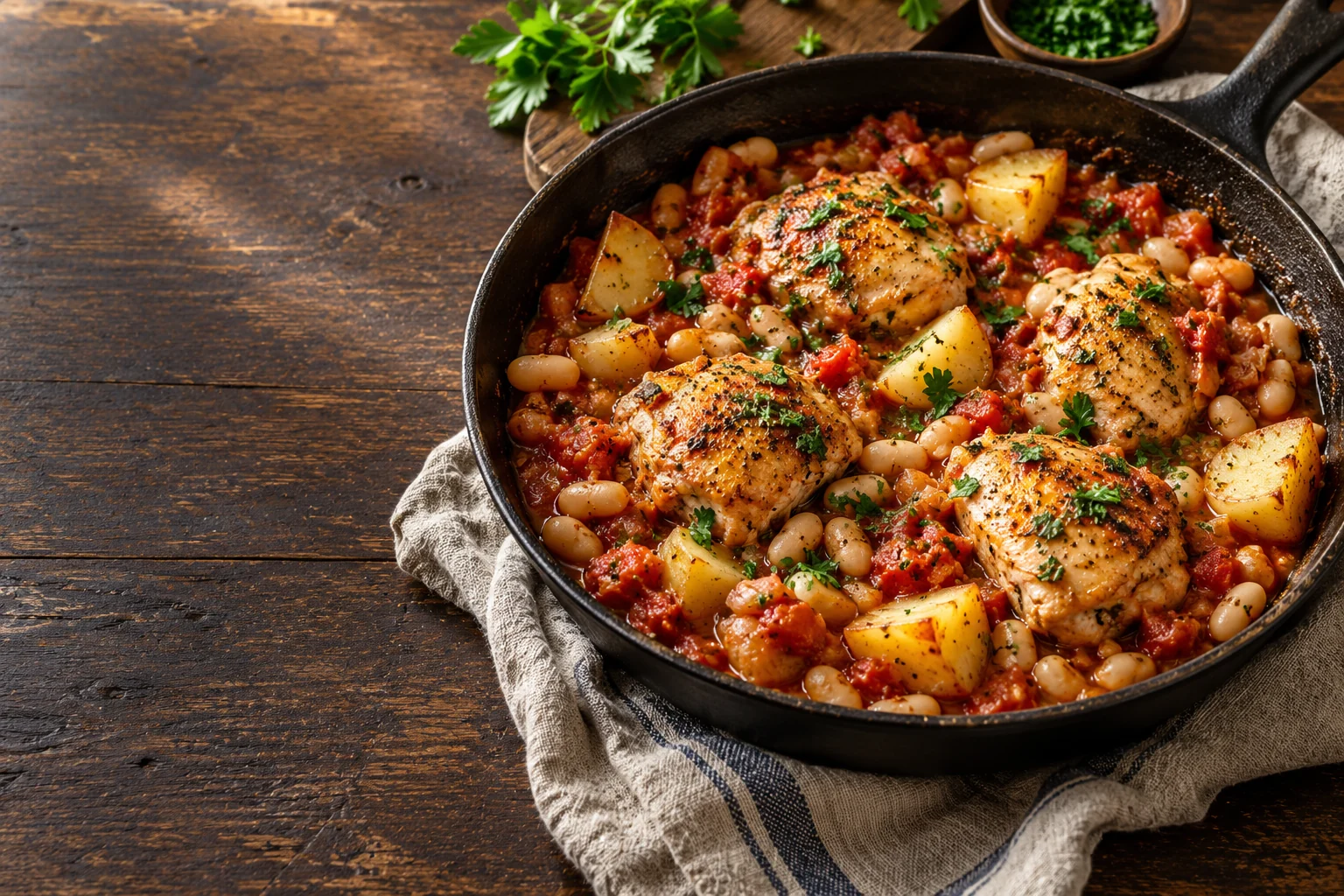
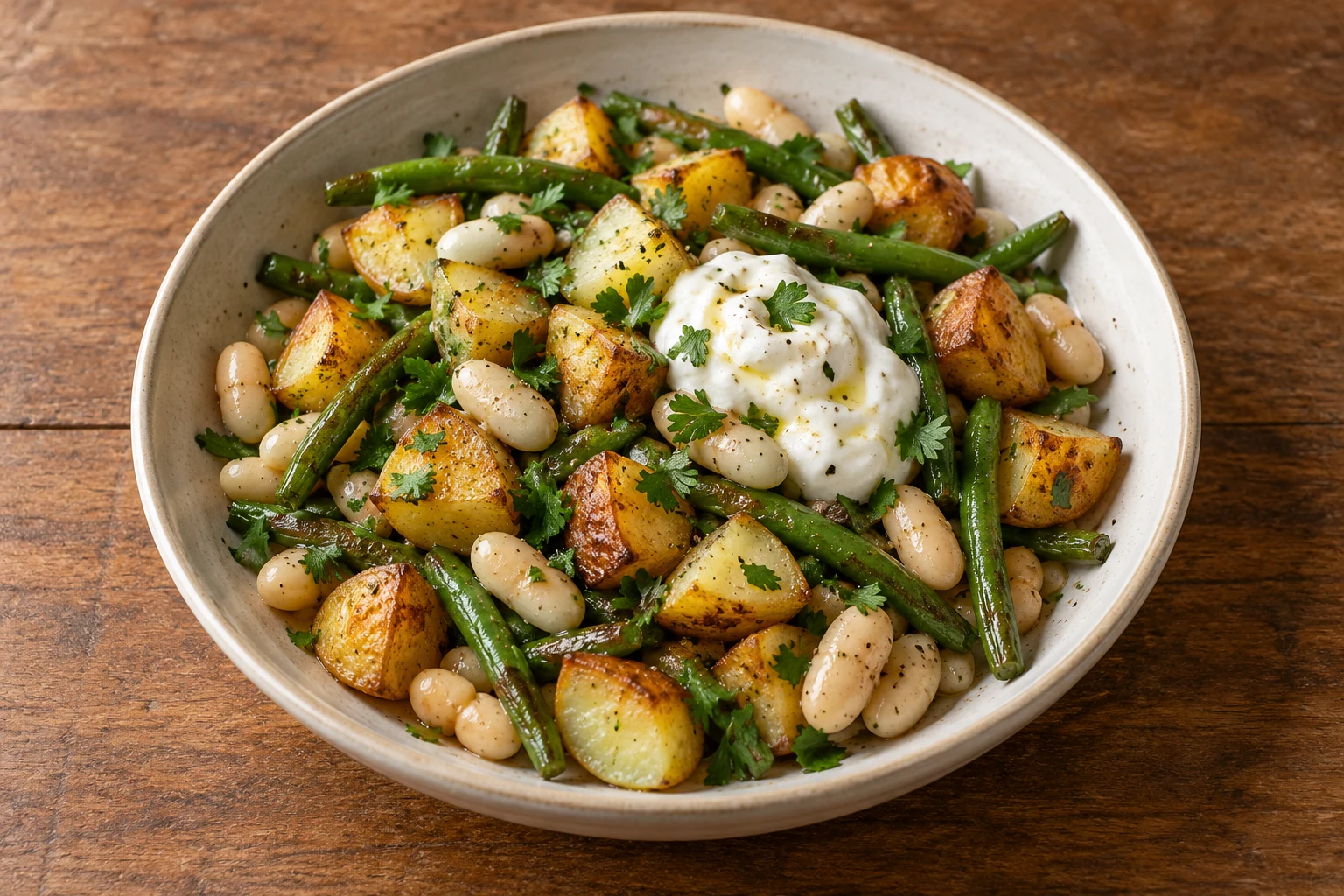
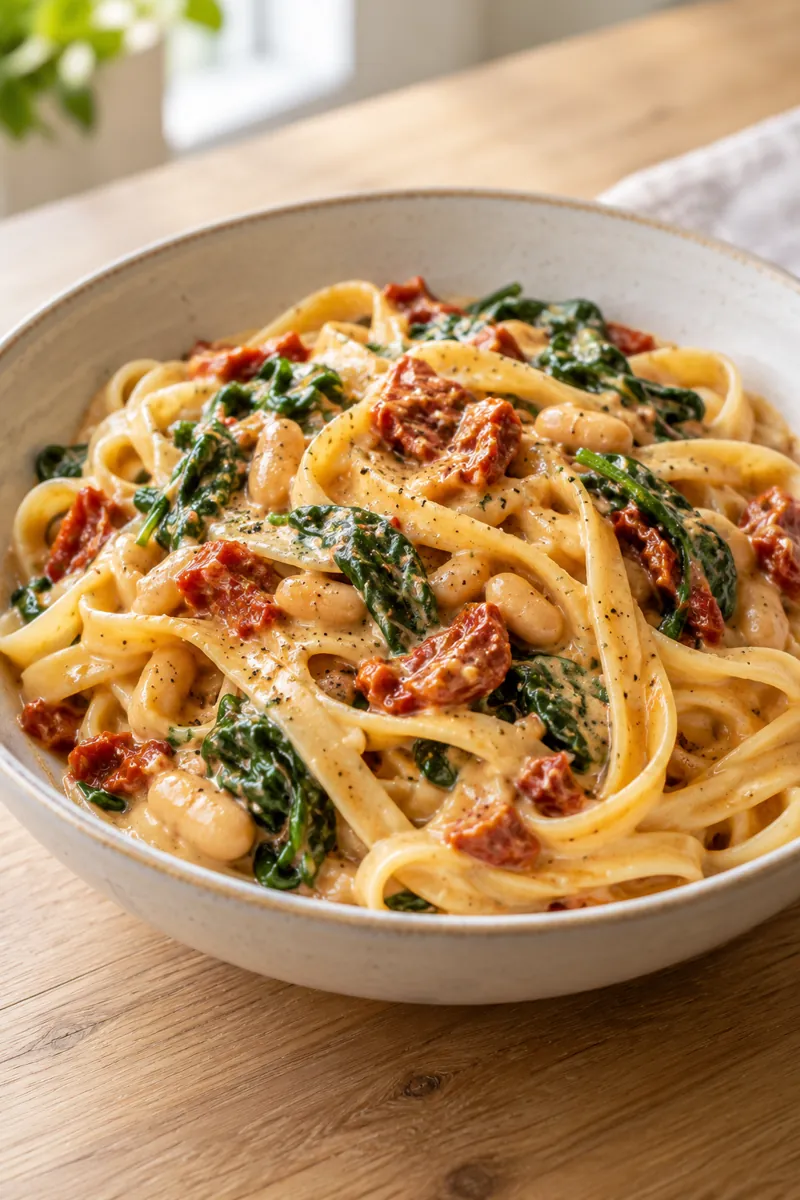
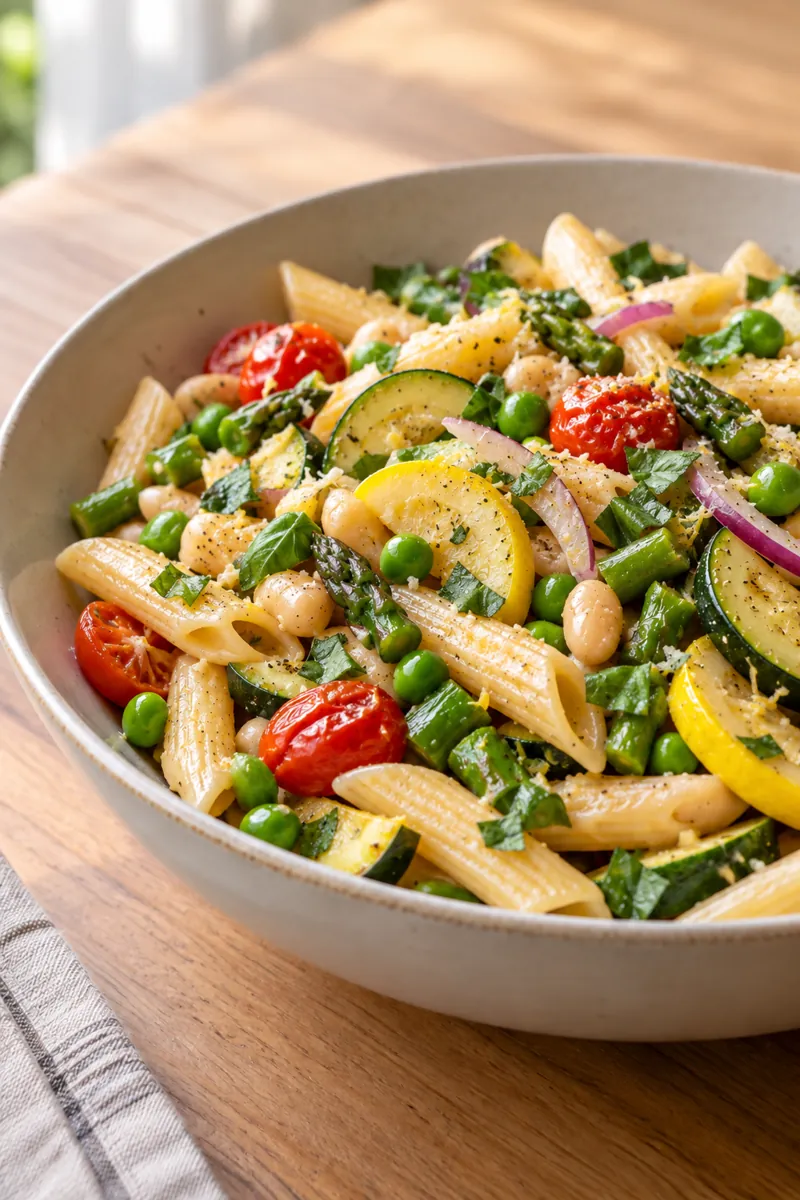
White beans do different work in these dinners: they warm through a chicken skillet, join golden potatoes, finish a creamy pasta or help thicken a rosemary soup. Compare six complete recipes before choosing which can to open. The portions range from approximate small-batch starters to six bowls.
Times and yields are the estimates stated in each recipe. The preparation column shows separate jobs and starting ingredients; follow the full original method before cooking.
White bean dinner recipes: portions, time and preparation
Use an immersion blender for the small bean portion before adding the remaining beans and dry pasta. Stir frequently as the pasta cooks.
Compare the recipe’s portion label first
The tomato-chicken skillet and potato-bean bowls make about two to three servings. That is an approximate range, not a recipe written for exactly two. The sun-dried tomato pasta and lemon primavera make four portions; the rosemary pasta-and-beans makes six bowls.
Use the recipe serving calculator only after deciding what the original yield means for your table. Keep canned-bean quantities, drained preparation and any optional ingredients separate. A larger can or an extra spoon of sauce is not a reason to silently change the whole recipe.
Keep each pasta method’s liquid in the right place
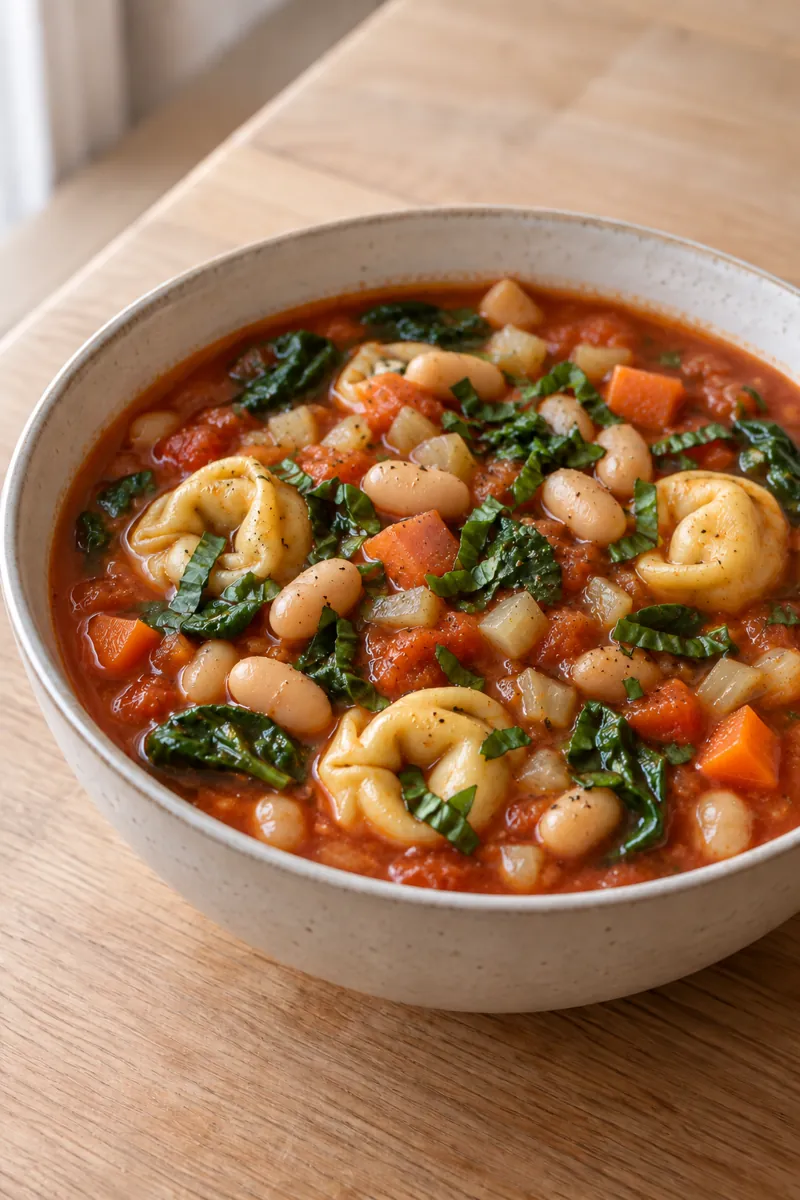
The sun-dried tomato fettuccine cooks in the skillet’s broth, which stays to form the sauce. Lemon primavera boils its penne separately and reserves some pasta water before draining. Tortellini is cooked in a separate pot before it joins the soup. Those methods are not interchangeable.
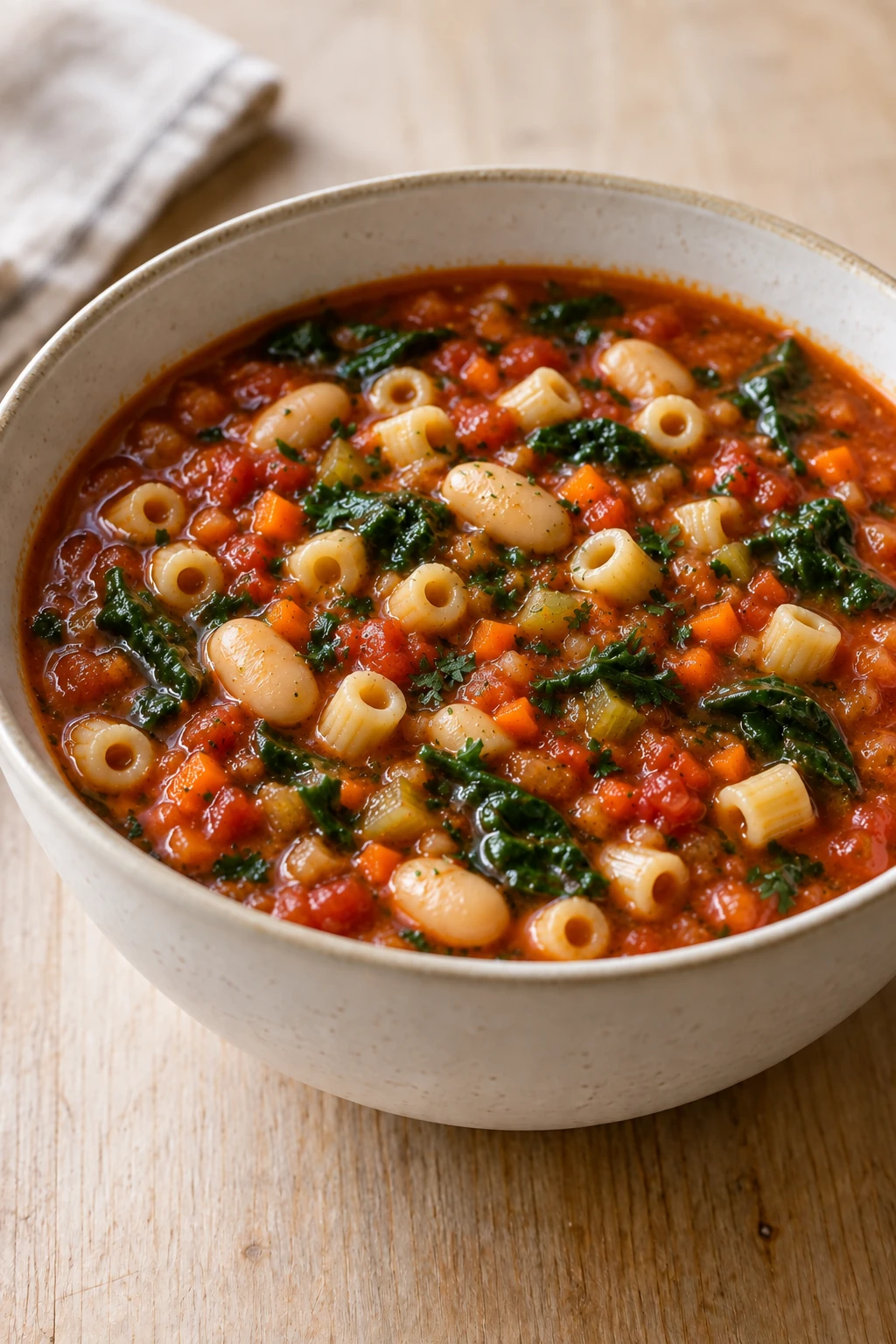
The rosemary soup briefly blends part of its cannellini beans with the vegetables before the remaining beans and dry pasta go in. Follow that order and remove the bay leaves for blending as the method states. Do not blend a different soup merely because it also contains beans.