Reserve the pasta water before draining
Place a cup beside the pasta pot at the start so collecting the cooking water is part of the setup. That water is the recipe's way to loosen the coating as the pasta, vegetables and beans come together; it is easier to keep it ready than to drain the whole pot and discover it is needed afterward.
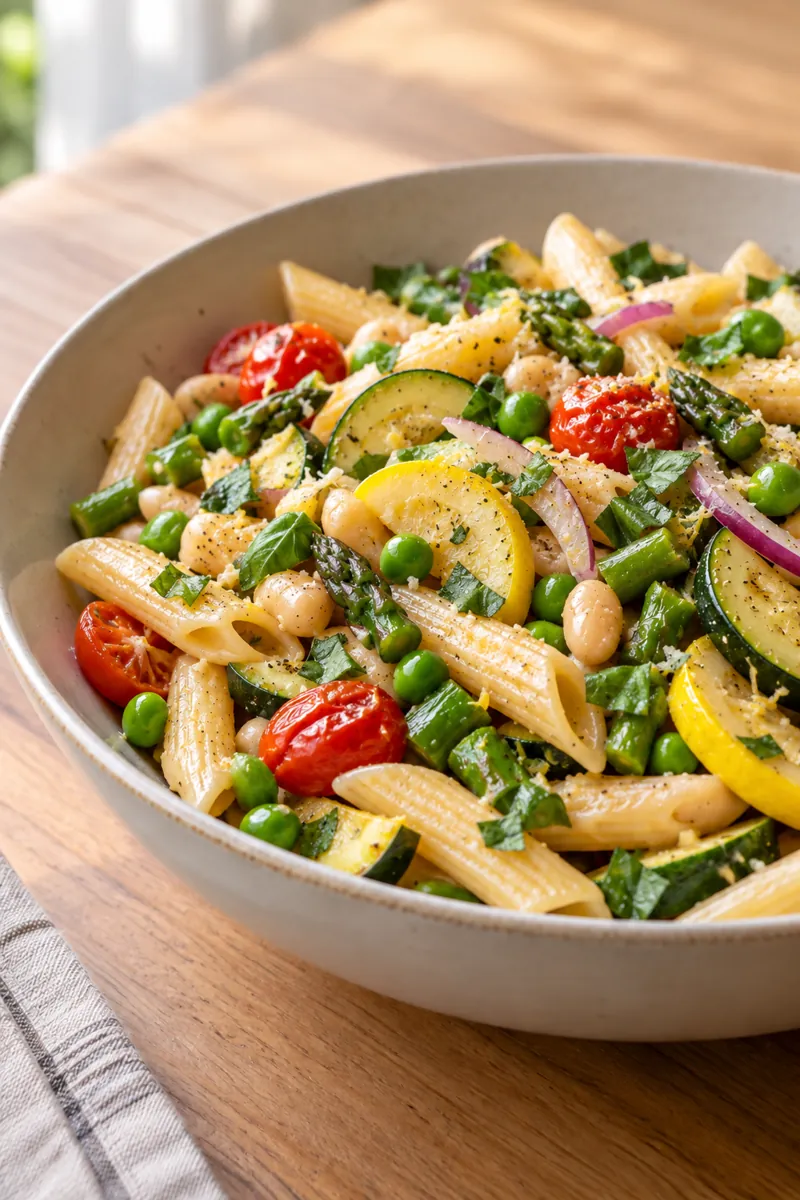
Thin squash half-moons and short asparagus pieces suit the skillet's brief vegetable stage. Have the thawed peas and drained beans ready separately, since they go in later with the cooked penne rather than spending the full vegetable stage in the pan.
Finish with a coating rather than a pool of liquid
Add reserved water in the small increments stated in the method and toss between additions. Stop when the pasta moves easily and carries its coating; you do not need to use every drop of the reserved cup.
Take the skillet off the heat before the cheese and lemon juice are added, then fold the basil in just before serving. Use broad, gentle turns so the beans stay recognizable. Divide the pasta, beans and vegetables together among four portions rather than scooping only pasta from the top.