Before you start: Prepare: 15 minutes Sauté and simmer: 35 minutes Use the listed ingredient state: dry, cooked, thawed, drained or squeezed. Times are estimates; follow the doneness cues. Use the fully cooked ham listed. No dry-bean substitution; no seasoning packet.
We may earn a commission from purchases through these links. Amazon search links open comparison results; check the item’s suitability.
Use an instant-read food thermometer to check the food’s center at the doneness step, using the temperature stated in the recipe.
Recipe note: Refrigerate perishable leftovers promptly in shallow containers; use within 3–4 days and reheat to 165°F. Count storage from the original cooking date when using leftovers. Refrigerate perishable cooked dishes in shallow containers within 2 hours, or 1 hour above 90°F; keep the refrigerator at 40°F or below.
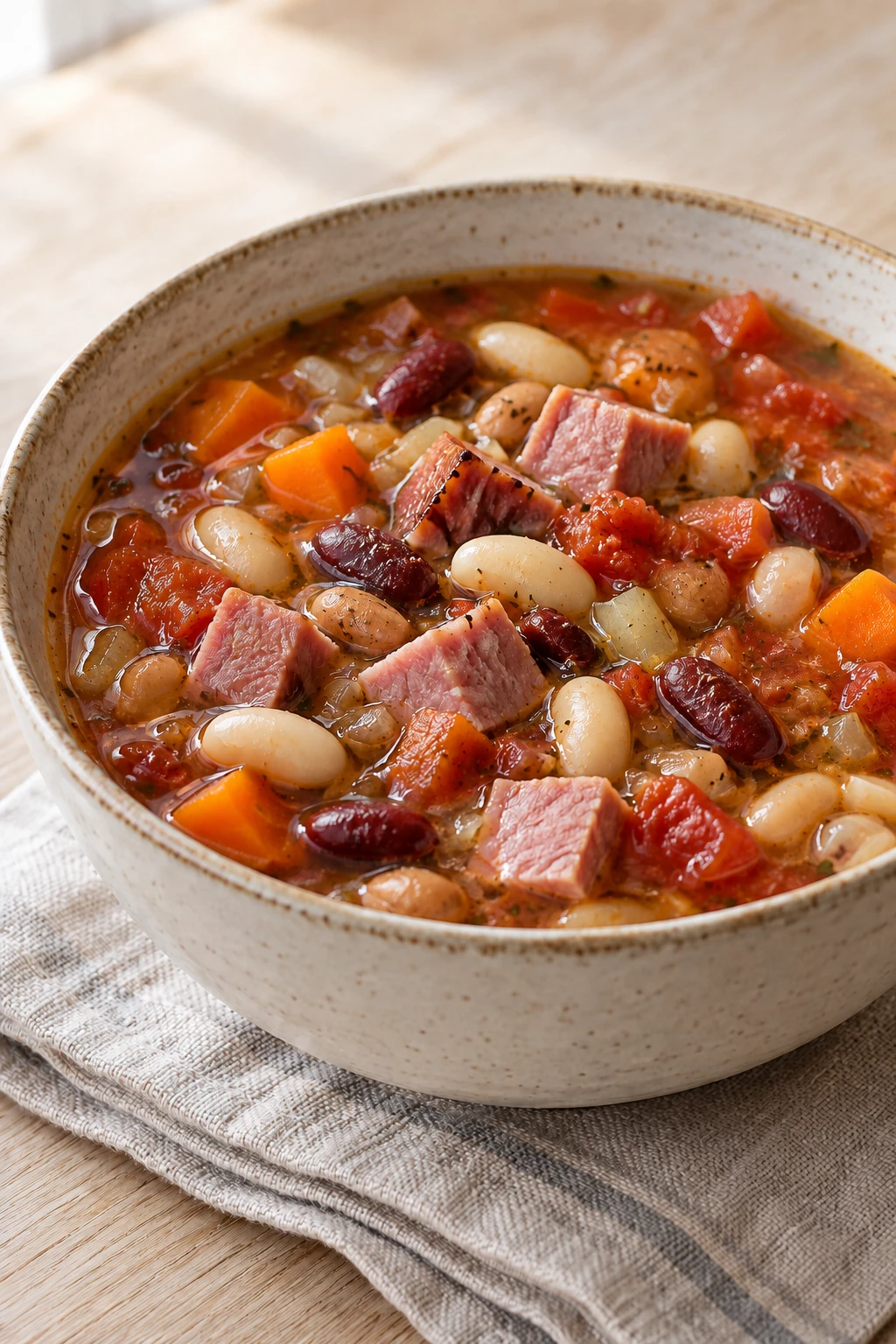
Use the three beans as drained ingredients
Drain and rinse each can before the soup starts. The tomato juices belong in the recipe, but bean-can liquid is not part of the measured stock. Keeping those instructions distinct helps preserve the intended consistency.
The ham is fully cooked at the beginning. Check the product and its storage history rather than using this short soup method for raw meat. Dice it so portions distribute through all six bowls.
Thicken a small amount before changing the pot
If a thicker soup is wanted, use the method’s single ladleful of beans and mash it against the side carefully before stirring it back in. That gives an adjustment you can judge without blending every bean and vegetable.
Check that the carrot is tender and the ham has reached the stated reheating temperature. Add the lemon at the finish, then taste the completed soup before considering further seasoning. Ham and stock vary in saltiness, so their combined effect matters more than tasting either ingredient alone.
Timing and servings are estimates. Equipment, ingredients and portion sizes affect the result.