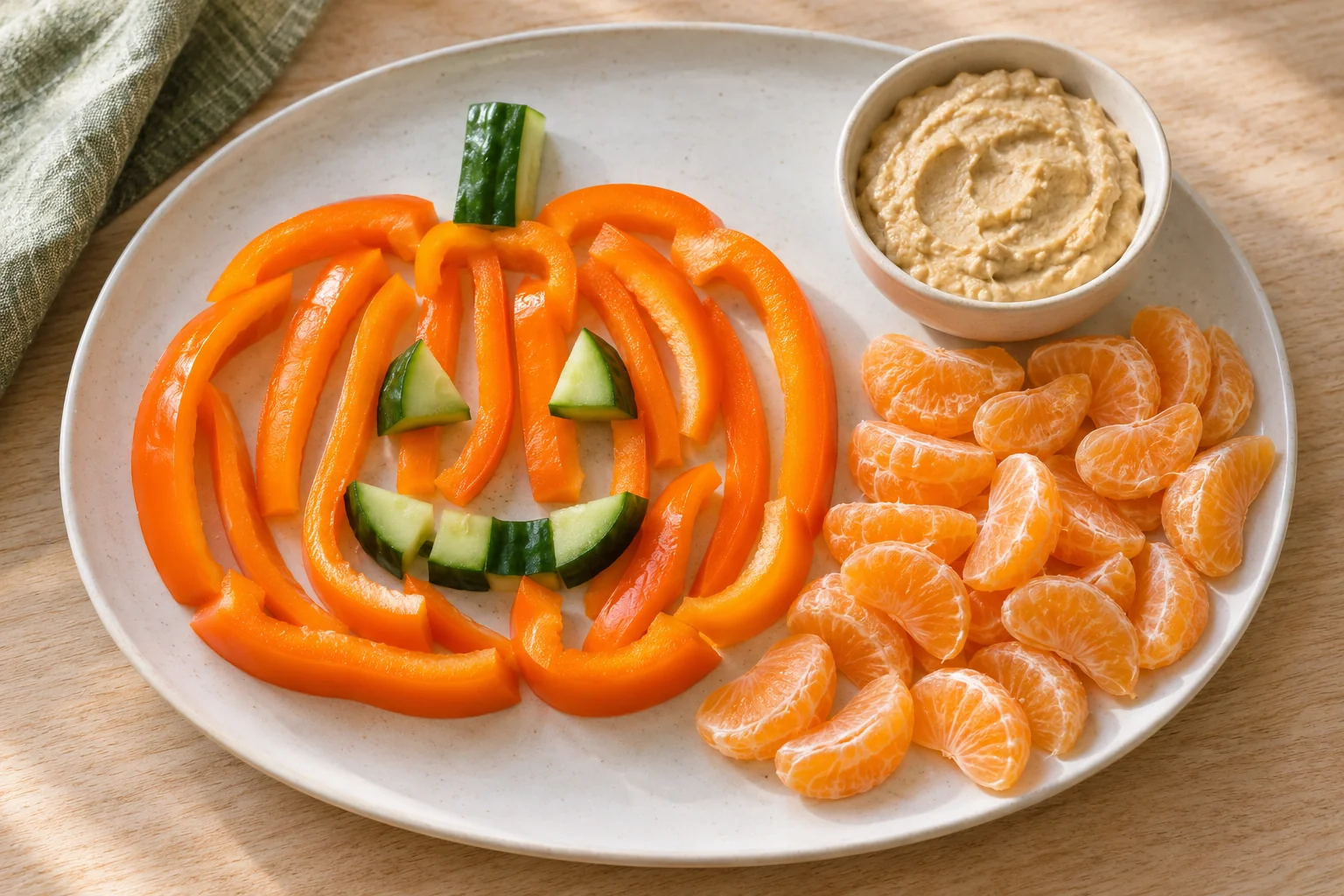
Orange pepper strips can make the outline of a pumpkin, with cucumber pieces for its face and clementines around the edge. Start with produce the people at your table already enjoy, then arrange a small amount so they can reach it. A recognizable pumpkin does not need to cover the whole table.
Build a small board
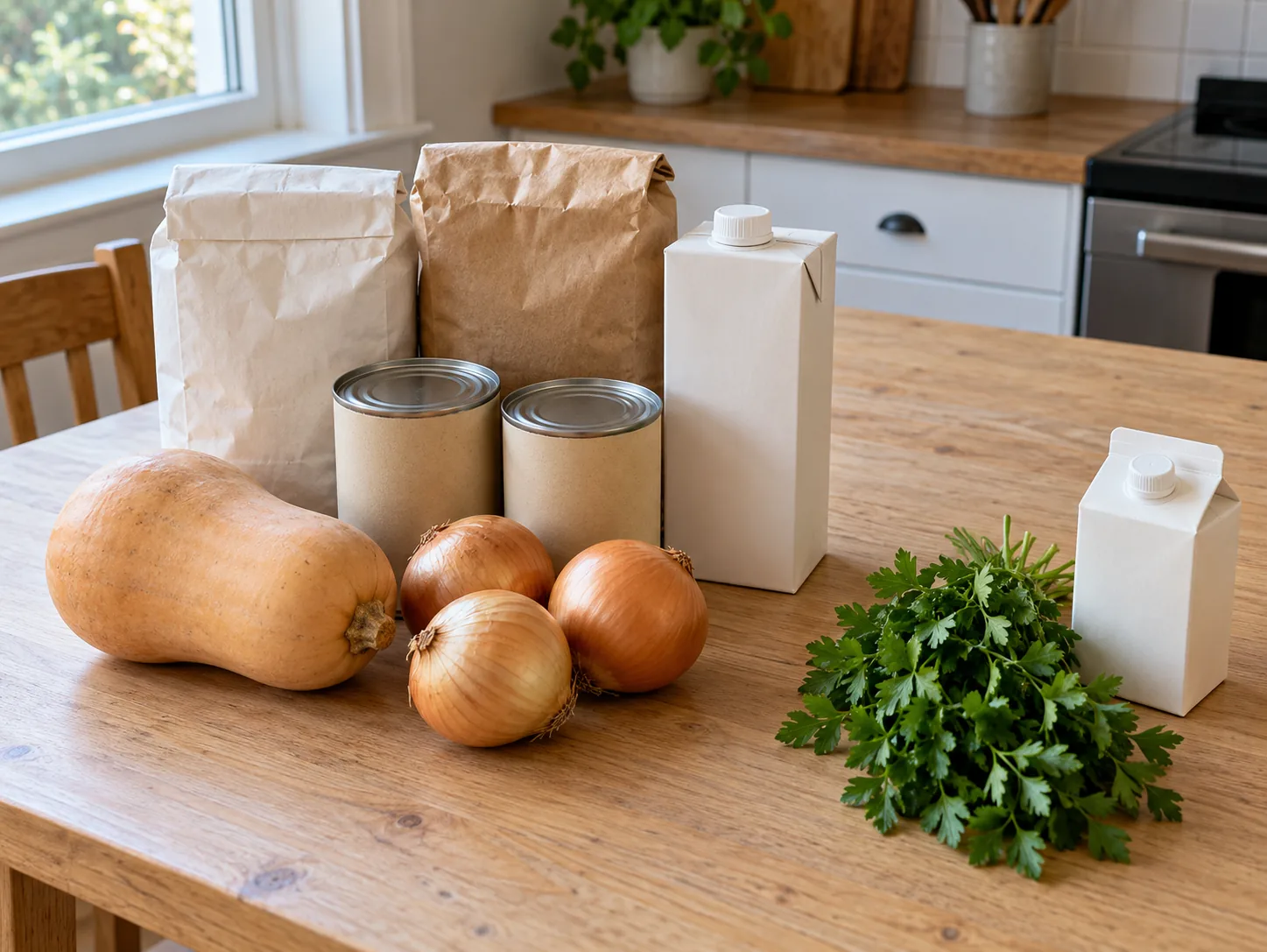
For a modest snack alongside other food, start with:
- 1 large orange bell pepper.
- 1 small cucumber.
- 2 clementines.
- About 1/2 cup prepared vegetarian hummus or another suitable refrigerated dip.
- A clean serving plate or board and a small bowl for the dip.
This is a shopping starting point for a small group, not a full meal or a fixed serving guarantee. For two people, put out half the prepared produce and half the dip; keep the rest refrigerated for another serving.
Read the dip's ingredient and allergen information with your guests' needs in mind. Keep the original packaging available if anyone needs to check it. A vegetarian label does not establish that a dip is suitable for every allergy.
Prepare the food before making the face
Wash your hands and rinse the pepper, cucumber and clementines under running water before cutting or peeling. Dry the produce with a clean towel. Remove the pepper's stem, seeds and white inner ribs, then slice it into strips. Cut the cucumber into pieces the people eating can manage, and peel and separate the clementines.
This raw board is intended for people who can safely handle its textures. Hard raw vegetables and some fruit shapes can be choking hazards for babies and young children. Prepare a separate portion with texture, shape and size suited to the child; simply making a decorative piece smaller is not enough. Children should eat seated and supervised.
Make a pumpkin people can take apart
- Put the dip in its bowl near one corner of the serving plate.
- Arrange the orange pepper strips in a broad pumpkin outline, with some strips loosely filling the middle.
- Use cucumber pieces for two eyes, a mouth and a short stem. Leave the pieces loose and easy to pick up.
- Group the clementine segments beside the pumpkin, leaving room for fingers or serving utensils.
Skip toothpicks, plastic eyes and hidden supports. If the face disappears when someone takes a piece of pepper, it has done its job. Keep any paper decoration behind the plate so it stays separate from the food.
Choose a surface you can clean
A serving plate you already own works well. A separate preparation board also lets you arrange the food after the cutting is finished.
This section contains affiliate links. Fondfolk may earn a commission if you buy through them. As an Amazon Associate I earn from qualifying purchases.
I recommend the SNOWCLAD double-sided cutting board, which has a stainless-steel side and a wheat-straw polypropylene side. The listing assigns the polypropylene side to fruit and vegetables. It is a mixed-material board, so check those materials and the care instructions against what you want before buying it.
Put out a little and replenish it
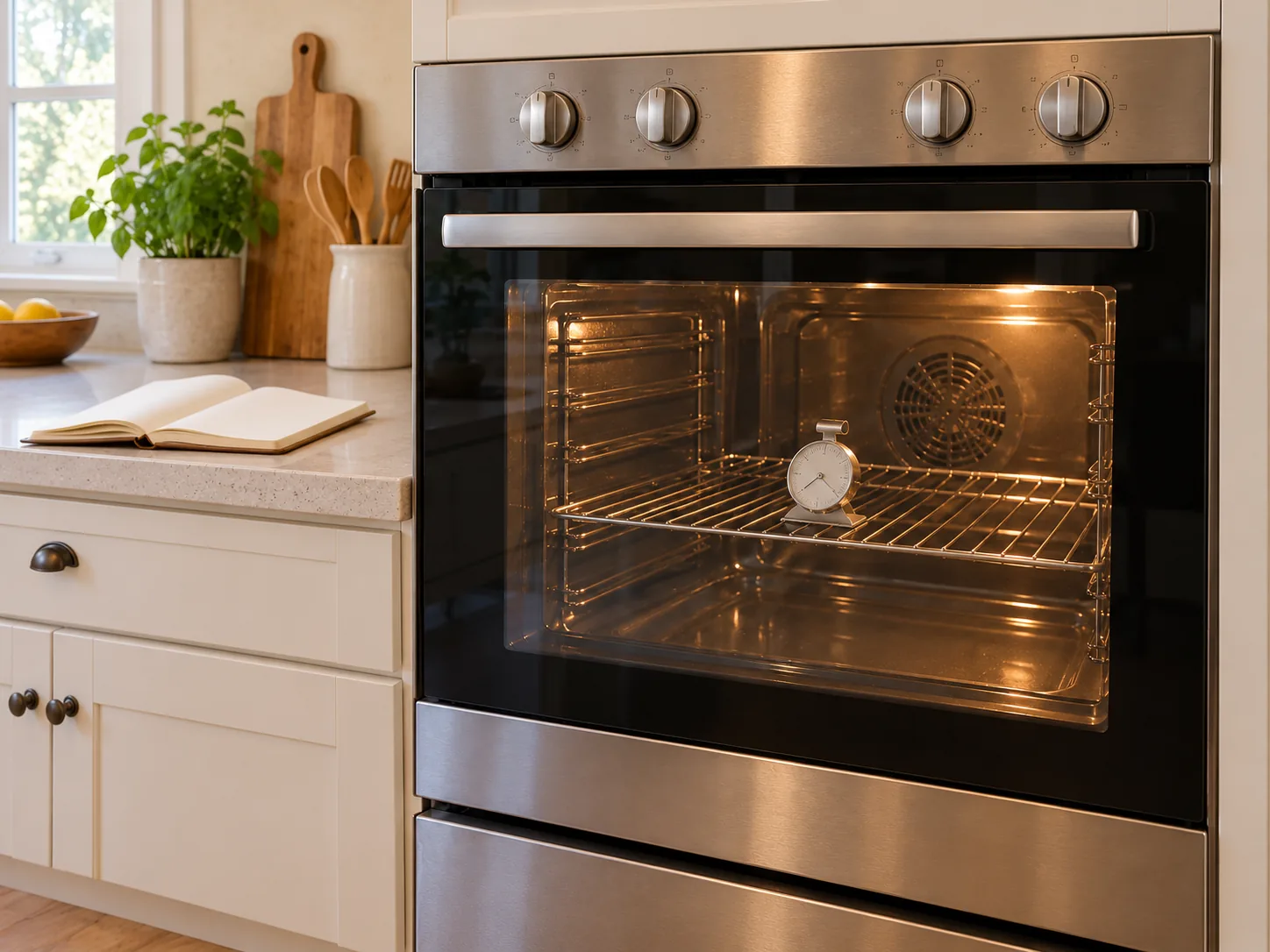
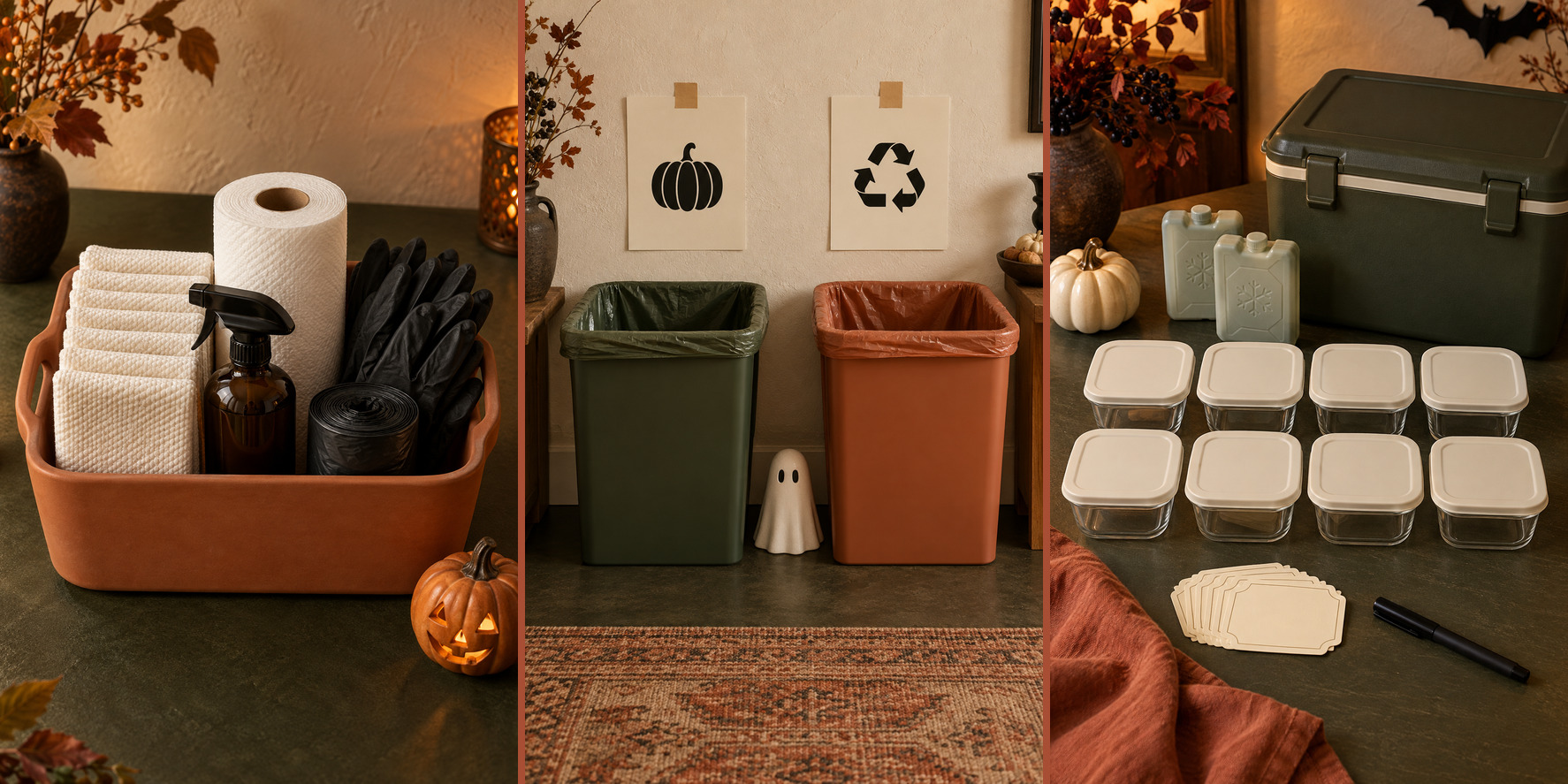
Keep prepared produce and refrigerated dip at 40°F or below until serving. I recommend the Rubbermaid Brilliance Glass storage containers for keeping these chilled portions covered until you need them. Put out small portions and replace an empty plate with a fresh one. Discard perishable food left out for more than two hours, or one hour when the temperature is above 90°F.
Pair the board with the Halloween drink station, or use the apple-tasting card as the afternoon's activity. Leave enough space for people to set down a glass and choose a piece of pepper without rearranging the table.
Sources
Give each cut piece a serving job
Use pieces that fit the way people will eat: a carrot stick that can reach the dip, an apple mouth that can be lifted intact, and a small plate with room for both. An elaborate shape is less useful if it collapses before it reaches the guest. Prepare a modest first board rather than turning all the fruit and vegetables into decorations at once.
Keep any agreed separate portions protected before arranging the shared board. Ingredient information and a discussion of preparation needs matter more than placing a label over food that has already touched everything else. A shared board is a serving arrangement, not a promise of allergen separation.
Keep the refill simple
Choose one clean replacement dish for the next round and keep its food stored as required until needed. Replace a partly used arrangement instead of hiding it under a fresh layer, so the preparation and serving history remains understandable. A small first board can also show which pieces guests actually want before you cut more.
Keep wrappers, unused decoration packets and knives away from the eating area. A clear edge for plates and napkins gives the food more room to be served. Let the fruit and vegetables remain recognizable; a few playful details are enough without covering every bite in candy.