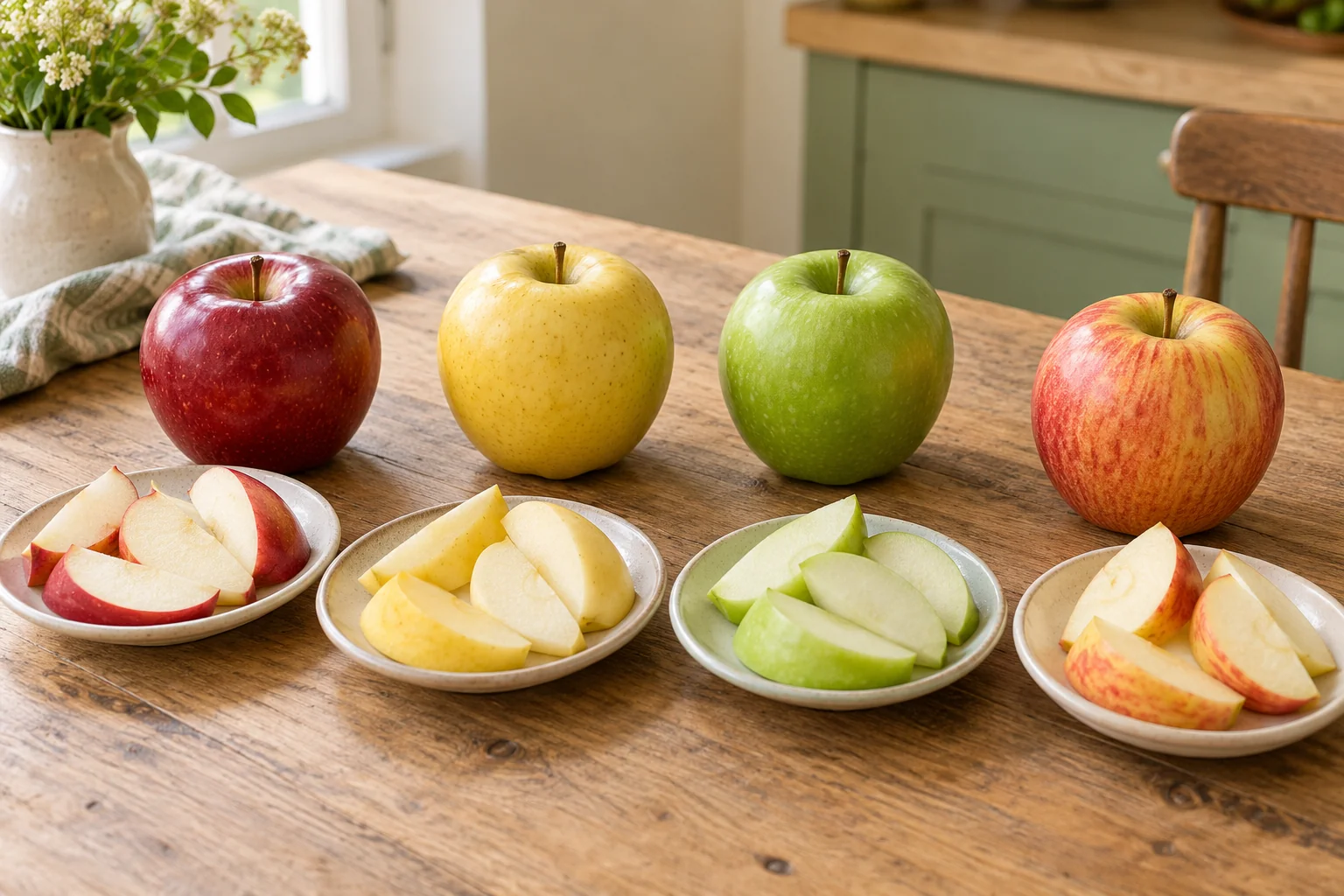
Put three or four different apples on the table, cut a few slices of each, and see which one you reach for twice. An apple tasting can be that small: a few plates, a glass of water, and something to write on.
Choose apples with names you can keep track of. If the shop has several loose varieties, buy a small selection instead of a bag of each. Keep the produce stickers or write down the names before you mix them together. The point is to compare what you brought home, so there is no required list of varieties to hunt down.
Give each apple a letter
Label the plates A, B, C and D, then keep the variety names on a separate note. You can reveal them after everyone has tasted. If seeing the names is part of the fun, leave them beside the plates from the start.
Prepare the apples close to tasting time. The FDA recommends rinsing produce under plain running water before cutting or peeling it; soap and produce wash are unnecessary. Wash your hands with soap and water for 20 seconds before preparing the fruit. Cut manageable pieces for the people taking part, with an adult handling the knife for younger helpers. Raw apple pieces can be a choking hazard for babies and young children; this raw tasting is for people who can safely manage that texture. Have children sit down to eat and supervise them.
This section contains affiliate links. Fondfolk may earn a commission if you buy through them. As an Amazon Associate I earn from qualifying purchases.
For the apple preparation, I recommend the OXO Good Grips Apple Corer for removing the center before you slice the fruit. A small knife such as the HOSHANHO 3.75-inch paring knife also does the job, so use what you already handle comfortably.
Notice more than sweetness
Taste the apples plain first, before adding caramel, cheese or other accompaniments. Use the card below to record sweetness, tartness and how firm or crisp each bite feels. A score of five means you noticed more of that quality, not that the apple is better.
Then answer the question that matters for the next shopping trip: would you choose another piece? Someone can enjoy the tartest apple while someone else prefers the mildest one. Keep those preferences separate instead of averaging them into a winner nobody chose.
Let the last bite settle it
Go back to your two favorites and try them again. Write down which you would buy for eating as it is, then reveal the names if you used letters. These are the results of your tasting today, not a verdict on every apple sold under that variety name.
A raw tasting also cannot tell you exactly how an apple will behave in a pie. If baking is next, start with which apples work for baking, sauce, and snacking, then follow the preparation in your chosen recipe. An apple you love for a snack does not have to fill every job in the kitchen.
Keep the scorecard with your next grocery list. The most useful result may be a single name you would otherwise forget by the time you reach the produce aisle.
APPLE TASTING CARD — PRINT OR COPY Print or copy this card. Each person can keep a separate set of scores. Date: __________________ Taster: __________________ Scale: 1 = little of this quality; 5 = a lot. Higher is not automatically better. Sample A — Sweetness __/5 | Tartness __/5 | Firmness/crispness __/5 Words that describe it: __________________________________________ Would I choose another piece? __________ Variety revealed: __________ Sample B — Sweetness __/5 | Tartness __/5 | Firmness/crispness __/5 Words that describe it: __________________________________________ Would I choose another piece? __________ Variety revealed: __________ Sample C — Sweetness __/5 | Tartness __/5 | Firmness/crispness __/5 Words that describe it: __________________________________________ Would I choose another piece? __________ Variety revealed: __________ Sample D, optional — Sweetness __/5 | Tartness __/5 | Firmness/crispness __/5 Words that describe it: __________________________________________ Would I choose another piece? __________ Variety revealed: __________ My choice for eating fresh: ________________________________________ One detail to remember at the shop: ________________________________ Keep the variety key separate if you want to reveal it after tasting.
Plan a tasting that fits your table
For an illustrative four-person tasting, three medium apples give everyone several small tastes without turning the activity into a full fruit platter. Buy one apple from each of three named varieties rather than several apples from one bag. Keep the stickers or a photograph of the shelf labels so the names can be recorded accurately. This is a planning example, not a fixed portion size; appetites and apple sizes differ.
Start with the least expensive varieties you can identify locally. The point is to notice a difference, not to buy a rare apple. If only two varieties are available, compare those two and use the spare column for a second taste. There is no need to fill every space on the card.
Use the same bite before comparing scores
Give each person similarly sized pieces from the same apple. One very thin slice and one thick wedge can make crispness seem different for reasons unrelated to variety. Offer plain water between samples, and keep cheese, crackers and dips for after the plain tasting. Let everyone write a first impression before discussing it so one confident description does not become the whole table’s answer.
Try ordinary descriptive words: juicy, sharp, mild, firm, fragrant or floury. A low sweetness score can belong to someone’s favorite apple. Ask each taster to circle the quality they enjoyed rather than adding all the numbers into a single quality ranking. If an apple seems unexpectedly soft, record that particular sample’s condition instead of deciding that the variety is always soft.
Turn the card into a useful shopping note
After revealing the names, write one short sentence beside each: good for my lunch, too tart for me, or worth trying in the next bake. Add the shop and purchase date if you want to repeat the comparison later. Ripeness and storage can change what you notice, so a later tasting may give a different result.
Keep untouched apples separate from pieces people have handled. Refrigerate cut fruit promptly, and prepare only another small round if people want it. A tasting that ends with one clear preference and a small amount of cut fruit is easier to repeat than a large spread with several half-finished bowls.