The most useful Thanksgiving timeline starts with the time you want to sit down and the dishes you have actually chosen. Write down when each dish needs the oven, how long it must rest and what can be finished earlier. A menu becomes much easier to manage when every dish has somewhere to cook.
This article contains affiliate links. Fondfolk may earn a commission if you buy through them. As an Amazon Associate I earn from qualifying purchases.
Start with a small, workable menu
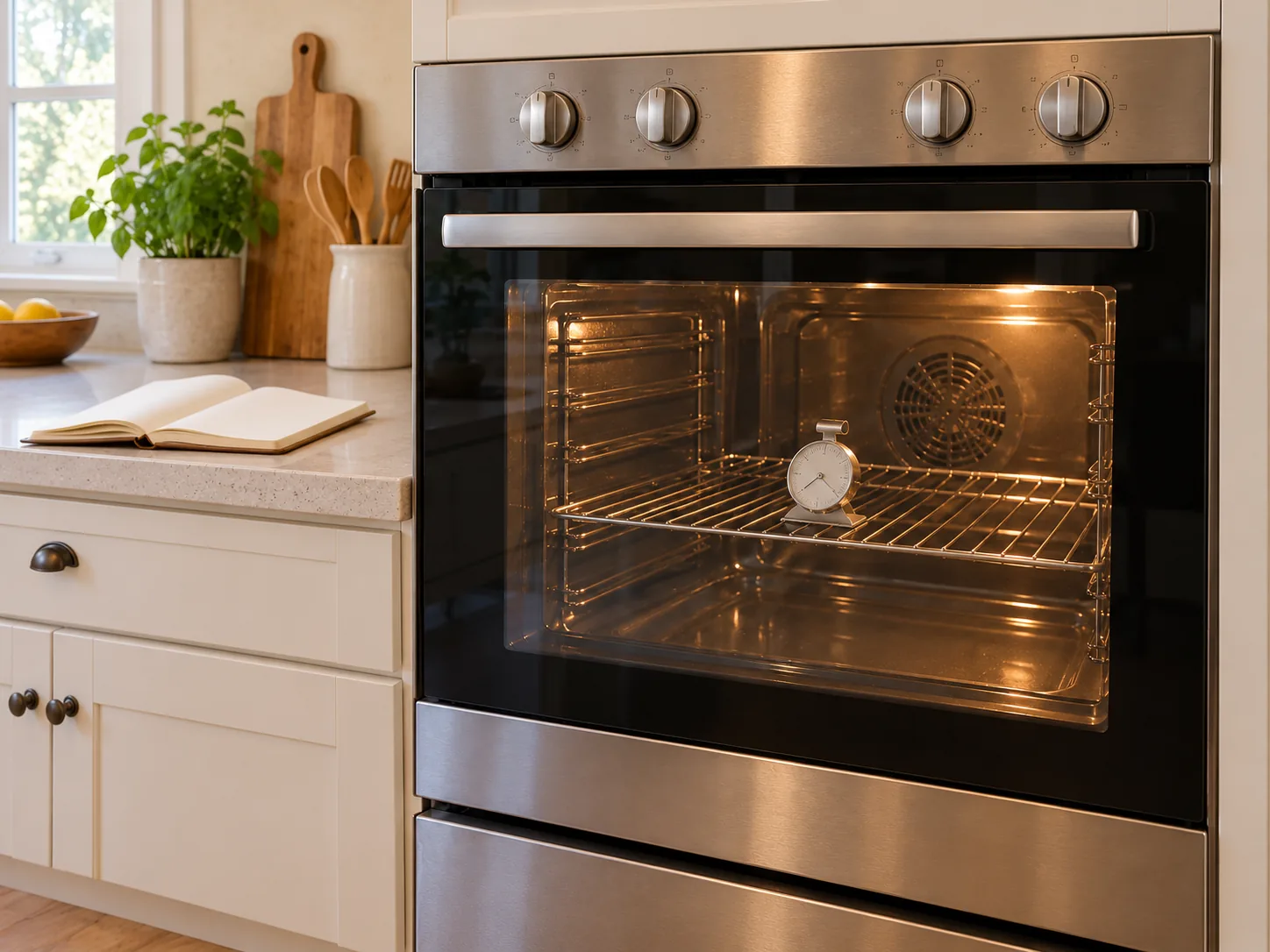
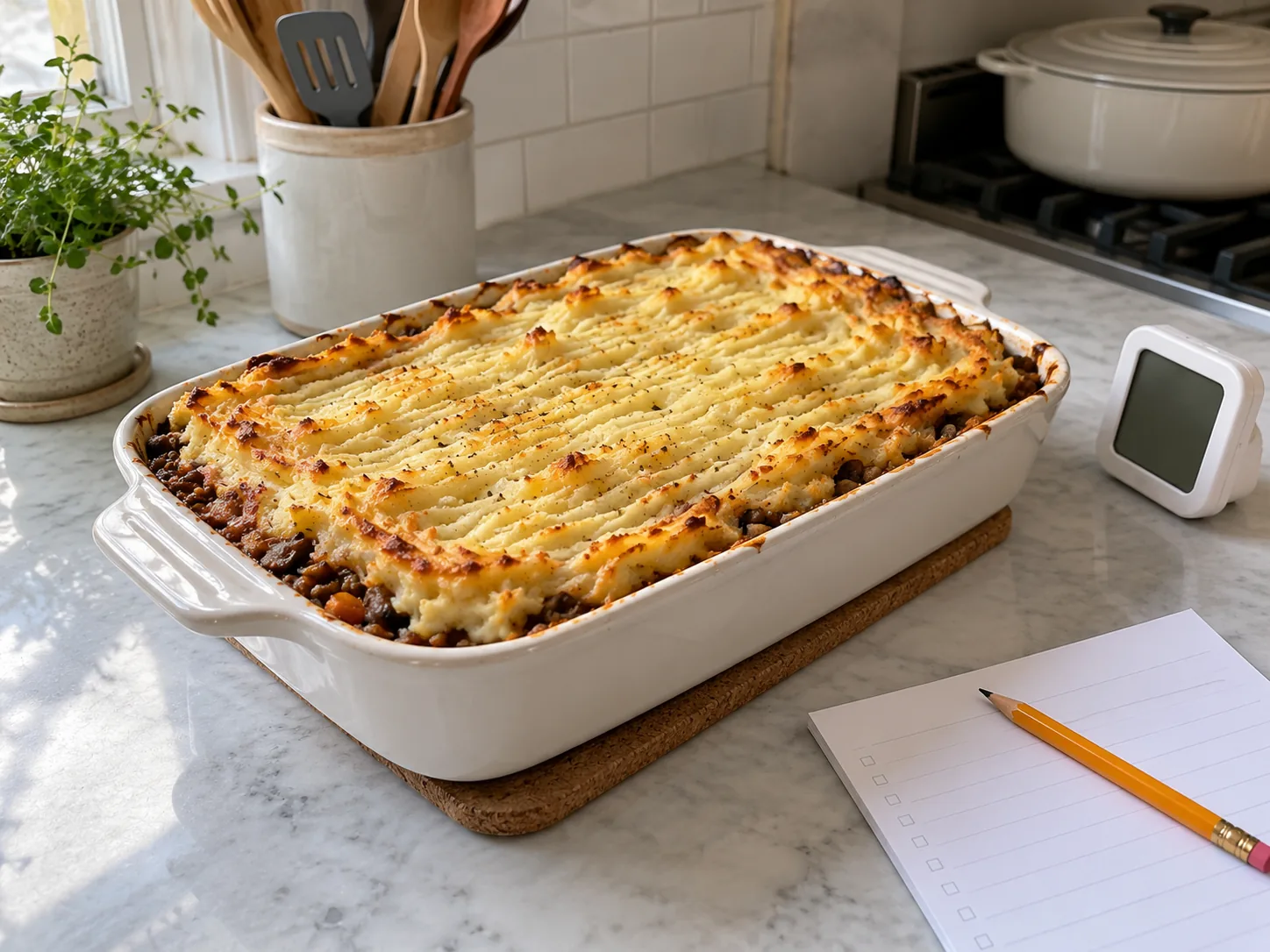
The example below is for six people eating at 5 p.m., with one oven and a stovetop. It assumes mushroom-and-lentil shepherd's pie as the main, a stovetop vegetable, bread served without reheating and dessert prepared the day before. It does not include a whole turkey; a turkey menu needs its own thawing, cooking and resting schedule.
This is a worked timing example, not a complete recipe. Use a complete recipe for your chosen main, and change the timeline before shopping if it calls for different equipment or timings.
One week before: give each dish a job
Confirm the number of people and ask about dietary requirements. Choose one main, the sides you want with it and dessert. Record the actual recipe yield, pan size, oven temperature, preparation time, cooking time and rest for each.
Check the pans against the oven shelves. Two dishes that fit separately may not fit side by side. Set aside the right serving utensils, too; the spoon for the main should not already be occupied by the vegetables.
Two days before: shop and clear space
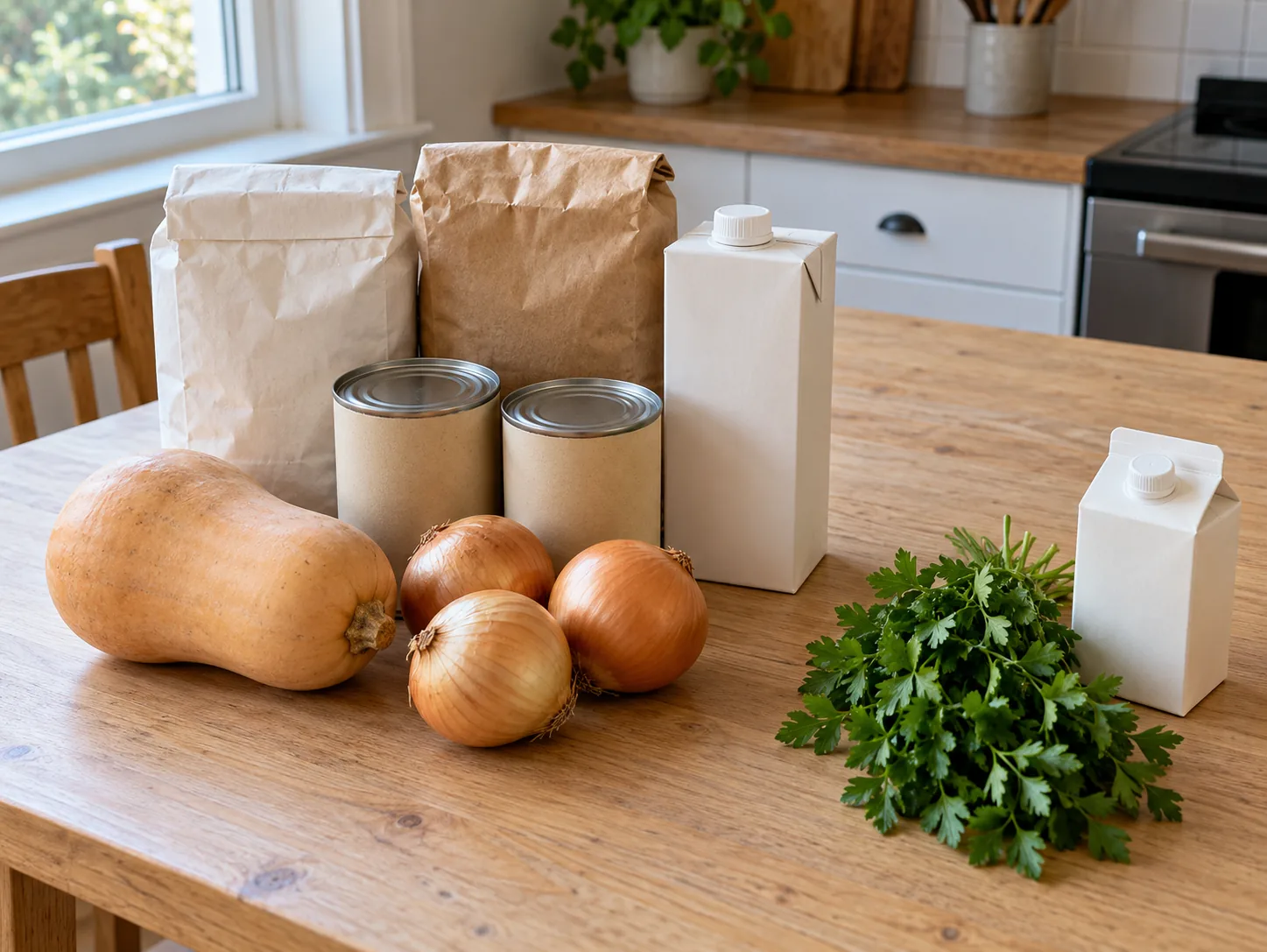
Shop from the combined ingredient list, checking what is already in the kitchen. Read package labels for ingredients that affect your guests, including stocks, sauces and dessert toppings.
Clear refrigerator space for prepared food and leftovers. Put shallow containers and their lids together now, while finding a matching lid is still a small job. For already-chilled portions, I recommend the Rubbermaid Brilliance Glass storage containers; follow their glass and lid care instructions. Keep a space in the sink or beside it for used utensils.
The day before: finish one whole task
Make the dessert according to its recipe, including cooling and storage. Set the table and put a small note in each serving dish naming what belongs there. Prepare only the ingredients your recipes allow you to hold ahead, and refrigerate perishables promptly.
I prefer finishing dessert to starting several dishes that all need attention tomorrow. A completed loaf in its container leaves one less pan competing for the oven.
A 5 p.m. dinner plan
- 2:45 p.m.: Read the main recipe from start to finish, gather the equipment and measure the ingredients. Have the cooked, drained lentils it requires ready; cooking dry lentils is an additional job.
- 3:15 p.m.: Begin the shepherd's pie. Its written sequence allows about 90 minutes, including a 10-minute rest; starting now leaves a little flexibility rather than a guaranteed finish time.
- During the main's cooking: Wash up the preparation equipment and set out bread, water and serving utensils. Leave refrigerated items chilled until needed.
- Near serving time: Cook the stovetop vegetable according to its recipe, working backward from its stated duration.
- Before serving: Check the pie is bubbling and reaches 165°F in the center, then give it its full 10-minute rest. If food finishes early, keep it at 140°F or above until serving.
A timer reminds you to check; it does not prove that food is ready. I recommend the OXO Digital Triple Kitchen Timer for keeping separate jobs visible, and the Lavatools Javelin PRO Classic thermometer for checking food temperature. Keep a note beside the timer identifying each countdown.
Leave room for the meal to run late
If the main needs longer, give it longer. Put out the bread and water, tell everyone the revised time and finish the food properly. Refrigerate perishable leftovers in shallow containers within two hours, or one hour above 90°F; the dishes can be washed after the food is put away.
Make the timeline visible to a helper
Use one page for the final afternoon, with a line for each active job and the pan or burner it needs. Mark whether a time is a start, a check or a serving target. Start the main at 3:15 and check the main at 4:30 are different instructions; a helper should not have to guess which action a number represents.
Place that page where it can be read without handling a phone over raw ingredients. Beside it, keep the actual recipes. The timeline coordinates them but does not replace their quantities, temperatures or doneness checks. If you change the menu, revise the page before the day begins rather than asking everyone to remember an exception.
Build a fallback that needs no new cooking
Choose the first thing you will simplify if dinner runs late. Bread that can be served as it is, water already on the table and dessert already finished give you breathing room without adding a second hot dish. A fallback works best when it removes work rather than creating another recipe to rescue the first.
For the six-person example, the main’s proper finish still takes priority over the planned 5 p.m. serving time. Write down who will check it, who will finish the stovetop vegetable and who will clear a serving space. Three named jobs are easier to coordinate than a roomful of people asking whether anything needs doing. After dinner, note the bottleneck you actually encountered so next year’s plan has one useful improvement.