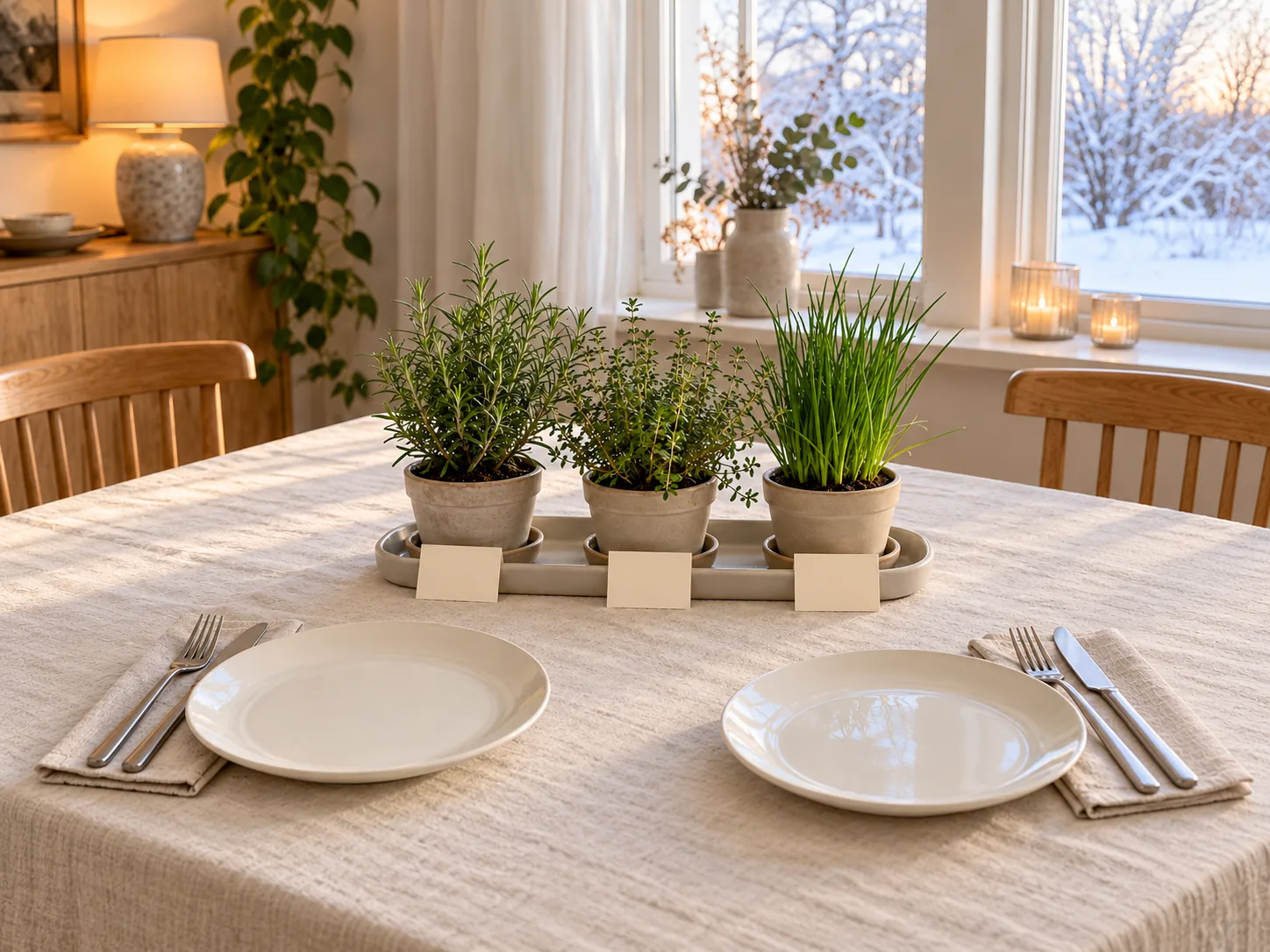
Three small herb pots can give a winter table some green without leaving you with a decoration to store until next year. Keep the plants in their own pots, cluster them on a washable tray and return them to a suitable growing spot after dinner. The table is their evening outing, not necessarily their new home.
Choose herbs you actually cook with. Rosemary, thyme and chives make a useful starting group: one for a few chopped leaves in a savory dish, one for a small sprig, and one to snip over potatoes or eggs. You do not need all three if a single thyme plant fits your table and your cooking better.
Buy the herbs as food plants
Start with correctly identified culinary herbs sold for edible use. Keep their plant labels so you know what you brought home and can find the care instructions again. Avoid substituting decorative holiday greenery or an unidentified plant that happens to smell familiar.
If a plant is labeled for decoration only, leave it in that role. Ask the seller when its food-use status is unclear. The National Pesticide Information Center explains that pesticide directions depend on the plant and intended use. A decorative plant is not made suitable for eating simply by removing its ribbon and washing the leaves.
For plants you treat yourself, use only a product whose label allows that edible crop and follow its directions. Where a harvest waiting period applies, keep it with the plant's care note; NPIC describes that interval here. You do not need a spray or treatment just to arrange a centerpiece.
At the shop, choose a plant whose size leaves space for dinner. A large rosemary topiary might suit a sideboard but obscure the person across a small table. Check that the pot is stable and that the foliage is not draped over the area where plates will go.
We may earn a commission from purchases through these links. Amazon search links open comparison results; check the selected item’s suitability.
After the gathering, take the edible herbs back to the kitchen before harvesting. Clean herb scissors can help with small stems; follow the plant’s food-use instructions.
Gather a small, workable set
For one low centerpiece, set out:
- Two or three culinary herb plants, each in its own roughly 4-inch nursery pot with drainage holes.
- A watertight saucer for each pot.
- A clean, washable tray large enough to hold the saucers without balancing them on its edge.
- A cloth for wiping the outside of the pots and tray.
- Small paper cards and a pen for the herb names.
The pot size is a shopping starting point, not a requirement for every plant. Use a larger tray for larger pots, or reduce the group to two. Leave the plants in suitable existing pots for the gathering; repotting is a separate job that may scatter compost just as you are setting the table.
I prefer individual saucers because each plant can be lifted out for watering. They also let you keep a thirsty pot separate from one whose compost is still damp. A deep decorative bowl hiding all three pots makes that harder to see.
Put the arrangement together before setting the food out
Water only the plants that need it, following their care requirements, and let excess water drain away before bringing them to the table. Empty the saucers rather than letting the roots stand in the runoff. Wipe soil from the outside of the pots and the underside of the tray.
Arrange the pots at the center of the tray with their saucers underneath. Give the tallest plant the back position on a sideboard, or keep the whole group low enough for conversation on a dining table. Sit down briefly to judge the height from a guest's view.
Write the herb names on separate cards beside the pots. Tuck any ribbon around the outside of a pot rather than spraying, glittering or painting the leaves. The green plants supply the decoration; the edible parts do not need a coating.
Keep soil, drainage water and plant-care tools away from serving dishes, bread baskets and utensils. Wash your hands after handling pots or compost and before preparing food. If the table is crowded, move the entire tray to a sideboard instead of squeezing it between hot dishes.
We may earn a commission from purchases through these links. Amazon search links open comparison results; check the selected item’s suitability.
Reserve places for the actual platters before deciding how much decoration the table can hold.
Tie gift ribbon around the outer holder, leaving the edible leaves clear. Remove the decoration before harvesting or moving the plants.
Give the plants a better place after dinner
A room that looks bright to you can still be too dim for herbs. Iowa State University Extension identifies light as a frequent limit indoors and recommends growing different herbs in separate containers. Rosemary can be more demanding indoors than thyme or chives. A centerpiece is not a promise that every plant will thrive on the same kitchen shelf.
Choose the growing location before buying the plants. A sunny window or appropriate supplemental plant lighting may be needed, especially through winter. If you have neither, keep the project to a herb you plan to harvest soon rather than buying a collection you expect to last indefinitely.
| Herb | A practical use after the meal | Care detail to retain |
|---|---|---|
| Culinary rosemary | Finely chop a small amount of leaves for roast potatoes. | Give it strong light; do not assume a dim dining room will sustain it. |
| Culinary thyme | Add leaves to mushrooms or a small pan of gravy. | Let the pot's moisture guide watering rather than automatically watering all pots together. |
| Chives | Snip over eggs, potatoes or a bowl of soup. | Keep the plant in its own draining pot so its care can be adjusted separately. |
The University of Maryland's indoor-herb guide emphasizes drainage, light and avoiding heat vents, drafts and temperature extremes. Thyme needs its soil to dry between waterings. Follow the requirements of each herb rather than watering by a fixed daily calendar.
Bring the tray back to the growing spot when dinner is over. Remove decorative wrapping if it obstructs drainage. A plant leaning toward the light is a reason to review its location, not to keep rotating it around a dark table and hope that is enough.
Harvest in the kitchen, not over the plates
Take the herb you need to a clean preparation area. Use clean scissors or a knife, keep the pot and soil separate from the cutting board, and harvest lightly. For thyme and chives, Iowa State recommends taking no more than the top third of growth at a harvest. Do not strip a small centerpiece bare to supply a recipe that needs a large bunch.
Wash the harvested herbs under running water and dry them with a clean towel before preparing them. FDA's produce guidance recommends running water rather than soap or produce wash. Washing reduces contamination; it does not turn an unidentified or decoration-only plant into an edible one.
Use the amounts called for in your recipe. Fresh leaves, dried herbs and whole woody sprigs are different measurements, so do not substitute a handful for a teaspoon without checking what the dish needs. Plan a dish that calls for the herbs you have.
Keep a little card with each pot naming the next dish you want to use it in. A thyme plant beside “mushroom gravy” has a clear place in dinner after its evening in the middle of the table.
Choose the plants for the week after dinner
Think about the meals you expect to make after the gathering. A pot of chives is useful if you enjoy cutting a few stems for potatoes or eggs; a large rosemary plant needs a suitable longer-term place as well as a recipe. Buying every herb that looks attractive can leave several plants competing for the same small bright spot.
Keep the plant labels with the arrangement. They help you distinguish care requirements and avoid treating three separate pots as though they share one watering schedule. Empty saucers and clean the tray before it returns to the table.
Treat harvesting as food preparation
Move the chosen pot back to the preparation area before clipping herbs. A dining table with plates and glasses is not the best place to manage soil, runoff or plant debris. Keep the clean scissors and harvested leaves separate from the pot, then follow the preparation instructions in the recipe.
After dinner, check the plants rather than leaving them in the decorative arrangement by habit. Remove any wrapping that interferes with proper drainage or care. The successful centerpiece is one you can still use sensibly next week, not one that stays arranged at the expense of the plants’ needs.