A frozen quart of sauce is useful when you need a quart. For one bowl of pasta or a little gravy over potatoes, it leaves you thawing far more than dinner needs. Freeze sauce in measured portions that match the meals you make, and label the amount as clearly as the name.
Start with a cooked sauce that has been handled safely, cool it promptly and use packaging intended for freezing. The portion size makes the sauce convenient; the ingredients determine how its texture will behave after thawing.
This article contains affiliate links. As an Amazon Associate, Fondfolk earns from qualifying purchases.
Choose the meal before choosing the container
Measure how much sauce goes into a meal you already enjoy. If two bowls of pasta take a cup of tomato sauce, a one-cup package has a clear job. If you want a spoonful over a baked potato, smaller portions make more sense.
These are starting points for packing, not fixed serving sizes:
| Amount in one package | A possible use | What to establish first |
|---|---|---|
| ¼ cup | Gravy over one plate or a small addition to another dish | Whether that amount suits the meal |
| ½ cup | Sauce for one pasta bowl | The amount your pasta recipe actually needs |
| 1 cup | Sauce for two modest pasta portions or part of a soup recipe | The recipe's quantities and any other ingredients required |
For three cups of cooked tomato sauce, one practical split is two one-cup portions and four quarter-cup portions. That uses the full three cups and leaves both dinner-sized and smaller packages. It is more flexible than freezing six identical portions you never quite need.
We may earn a commission from purchases through these links. Amazon search links open comparison results; check the selected item’s suitability.
Use US measuring cups for these quantities. If a tray has marked cavities, confirm what each mark means instead of assuming every cube holds a tablespoon. Keep a little space above the sauce for expansion; the capacity of a container is not automatically its safe fill volume.
Match the method to the sauce
Cooked tomato-based sauces are a reasonable place to begin, using the freezing directions for the particular recipe. A smooth tomato sauce and one with meat or vegetables can need different handling and reheating details. Freeze the sauce separately from pasta when that suits the recipe.
Milk sauces need more caution about texture. The National Center for Home Food Preservation notes that milk sauces may curdle or separate after freezing; mayonnaise and some dressings can separate too. A frozen sauce can have been handled safely and still thaw into a texture you do not want.
Gravy may also separate or curdle after thawing. University of Georgia food-preservation guidance flags that quality problem. Stirring during reheating may help, but do not count on it restoring every sauce to its original consistency.
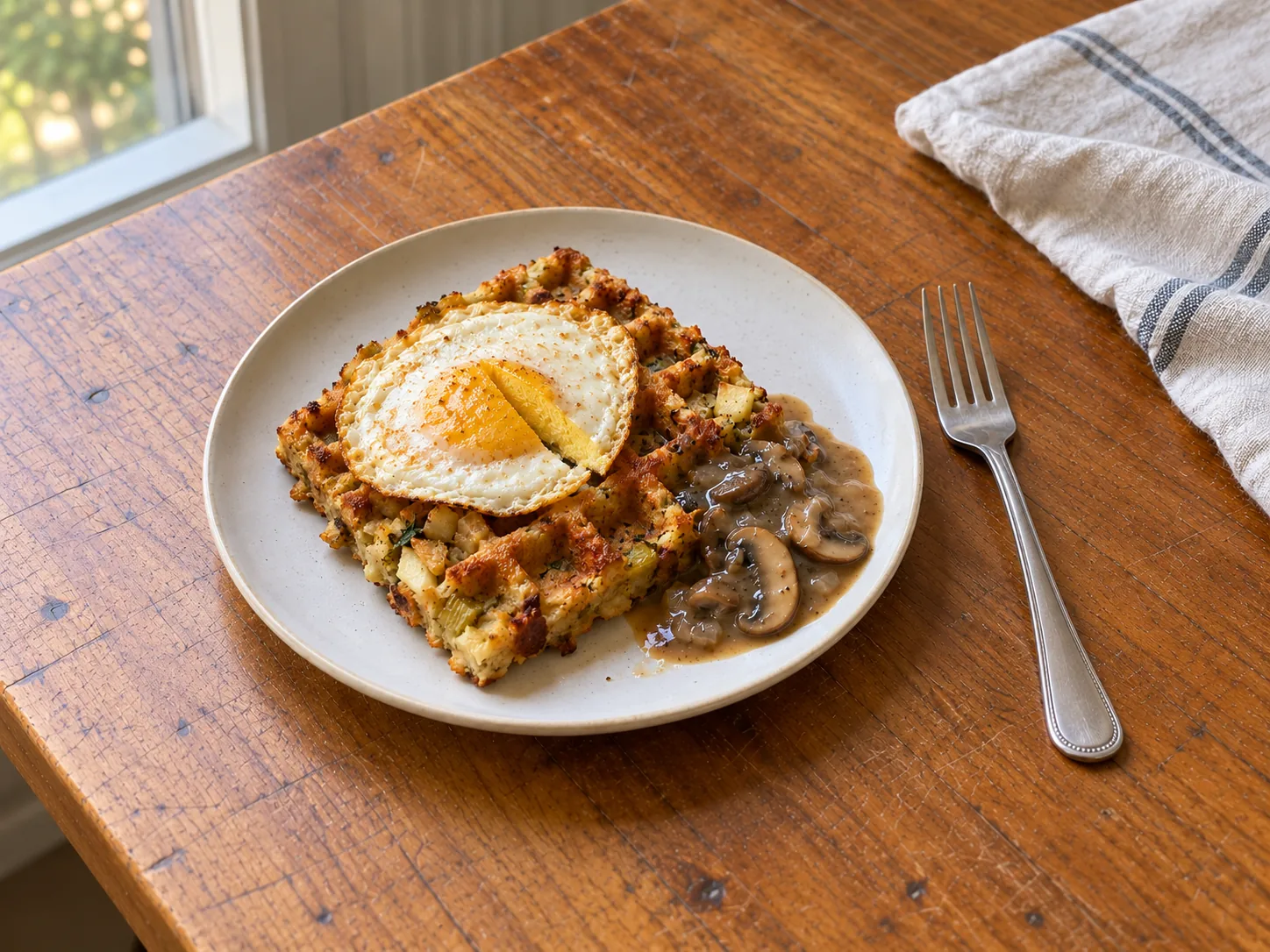
Our mushroom gravy without meat drippings contains flour, butter and vegetable stock. For a dinner the next day, its refrigerator make-ahead instructions are a useful choice. If freezing a portion for a later meal, label it as mushroom gravy with wheat and milk, and allow for a possible texture change. It is not interchangeable with a plain tomato sauce just because both fit in the same tub.
For a recipe designed to have cream or another delicate finish added after thawing, keep that finishing ingredient out until directed. Do not strip ingredients from an unfamiliar recipe and assume the remaining sauce has the same method or yield.
Cool first, then fill the freezer portions
We may earn a commission from purchases through these links. Amazon search links open comparison results; check the selected item’s suitability.
FoodSafety.gov recommends putting cooked food away promptly, within two hours, or one hour if exposed to temperatures above 90°F. Divide a large pan of sauce among small, shallow containers for rapid cooling. Hot food can go directly into the refrigerator in suitable containers; it does not need to reach room temperature on the counter.
Keep the refrigerator at 40°F or below and the freezer at 0°F or below. Once the sauce is chilled, measure it into the freezing containers. The refrigerator storage guide explains the cooling step in more detail.
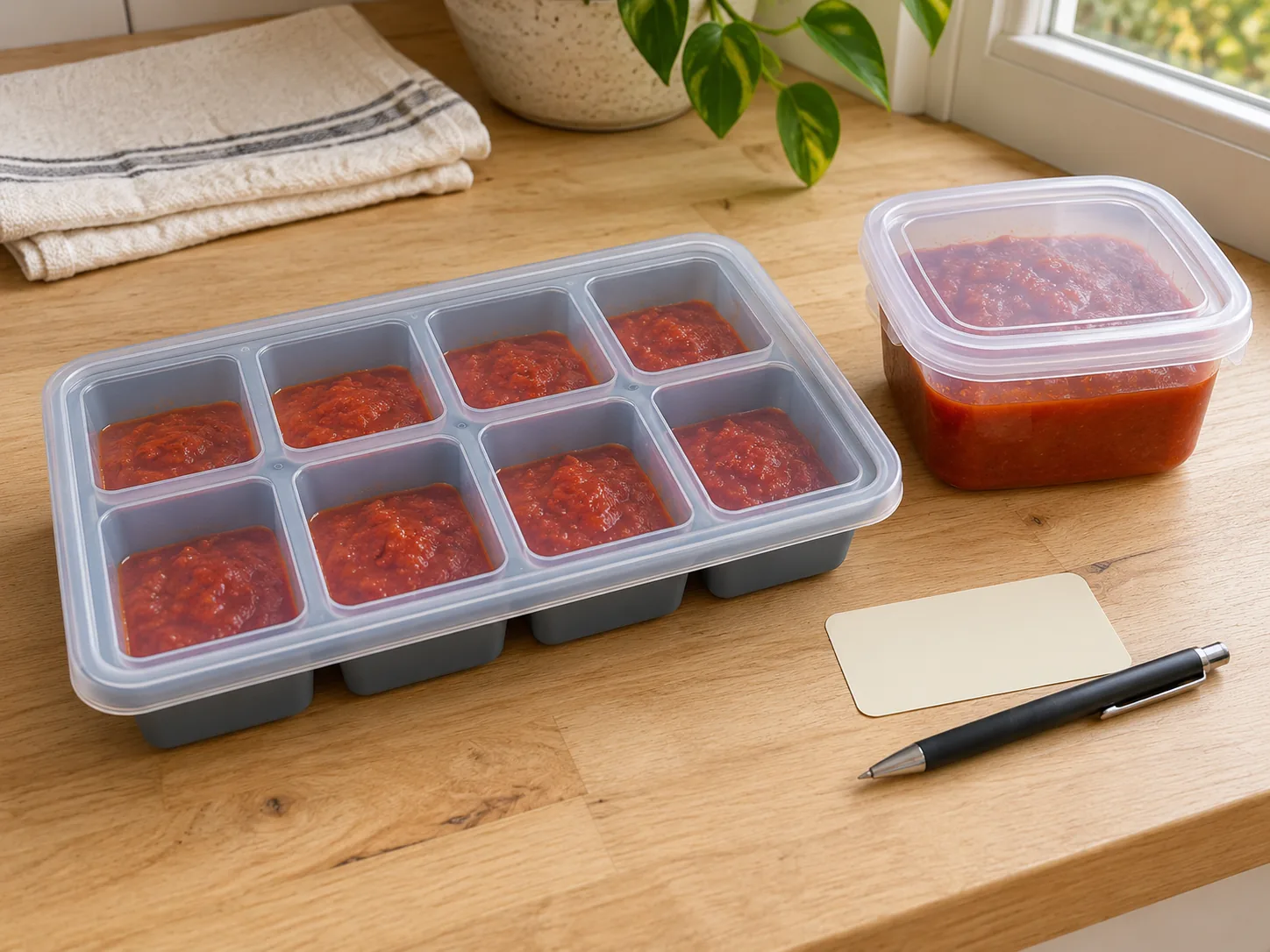
Use clean, freezer-rated containers or bags, and choose a food-contact freezer tray if making small blocks. NCHFP's container guidance distinguishes suitable freezer packaging from ordinary glass jars or thin cartons that may break or give poor protection. A washed jam jar is not automatically a freezer container.
I recommend Rubbermaid Brilliance Glass containers for transferring sauce that is already chilled. Follow the glass-care instructions: avoid sudden temperature changes, cool hot glass before refrigerating or freezing, and let it become comfortable to touch before attaching the plastic lid. Use another suitable container for prompt cooling if necessary.
Leave the expansion space specified for the container and food, or use its freezer fill line. The NCHFP headspace table shows why a single gap does not fit every pack: the amount varies with the contents, container size and opening. Do not fill a rigid container to the brim or press the lid against the sauce.
Use small containers or a covered portion tray
For individual containers, measure the chilled sauce, leave the required headspace, clean the sealing rim and close the lid. Label before the container becomes frosty. Put it on a level freezer surface with room for cold air to circulate as it freezes.
For portion trays, fill the cavities to the permitted level, cover as directed and freeze on a level surface. Once the portions are solid, release them according to the tray's instructions and promptly transfer them into a labeled freezer bag or container. Remove excess air from a bag before sealing, without crushing the portions. Return them to the freezer immediately.
The outer package needs the portion size too: “Tomato sauce — four blocks, ¼ cup each” is more useful than “sauce.” Do not leave uncovered cubes in a tray indefinitely, where they are exposed to the freezer's dry air and other foods.
Use small freezer containers already in your cupboard when their sizes match dinner. A tray earns its space when you regularly need portions smaller than those containers hold.
Keep the original date with the sauce
Write the sauce name, quantity, original cooking date and freezing date. Add relevant ingredients and any finishing instruction, such as “add cream after reheating” only when the actual recipe calls for it.
Freeze suitable sauce while it is still within its refrigerated storage limit; do not wait until its history is uncertain. For the cooked leftovers covered here, the usual refrigerator window is three to four days, with any shorter recipe-specific limit taking priority. Freezing does not erase earlier time out of safe temperature control or make mishandled food safe.
FDA explains that freezing stops bacterial growth but does not kill most bacteria. Properly handled food kept continuously at 0°F remains safe, while its quality can decline. Use the recipe's freezer-quality guidance instead of giving every sauce the same shelf-life promise.
I prefer to freeze the extra portions on cooking day and thaw only what the next meal needs. Keep older packages at the front. A short note on your meal plan—“use one cup of tomato sauce”—gives that labeled container somewhere to go.
Thaw only what you need and reheat properly
Thaw a portion in the refrigerator, keeping it in a container that will catch leaks. Allow extra time for a larger block; do not leave it on the counter to hurry it along. Follow glass-container instructions and do not force out a frozen block with a knife or use hot water against cold glass.
Transfer the thawed sauce into appropriate cookware. USDA recommends reheating leftover sauces to a rolling boil; leftovers, including any meat or dense pieces in the sauce, need to reach 165°F. Stir as it heats and measure the food rather than the pan. Reheat the portion for that meal instead of warming every package.
Use thawed sauce promptly and keep its original dates visible. On the plate, the amount should suit dinner. In the freezer, the remaining portions should still be separate, labeled and ready for their own meal.
Make a portion map on paper first
List two or three meals you actually make and the sauce amount each needs. Then choose packaging sizes that match those amounts. For example, one dinner might use two small blocks while another uses one larger container. Mark the amount on every package so the number of pieces does not have to be guessed later.
Use measured sauce volume rather than a tray’s advertised number of cavities as the only guide. Individual wells can differ, and a full well may need headspace according to its freezer-use instructions. Keep the manufacturer’s filling and removal directions with a reusable tray.
Label the finishing step before freezing
If a particular recipe directs adding a component after reheating, write that exact instruction on the portion. Do not invent a new finishing step merely because a sauce contains cream or cheese. Different sauces have different freezing suitability and methods.
When a package is used, remove it from the freezer inventory so another person knows what remains. Keep the original cooking date alongside the freezing date rather than replacing it. A small accurately labeled supply is easier to use than a freezer full of anonymous blocks whose amounts and histories are uncertain.