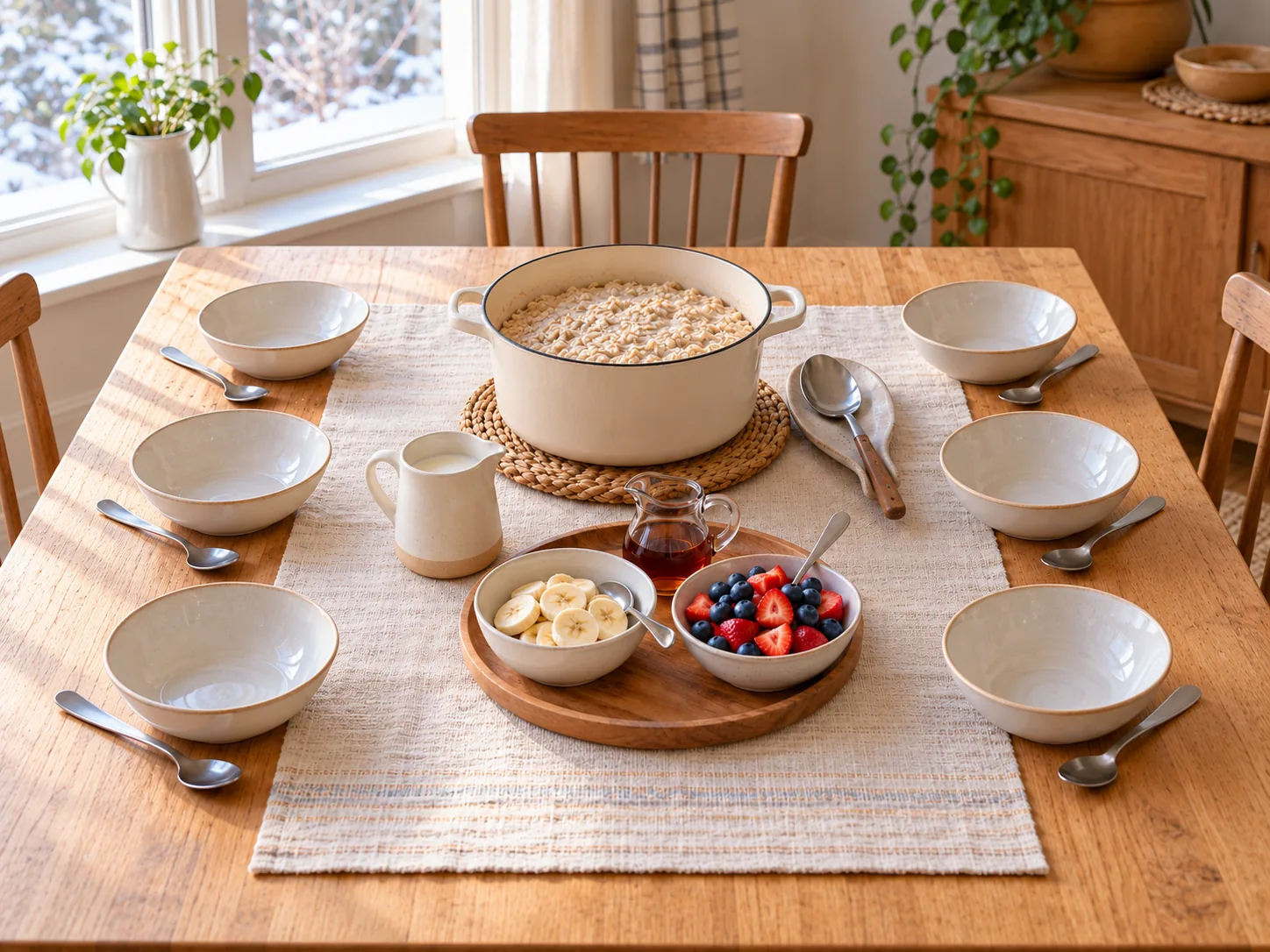
A pot of plain oatmeal can feed six people without asking them to agree on breakfast. Put sliced banana, berries, syrup and milk beside it, and each bowl can be finished at the table. Keep the oatmeal unsweetened so the person who wants a few berries is not starting with someone else's brown-sugar breakfast.
Make the pot close to the time people plan to eat. A breakfast tray can wait with bowls and spoons laid out; cooked oatmeal and a jug of milk need temperature control. If your guests wake several hours apart, two smaller pots make more sense than one pot left beside the coffee maker all morning.
This article contains affiliate links. As an Amazon Associate, Fondfolk earns from qualifying purchases.
Set up the bowls before heating the water
Choose a place where people can serve themselves without reaching across the stove. Put the empty bowls first, leave room for the oatmeal, then arrange the toppings and spoons. Keep the hot pot on a suitable heatproof surface, away from the counter's edge. Carrying it from the stove is the host's job, particularly when children are nearby.
We may earn a commission from purchases through these links. Amazon search links open comparison results; check the selected item’s suitability.
I recommend Sweese divided serving dishes for toppings that your group can share. A divided dish keeps banana slices out of the syrup, but its compartments do not prevent allergen cross-contact. Use separate bowls and utensils when needed. If a shared station cannot meet someone’s needs, discuss a separately prepared portion with them. The buffet-label guide has a simple place to record the actual ingredients.
You do not need a topping for every possible preference. Two fruits, one sweetener and one optional crunchy addition give people a choice without producing a row of half-used packets.
Plain stovetop oatmeal for six
Makes: 6 breakfast portions. Allow: About 20 minutes, depending on how quickly the water heats and how you like the oats.
We may earn a commission from purchases through these links. Amazon search links open comparison results; check the selected item’s suitability.
Use: A pot holding at least 4 quarts, a spoon, US measuring cups and spoons, and six bowls. The Lodge 6-quart enameled Dutch oven is one option I recommend when it is already part of your kitchen; it leaves room for stirring. Its weight does not replace checking the food's temperature if breakfast will be held hot.
This water-based formula scales the old-fashioned oat method from Quaker's preparation guide. Use old-fashioned rolled oats, not instant packets or steel-cut oats. Those products have different instructions.
Ingredients
- 3 cups old-fashioned rolled oats
- 6 cups water
- ¼ teaspoon fine salt, optional
- Additional hot water, 2 tablespoons at a time, only if needed to loosen the cooked oatmeal
Method
- Put the 6 cups water and optional salt in the pot. Bring to a boil over medium to medium-high heat, watching the pot rather than leaving it unattended.
- Stir in the oats. Reduce the heat to maintain a gentle, uncovered simmer. Cook for about 5 minutes, stirring occasionally and drawing the spoon across the bottom so the oats do not catch.
- Taste a cooled spoonful. The flakes should be tender, with the texture you enjoy. If they need longer, keep cooking gently and stir; the exact time depends on the oats and your preferred texture.
- Remove from the heat and stir again. If the oatmeal is thicker than you want, add hot water 2 tablespoons at a time, stirring before adding more. Serve promptly, allowing individual portions to cool to a comfortable eating temperature.
For three people, use 1½ cups oats, 3 cups water and ⅛ teaspoon fine salt. Begin checking the oats after the same approximate cooking time; halving the ingredients does not mean halving the time the flakes need to soften.
A topping tray for six
These are starting quantities for six people choosing among the toppings, not six portions of every possible combination.
| Topping | Amount to set out | Prepare it this way |
|---|---|---|
| Bananas | 2 medium | Peel and slice shortly before serving. |
| Berries | 1½ cups | Rinse fresh berries under running water and drain; cut larger strawberries into bite-sized pieces. |
| Maple syrup | ¼ cup | Use a small jug or bowl with its own spoon. |
| Chopped walnuts, optional | ⅓ cup | Keep separately labeled and omit if unsuitable for your guests. |
| Milk or an unsweetened alternative | 1½ cups | Keep refrigerated until serving; set out a small amount and refill from the fridge. |
| Ground cinnamon, optional | ½ teaspoon | Offer separately with a small spoon. |
Keep the syrup out of the main pot. A little sweetness can be added to a finished bowl, but it cannot be removed from everyone else's oatmeal. Likewise, a milk alternative has its own ingredient list; it is not automatically suitable for every guest who avoids dairy.
For fruit preparation, FDA recommends plain running water rather than soap or produce wash. Start with clean hands, utensils and bowls. Follow the package instructions for any prepared topping you substitute.
Oats and toppings need their real labels available. If someone requires gluten-free oats, choose a product labeled for that requirement and discuss preparation separately. FARE's cross-contact guidance explains why a shared spoon or bowl can matter even when the ingredient list seems suitable.
Do the quiet jobs the night before
Measure the dry oats into a covered bowl. Set out the pot, measuring jug, serving bowls and spoons. Decide which toppings you are actually using, and keep refrigerated ingredients cold. Leave banana slicing until morning.
Write down a breakfast window when you arrange the visit. “Oatmeal at nine” is enough information to avoid guessing whether the first guest will appear in ten minutes or an hour. Start heating the water while you prepare the fruit and put out the dry toppings.
If everyone would rather have an oven breakfast, the make-ahead Christmas brunch offers a bread-and-egg casserole. Oatmeal suits a morning when the main job should stay on the stovetop and each person wants to choose their own finish.
Keep a short serving window
FoodSafety.gov advises keeping hot food at 140°F or above and cold food at 40°F or below. An unheated tray, a lid or a heavy pot does not establish that either condition is being met.
Serve the oatmeal promptly. For a brief delay, keep it on gentle heat, stir and verify the temperature with a food thermometer. Add a little hot water if it thickens, as described in the recipe. For guests arriving much later, cool their portions promptly and reheat when they are ready, or make the three-person batch later.
Refrigerate cooked oatmeal and other perishable leftovers promptly in small, shallow containers, within 2 hours, or 1 hour if exposed to temperatures above 90°F. Hot food can go directly into the refrigerator in suitable portions and containers. Discard perishables that have exceeded those limits without temperature control; do not leave breakfast out until the final guest comes downstairs.
Save the plain portion separately
Keep leftover oatmeal apart from served fruit, milk and nuts. Label its original cooking date, refrigerate at 40°F or below and use within 3–4 days, or follow a shorter applicable ingredient instruction. This follows the same federal guidance for cooked leftovers; adding a fresh topping does not restart the storage period.
To reheat a portion, put it in a suitable saucepan with a little water, beginning with 2 tablespoons per cup of cooked oatmeal. Heat gently, stirring and adding more water if needed, until it reaches 165°F throughout. Add fresh toppings after reheating. The cooked-food storage guide explains why keeping the components apart helps tomorrow's meal.
Once breakfast is finished, put away any unserved dry toppings and keep remnants from the shared tray separate from their original packages. Wash the few serving bowls. The pot has supplied the shared part of the meal; the banana, berries and syrup have left each guest room to make it their own.
Make the plain bowl easy to serve
Put bowls and spoons where guests can reach them without passing over the hot pot. Keep an adult in charge of moving and serving the hot oatmeal when needed. Allow enough space for someone to put a bowl down before choosing toppings instead of balancing it beside several open containers.
Name the base plainly and keep its optional salt decision clear. An unsweetened base gives people room to choose a modest topping; it should not be described as suitable for every dietary need without checking the oats and the other ingredients.
Refill small topping portions
Set out a little of each chosen topping and keep suitable reserves stored properly. This keeps the serving area readable and makes it easier to replace a nearly empty dish with a clean one. Give milk, syrup, fruit and any nuts their own utensils and ingredient information.
Choose the number of toppings by the space and attention you have. Three wanted options can be more pleasant than a crowded tray of ten. At the end of breakfast, separate untouched reserves from handled food and put suitable leftovers away promptly. The next morning’s convenience begins with a clean container and an accurate original-date label.