A lemon-glazed star should still taste like lemon when someone opens the box beside a molasses cookie. Choose a small assortment, give each variety its own packet or container, and arrange those packages together at the end. The box can look generous without asking every cookie to share the same air all week.
Three kinds are plenty for a thoughtful gift: a fruit-and-chocolate cookie, a spiced cookie and a simple decorated shape. Start with recipes you know how to bake, then plan the quantity, storage and handoff before buying the box.
This article contains affiliate links. Fondfolk may earn a commission if you buy through them. As an Amazon Associate, I earn from qualifying purchases.
Give each cookie a reason to be there
Choose differences the recipient will enjoy. A chewy round cookie and a flat glazed star bring different shapes to the box; another round cookie can earn its place through ginger and molasses. You do not need peppermint, orange, coffee, almond and caramel competing in one small gift.
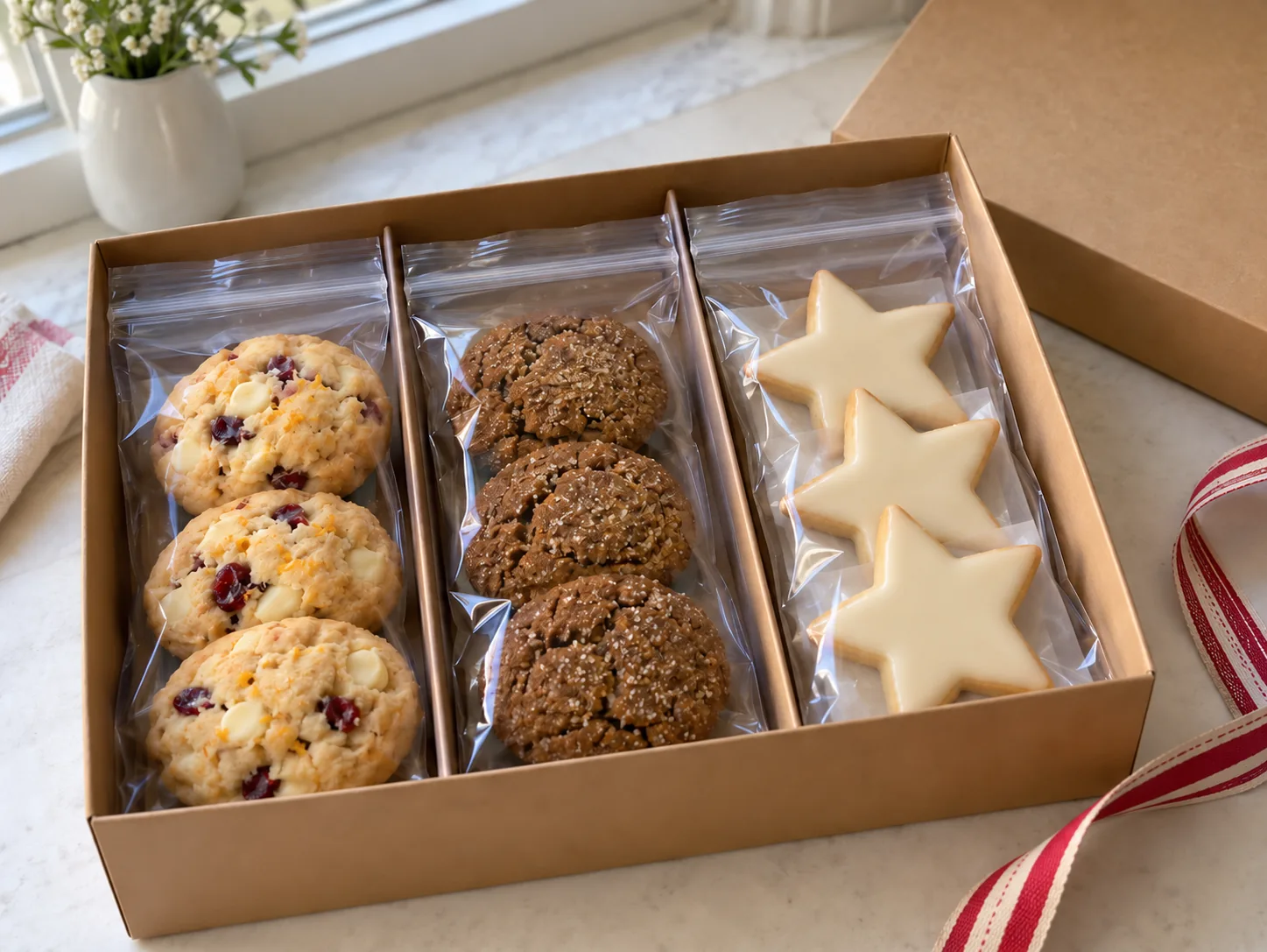
Here is a three-variety plan using Fondfolk's cranberry-white-chocolate cookies with orange, molasses cookies with orange sugar, and vanilla stars with lemon glaze. Treat it as an assortment to assemble from the individual recipes, with the cranberry cookies in one packet, the spice cookies in another and the stars protected separately.
| Cookie | What it adds | Packing detail |
|---|---|---|
| Cranberry-white-chocolate with orange | Chewy fruit and small pieces of chocolate | Pack fully cooled cookies together in their own sealed packet. |
| Molasses with orange sugar | Ginger, cinnamon and a darker round cookie | Keep separate so its spices remain with these cookies. |
| Vanilla stars with lemon glaze | A flat decorated shape and a lemon finish | Let the glaze dry completely; protect the points and separate layers with parchment. |
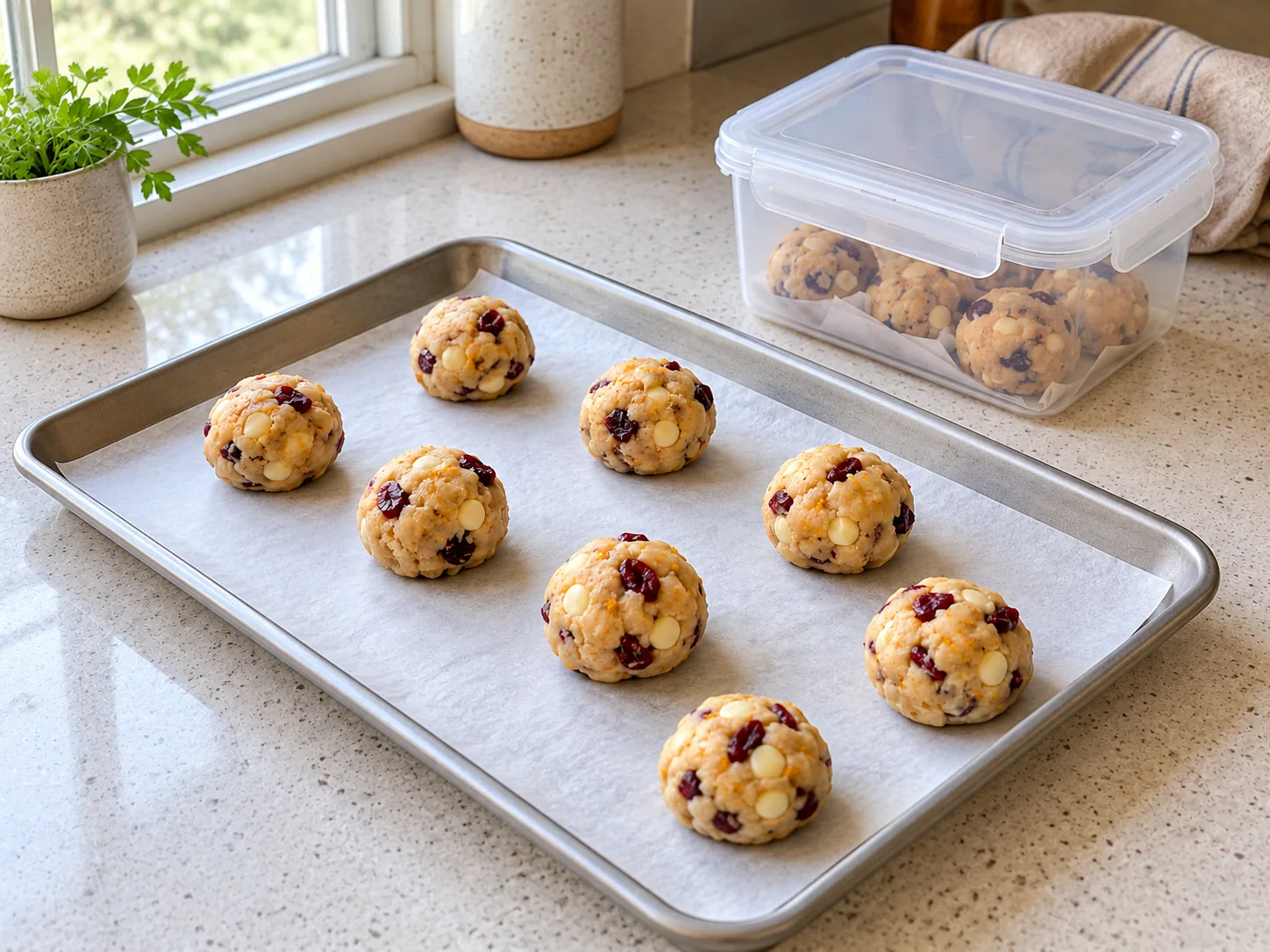
Our cranberry cookie freezer method lets you bake only the portions needed for the gift. Use the full recipe's spacing and doneness instructions, even when you are baking fewer cookies.
If three homemade varieties make the project too large, make one and choose two purchased cookies whose ingredient and storage information you can include. The recipient gets a clear assortment, and you have fewer cooling racks to find room for.
Count the gifts before counting recipes
For four boxes containing nine cookies each, you need 12 cookies of each variety, or 36 cookies total. Write that allocation down before the first finished batch starts disappearing into other plans.
The written Fondfolk recipes yield 28 cranberry cookies, 30 molasses cookies and about 24 vanilla stars, with the star count depending on the cutter and rerolling. Those yields are larger than this four-box plan. Decide where the rest will go rather than making every box larger just to empty the trays.
For the cranberry dough, you can freeze the unbaked portions you do not need using the linked method. For the other recipes, follow their own make-ahead directions or plan a smaller assortment from the start. Do not divide baking times in proportion to a smaller batch.
Count the intact, fully cooled cookies before promising the final number of boxes. If you have ten good stars, four boxes cannot each contain three. Give each box two stars and revise the other counts, or make fewer boxes. Keep the finished boxes consistent unless a recipient has requested a different assortment.
| Variety | Finished cookies available | Cookies per box | Number of boxes | Set aside for another use |
|---|---|---|---|---|
| __________ | __________ | __________ | __________ | __________ |
| __________ | __________ | __________ | __________ | __________ |
| __________ | __________ | __________ | __________ | __________ |
Separate moisture as well as flavor
A paper divider keeps cookies in neat rows, but it does not create a sealed storage compartment. King Arthur Baking explains that crisp cookies can absorb moisture from soft ones, while strongly flavored cookies can affect neighboring varieties. Store each type in its own closed food-safe package before placing the packages inside the decorative box.
If you add a crisp purchased shortbread, keep it sealed separately from the chewy cranberry cookies. Put a peppermint cookie in its own packet, too, even if both cookies happen to be crisp. A little paper cup is useful for positioning a cookie at the handoff; it is not a substitute for the storage wrapper.
We may earn a commission from purchases through these links. Amazon search links open comparison results; check the selected item’s suitability.
Keep undecorated and decorated cookies separate until you know the decoration is fully set. For Fondfolk's vanilla stars, the written recipe allows about four hours for the thin lemon glaze to dry, with longer possible in humid conditions. Let the surface become dry to a light touch before layering, then place parchment between the layers. Do not press the lid against the glaze to find out whether it is ready.
Let the baked cookies finish cooling
We may earn a commission from purchases through these links. Amazon search links open comparison results; check the selected item’s suitability.
Packaging begins after cooling, not when the tray leaves the oven. Follow the recipe's time on the sheet, then move the cookies to a rack as directed. A warm center can outlast a cool-looking edge.
Keep the varieties identified as they cool so their ingredients and dates stay with them. A note beside each rack is enough. Finish the glaze on cold cookies and give it its drying time before moving to the packing table.
For holding already-cooled cookies, I recommend Rubbermaid Brilliance glass containers, choosing the size and lid that suit the batch. Follow the glass and lid care instructions; this is a storage use, not a reason to move hot bakeware into the fridge. Sound containers you already own are sufficient.
Pack a box that closes without pressure
Lay the sealed packets beside the empty box before filling it. If the tallest stack is higher than the box, reduce the stack or use a different box. Pressing on the lid will not make a glazed star more flexible.
Use food-safe packaging intended for direct food contact. Keep decorative tissue, dried greenery, loose glitter and scented materials away from exposed cookies. Put ribbons and decorations on the outside, where they do not compete with the food or hide its label.
Set the sturdier packets flat in the base. Give the stars a supported section with no heavy stack above their points. Fill empty spaces around the packets with clean packing material so the contents do not slide during a local trip. Close the lid gently and carry the box level.
Before allocating the cookies, compare cookie gift boxes by usable internal dimensions. Allow space for separate packets so closing the lid does not press on the decoration.
Let the most demanding storage instruction govern
The three Fondfolk recipes named here use a conservative refrigerated storage limit of 3–4 days after baking, in airtight containers. Keep that instruction with these cookies; it is not a universal shelf-life claim for every cookie recipe. Packing or giving them away does not restart the count.
Bake close to the handoff, and give the recipient the actual baking date and a use-by date based on the oldest batch. If the gift includes a purchased item with a shorter instruction, use the shorter limit. Keep refrigerated gifts cold during transport and arrange a handoff where they can go into a fridge.
Avoid adding a cream-cheese-frosted bar or a cream-filled cookie simply to fill a gap. Nebraska Extension's holiday guidance keeps moist dairy desserts and cream-cheese-frosted cakes refrigerated. Adding a perishable filling requires its own recipe and cold-storage plan; the box does not make it travel like a plain biscuit.
Put the ingredients where the recipient can find them
Ask about allergies before baking. Each packet should have its cookie name, ingredients, baking date and storage instructions. Include the ingredients in packaged components such as white chocolate chips, sprinkles or decorations, and retain any relevant package information.
Separate packets help organize the gift, but they cannot undo allergen transfer during preparation. FARE warns that traces transferred through utensils or surfaces can cause reactions. If the recipient needs an allergen avoided, agree on suitable ingredients and preparation arrangements with them before choosing this assortment; do not call a shared-kitchen box allergen-free.
A simple outer note can read: “Three kinds, packed separately. The ingredients and dates are on each packet. Keep refrigerated and follow the earliest use-by date.” Inside, the cranberry cookies, molasses rounds and lemon stars each have their own place.
Pack one trial box before allocating every cookie
Use empty packets or a few fully finished cookies to check the arrangement. Close the lid without pressure, lift the box and see whether the packets shift. A box that looks generous while open may crush a glazed decoration when closed. Change the packing plan before every gift has been filled.
Count the cookies for each recipient on paper first. Keep a small allowance for a broken star or an uneven edge without quietly borrowing from the last person’s box. The recipe yields are estimates, so the gift allocation should be checked against the actual cooled cookies available.
Keep a mixed gift’s instructions understandable
Name each variety on its packet and keep its ingredients and storage directions accessible. A single note on the outer box can point to those labels, but it should not erase differences between the recipes. The most demanding storage instruction governs how the assembled gift is handled.
If a recipient needs to avoid an ingredient, separate packaging alone does not establish a suitable preparation history. Ask before baking and be accurate about the kitchen and utensils used. A smaller assortment made with clear information is a better gift than a decorative box whose contents the recipient cannot confidently identify.