Ingredients and preparation
Makes four side portions. Estimated preparation: 5 minutes; cooking: 10 minutes; total: about 15 minutes. You need a pot large enough for the beans to move in boiling water and a wide skillet for the butter finish. Ordinary suitable equipment you already own is enough.
- 500 g green beans, trimmed
- 25 g unsalted butter
- 2 garlic cloves, minced
- 1 tbsp lemon juice
- ¼ tsp fine salt
- ⅛ tsp black pepper
We may earn a commission from purchases through these links. Amazon search links open comparison results; check the selected item’s suitability.
Trim the stem ends before boiling and keep the beans whole unless they are too long for the pan. Put a colander beside the sink before you begin: the beans need to drain thoroughly before they enter the butter. A lot of clinging water will dilute the coating instead of helping it cling.
Cook the beans, then finish in butter
- Bring a pot of water to a boil. Add beans; cook 3–4 minutes until bright green and just tender. Drain thoroughly.
- Melt butter in a wide skillet over medium-low heat. Add garlic; stir 30 seconds without browning.
- Add drained beans. Toss 2 minutes until hot and coated. Remove from heat; add lemon juice, salt and pepper.
- Serve immediately. Allow about 5 minutes prep and 10 minutes cooking; bean thickness affects timing.
We may earn a commission from purchases through these links. Amazon search links open comparison results; check the selected item’s suitability.
Keep the beans moving gently rather than pressing them against the pan. Silicone-head tongs let you lift and turn a small bundle at a time; use utensils suitable for your skillet surface. The goal is a light coating on each bean, not a deep pool of sauce.
Keep the garlic pale and the lemon fresh
Garlic can move from fragrant to dark while the rest of dinner distracts you. Have the drained beans beside the stove before the butter goes in. Add the garlic over medium-low heat, stir for the stated short interval and add the beans promptly. If the garlic turns dark and smells bitter, start the butter-and-garlic stage again rather than trying to hide the taste with lemon.
Bean thickness matters more than the clock. Taste a bean after the initial boil: it should be just tender, with the texture you enjoy. Very thin beans may need less time, while thicker ones can need a little longer. Drain when they reach that point; the later two-minute toss is mainly for warming and coating.
We may earn a commission from purchases through these links. Amazon search links open comparison results; check the selected item’s suitability.
Measure the lemon juice rather than squeezing an unknown amount over the pan. A citrus press can help separate juice from seeds; a fork and a separate bowl work too. This Amazon search link opens comparison results, so check the chosen tool’s suitability. Add the measured tablespoon off the heat, then taste the finished beans before considering an adjustment.
Serve with the rest of dinner
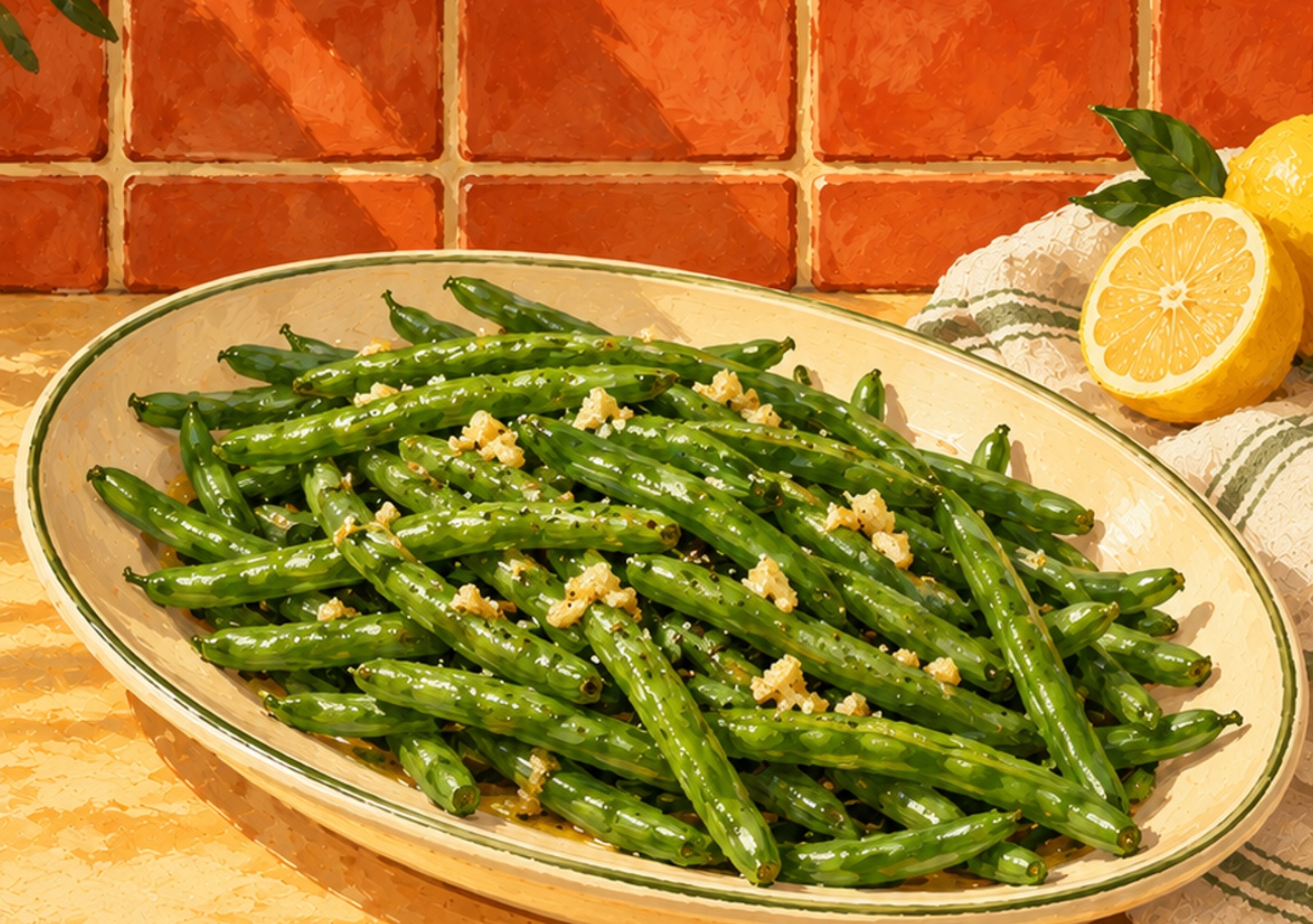
Transfer to a shallow serving platter so the beans are easy to lift alongside other dishes. That link opens Amazon comparison results; choose a food-safe vessel with room for four side portions. Do not buy another platter if a suitable plate already works.
This is a freshly cooked side, intended for immediate serving. Prepare the trimmed beans, minced garlic and measured lemon before cooking, then leave the final butter toss until the rest of the meal is nearly ready. This development recipe does not supply a tested make-ahead, storage or reheating schedule.
Contains milk from butter. This is not a vegan recipe, and no dietary or health outcome is claimed. The illustration shows a serving platter rather than a measured count or weight of individual portions.
For another vegetable on the same table, try honey and thyme roasted carrots. Unlike the beans, they use the oven, so plan the order around the other dishes.
Source note: original Fondfolk recipe development; timings are estimates and this formula has not been kitchen-tested. Artwork is an illustration.