A butternut squash can become a smooth bowl of soup; a spaghetti squash gives you strands to lift with a fork. They may share a produce display, but choosing between them starts with the dinner you want to eat.
This article contains affiliate links. Fondfolk may earn a commission if you buy through them. As an Amazon Associate I earn from qualifying purchases.
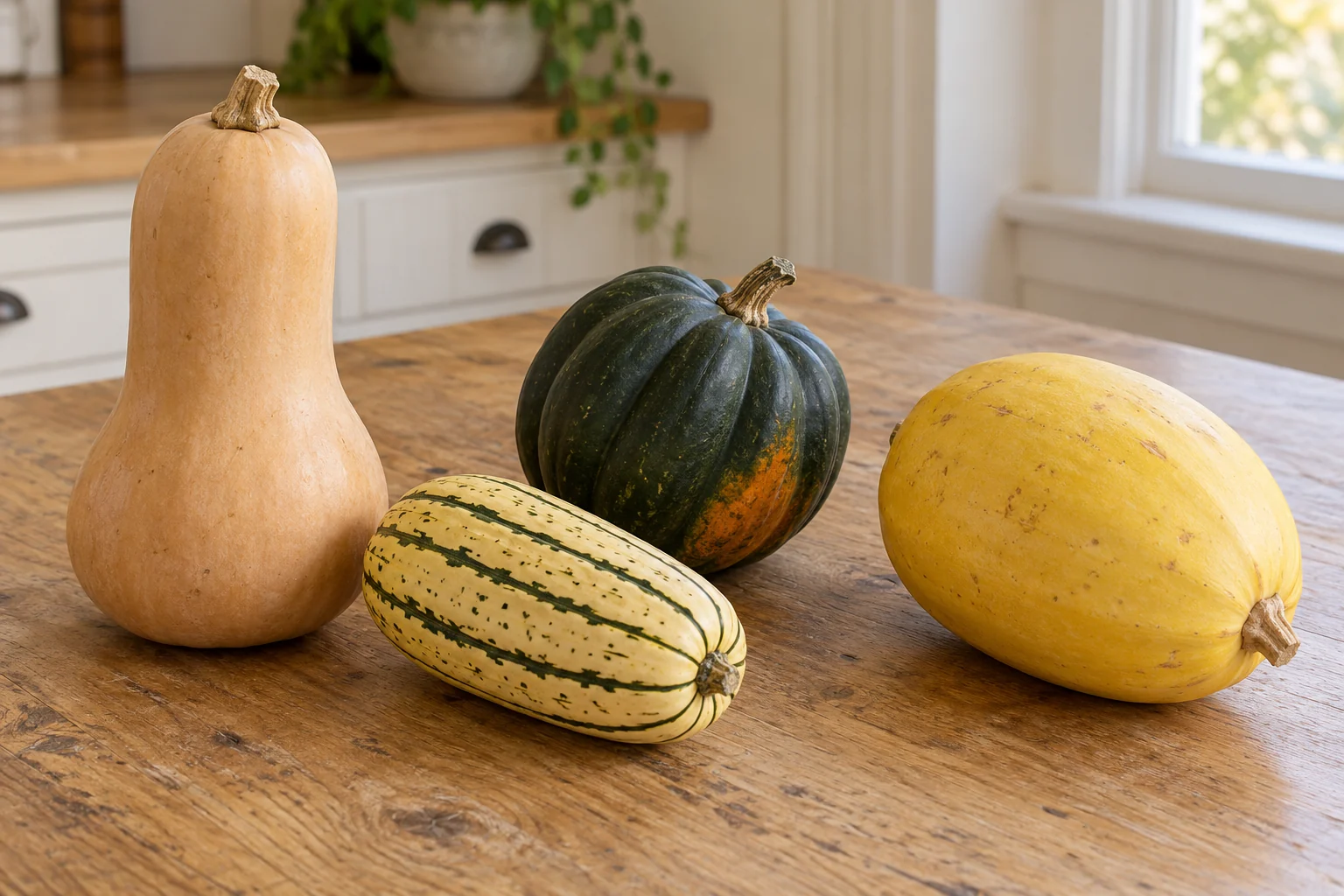
These four familiar winter squashes give you a useful range: one for soup and cubes, one for thin slices, one for filling, and one for a bowl with plenty of texture.
Butternut: choose it for soup or cubes
Look for the tan squash with a long neck and a wider, rounded base. For cubes, wash and dry it, trim the ends, separate the neck from the bulb and peel it with a vegetable peeler such as the OXO Good Grips Y-Peeler. Halve the bulb and scoop out the seeds before cutting the flesh into the size your recipe specifies.
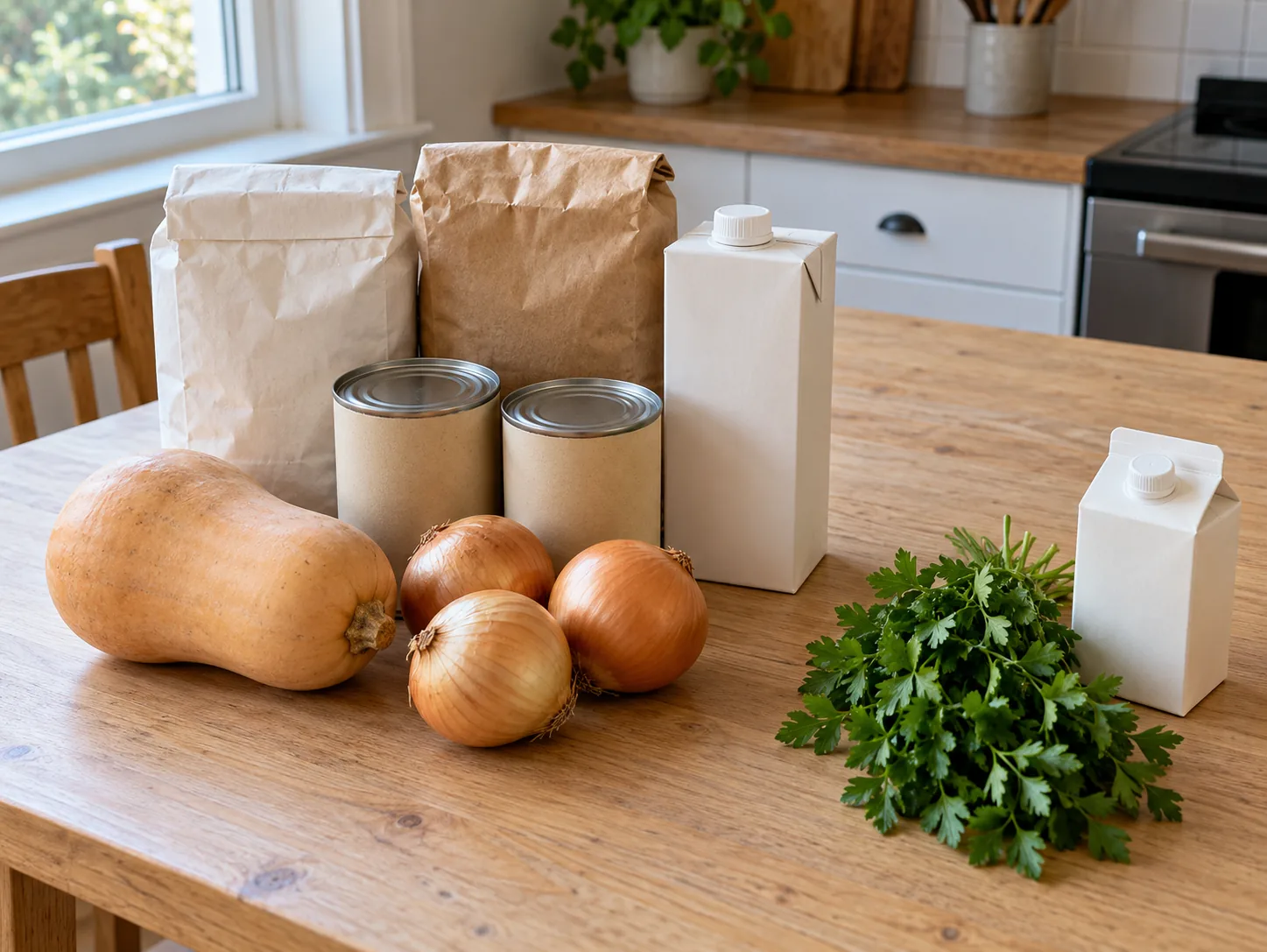
Butternut squash soup with white-bean toasts is a dinner option when you want the squash blended smooth. Its 800 grams means peeled, seeded squash, not the weight of the whole fruit. I recommend the KitchenAid dual-platform scale for weighing that prepared flesh; tare the empty bowl before adding it. The beans and toast belong to the meal, so keep them on the shopping list with the squash.
Delicata: choose it when you want to leave the peel on
Delicata is the small, elongated squash with stripes along its skin. Its edible peel lets you skip the peeling step. Wash it, halve it lengthwise, scoop out the seeds and cut it crosswise into half-moons for a recipe that calls for roasted slices.
Choose this shape when you want individual pieces beside dinner. It also gives you less peeling work than preparing butternut cubes. That is a practical reason to buy one, even before deciding on the seasoning.
Acorn: choose it for a squash half you can fill
Acorn squash has deep ribs and a tapered end; familiar green varieties often have an orange patch. Cut it into halves, remove the seeds and follow a stuffed-squash recipe that cooks the flesh until tender. The peel can stay on for this preparation.
Look at the size before you shop for a filling. Two acorn squashes will not necessarily have identical cavities. Keep any extra filling in a separate oven-safe dish and use the recipe's cooking instructions, rather than piling it into an unstable mound.
Spaghetti: choose it for strands
Spaghetti squash is oval, often with a yellow rind. Once cooked, its flesh separates into strands when scraped with a fork. Use it with a sauce or as part of a bean-and-vegetable bowl. Choose another squash when a recipe needs a smooth purée.
The strands give dinner a different texture from ordinary pasta. Let that texture be the reason to choose it, and build the rest of the meal around it.
Make the first cut manageable
Buy firm squash without soft spots or decay. Wash and dry the outside before cutting. Use a stable board, keep your hands clear of the blade and create a flat resting surface where the shape allows. If you cannot cut it securely, buy prepared squash instead of forcing a knife through it.
I recommend the Atumuryou 8-inch chef's knife for general kitchen preparation. A product recommendation does not make a difficult squash easy to cut; choose equipment you can control, and follow its maker's intended uses.
For soup tonight, buy the butternut and the beans. For roasted half-moons beside a meal already planned, choose the delicata.
Match the shopping weight to the recipe
Whole squash includes peel, seeds and the hollow seed cavity. A recipe asking for prepared flesh needs a different measurement from a recipe asking for one whole squash. For the linked soup, weigh 800 grams after peeling and removing the seeds. If buying precut squash, read the package weight and check that it describes the trimmed pieces you actually need.
As a shopping example, two 400-gram packs provide the soup’s 800 grams of prepared squash. That calculation does not predict how much usable flesh a whole squash will yield. Whole fruits vary, so weigh the prepared pieces before starting the soup and save any extra for a separate use. Do not quietly change the liquid to compensate for an unmeasured amount.
Think about shape as well as flavor
Butternut’s long neck is convenient for similarly sized cubes; its rounded base takes more trimming around the seeds. Delicata gives you relatively small half-moons with the peel left on. Acorn halves make a natural container, while spaghetti squash is useful when separate strands are the feature you want. Those shapes affect how the food fits on the tray and how it will be served.
Switching between them is more than exchanging the same weight. Spaghetti squash will not give a smooth soup the same texture as butternut. Large acorn halves will not roast on the same schedule as small delicata slices. For a different variety or cut, use instructions written for that preparation rather than keeping the original timer and hoping the centers are ready.
Prepare the workspace before the squash
Set out a stable board, a bowl for seeds, a bowl for the prepared flesh and the pan the recipe needs. Dry the rind and your hands after washing so the squash is less slippery. Keep the cutting task separate from answering a message or arranging the rest of dinner. If a piece rocks or the knife sticks, stop and reposition it; do not push down on the blade with your free hand.
Prepared refrigerated squash can be a useful choice when cutting a whole one is awkward. Keep it chilled and follow its use-by and storage directions. That convenience changes the preparation work, not the amount the recipe calls for. Once the dish is underway, judge tenderness at the thickest pieces as well as looking at the color of the surface.