“Fresh,” “frozen” and “self-basting” answer different questions. Fresh and frozen describe a raw turkey's temperature history. Self-basting tells you that a solution has been added during processing. A bird can be both frozen and self-basting, so choosing one word on the front does not finish the shopping decision.
Read the full product name, the ingredients and the storage instructions before matching a turkey to your recipe. That is especially useful if the recipe begins with a dry brine: the salt you plan to add needs to account for the bird you actually bring home.
This article contains affiliate links. As an Amazon Associate, Fondfolk earns from qualifying purchases.
Start with the recipe and the day you will cook
Decide whether you want a plain turkey to season yourself or a product prepared with added ingredients. Then work backward from cooking day to the shopping, thawing and preparation time it needs. The choice should fit your refrigerator as well as the roasting pan.
I prefer a turkey without an added seasoning solution when following a recipe written for an unbrined bird. It leaves the recipe's salt treatment easier to follow. A self-basting turkey can be a reasonable choice, too, when its ingredients and preparation instructions suit the meal. Neither label tells you whether you will enjoy the finished seasoning.
This guide concerns raw turkey. A fully cooked turkey, a stuffed frozen product or a prepared meal kit needs the handling and cooking instructions for that specific product; do not apply a plain raw-turkey recipe automatically.
What “fresh” means
Under USDA's poultry-label guidance, raw poultry labeled fresh has never been below 26°F. That is a labeling definition. It does not mean the bird was processed this morning, that it has no added ingredients or that it can spend extra days in your home fridge.
Keep fresh raw turkey refrigerated at 40°F or below and use it within one to two days, or freeze it. Plan the collection or delivery close to cooking day instead of assuming “fresh” buys a week of refrigerator storage.
The temperatures can look puzzling together: 26°F concerns whether the product qualifies for the fresh label; 40°F is the maximum refrigerator temperature in the home handling guidance. You do not need to turn your refrigerator down to 26°F to store a fresh turkey.
What “frozen” tells you
USDA explains that raw poultry held at 0°F or below must be labeled frozen or previously frozen. Poultry chilled below 26°F but above 0°F does not require a special label for that temperature band, but it does not qualify for the fresh claim.
“Previously frozen” also does not tell you how much thawing remains when you buy it. Read the storage directions, look at the product's current state and ask the seller if you need help establishing the handling plan. Do not assume every refrigerated bird is ready for an overnight seasoning step.
A frozen turkey suits an earlier shopping trip if you have freezer room and have allowed time for safe thawing. Use USDA's turkey-thawing guide to plan around the actual weight. A turkey thawed in the refrigerator can remain there for another one to two days before cooking; that allowance does not apply to every thawing method.
Self-basting means something was added
For bone-in poultry, USDA defines basted or self-basted products as those injected or marinated with a solution containing ingredients such as edible fat, broth, stock or water, along with seasonings or other permitted ingredients.
The word is not a promise that the turkey will baste itself in the oven or that you can ignore the cooking instructions. Its practical value is the signal to read what has already gone into the meat.
Look beside the product name for a statement describing an added solution and its amount, then read the ingredient list. Salt, broth, flavorings and other ingredients can change how a recipe fits this bird. If an ingredient matters for an allergy or food preference, establish what is in this exact product rather than relying on the word “turkey.”
“Enhanced,” “pre-brined” or “marinated” should prompt the same pause. Do not automatically add the full dry-brine or wet-brine treatment from a recipe written for plain poultry. Choose instructions intended for the product, or choose a different turkey. Our dry-brine and wet-brine guide explains that decision without treating every bird as a blank starting point.
Retained water and an added solution are different
A retained-water statement can refer to water left from processing steps such as washing and chilling. It is different from a deliberately added flavoring solution. USDA's retained-water guidance distinguishes the two labeling systems.
Do not read “retained water” alone as proof that the turkey is brined. Equally, a “no retained water” claim is not a substitute for reading the rest of the package. The added-solution statement and ingredients answer the seasoning question.
Keep the label questions separate as you compare:
| Wording on the package | What to establish next |
|---|---|
| Fresh | When will you cook it, and what ingredients have been added? |
| Frozen or previously frozen | What storage and thawing plan does this bird need? |
| Basted, self-basting or an added-solution statement | What is in the solution, and does the recipe account for it? |
| Retained water | Is there a separate added-solution statement or ingredient list? |
| Natural | What does the package's explanation say, and are there added ingredients? |
The last row matters because USDA permits some products labeled natural to contain a flavoring solution. “Natural” does not establish that a turkey is unseasoned.
Make the comparison before the turkey reaches the cart
If two birds look suitable, compare their actual weight, total price, ingredient information and preparation requirements. When comparing sodium on Nutrition Facts panels, use the same serving size and product state. A different serving size can make the numbers look more alike—or further apart—than they are.
Photograph the preparation panel if the wrapper will be discarded during cooking. Keep the product identity and any handling instructions available until the meal is finished. It is easier to read a dry label at the shop than a wet piece of packaging beside a full sink.
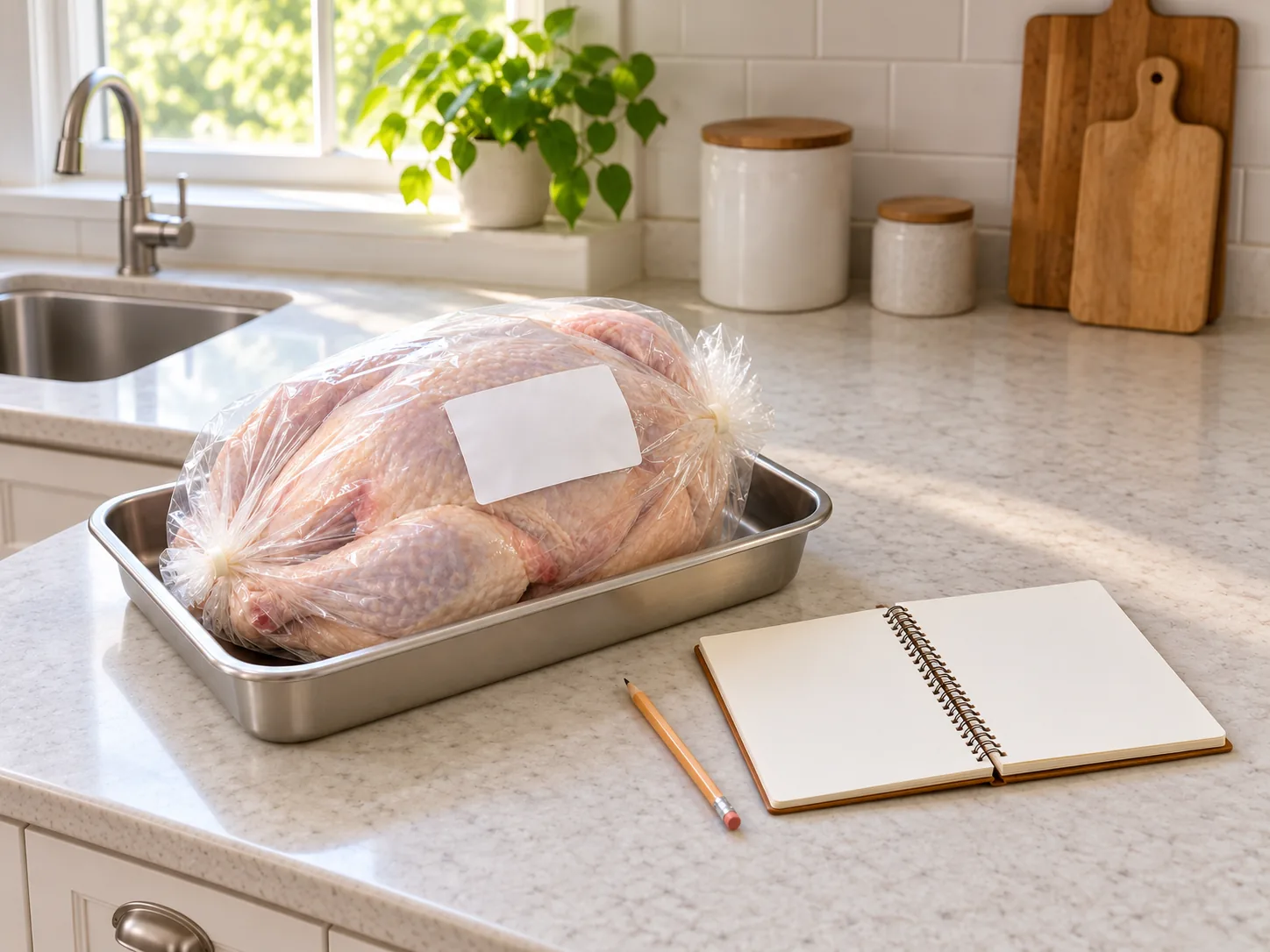
Before buying, confirm that the turkey and its leak-catching tray will fit in the fridge. The holiday refrigerator guide helps reserve that space beneath ready-to-eat food.
Whatever the label, use a food thermometer to check cooking. A whole turkey needs to reach 165°F in the innermost thigh and wing and the thickest breast, avoiding bone; stuffing, if present, needs its own 165°F check. I recommend the Lavatools Javelin PRO Classic instant-read thermometer for spot readings. It comes out after the reading; it is not a leave-in oven thermometer. Our thermometer placement guide shows where to measure.
Choose the bird whose ingredients, storage needs and cooking instructions fit your plan. Then put the thawing or collection date on the calendar while the package is still in front of you.
Compare two packages on the same basis
Place the recipe beside the two turkey labels and check the required starting product first. If the method calls for unbrined, unseasoned meat, added solution is a practical difference before price enters the calculation. Compare the same product state and serving size when reading the nutrition information.
Then record the full package weight and the total cost. A unit price is useful only when the products can serve the same intended job. The smaller or cheaper package may require a different recipe, a different amount of refrigerator space or a different thawing plan.
Keep the label until the cooking is finished
Photograph the complete label or retain the wrapper information safely away from preparation surfaces. You may need the added-ingredient statement, handling directions or identifying information later. A front-of-package photograph alone can omit the details that determined the purchase.
Once the bird is home, keep the storage and thawing plan attached to the actual cooking date. Do not let a general holiday calendar override the instructions for the product you bought. If the purchase changes, revisit the seasoning, thawing and space decisions together instead of changing only the name at the top of the shopping list.