This article contains affiliate links. Fondfolk may earn a commission if you buy through them. As an Amazon Associate I earn from qualifying purchases.
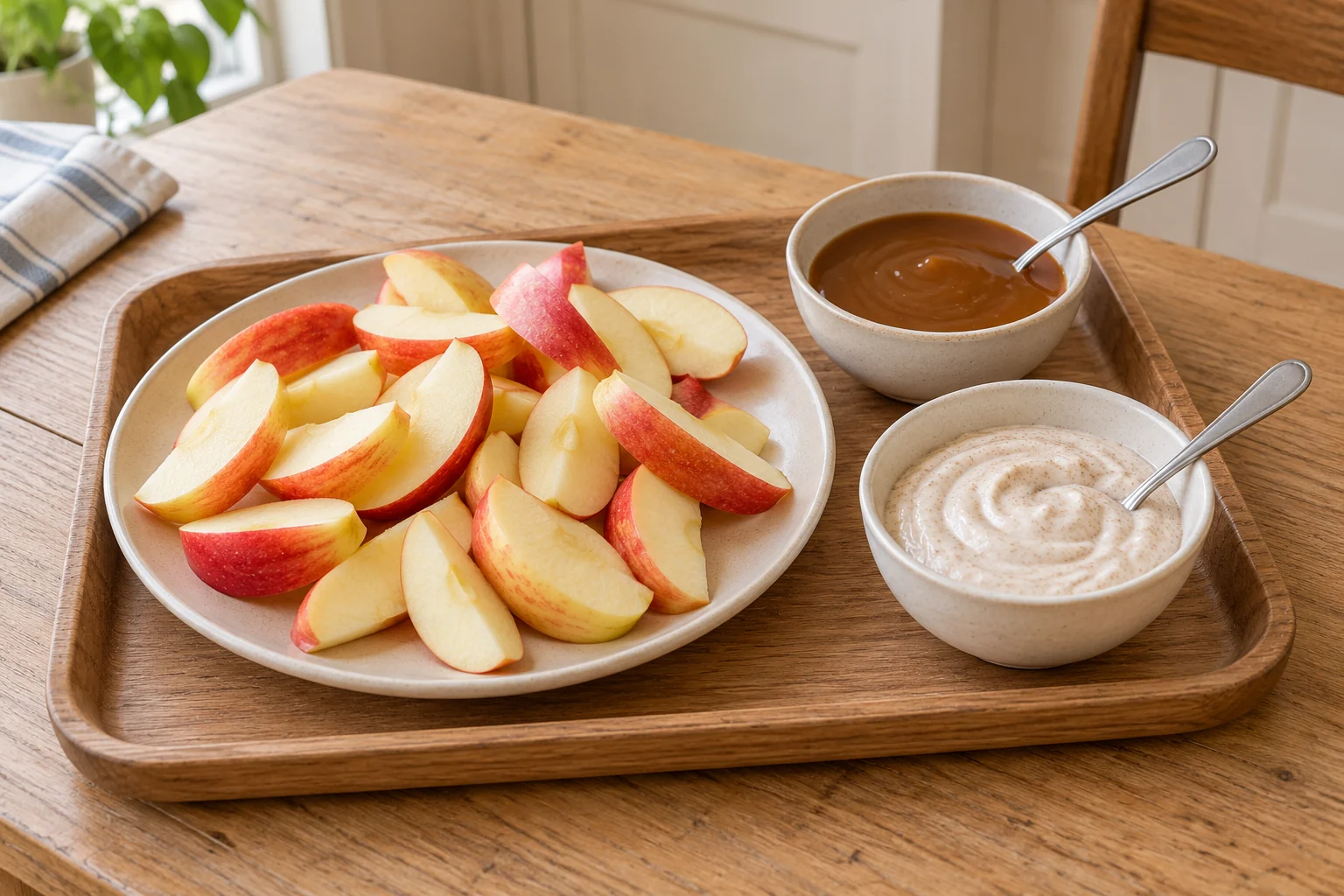
Apple slices, a small bowl of caramel and a place to put the sticky spoon make a good autumn evening. You get to choose how much dip goes on each bite, and nobody has to work through a whole coated apple on a stick.
Start with a small tray
For a first round, set out two medium apples, 1/2 cup purchased caramel dipping sauce and a clean spoon. These are modest starting quantities for a small gathering, not a promise that everyone will want the same amount.
Choose sauce sold for dipping or topping desserts. Check its ingredients with your guests' needs in mind; caramel may contain milk, and toppings can introduce other allergens. Keep the packaging available instead of relying on a handwritten flavor name to explain what is in the food.
For a second dip, stir together 1/2 cup plain Greek yogurt, 1 teaspoon maple syrup and 1/8 teaspoon ground cinnamon. Spoon it into a separate bowl and keep it refrigerated until serving. This gives the tray a tangy choice alongside the caramel. Use clean utensils for each bowl.
Prepare the apples close to serving
Wash the apples under running water and dry them before cutting. Core them and cut slices suited to the people eating. A small knife is enough for two apples; I also recommend the OXO Good Grips Apple Corer if you want a dedicated tool for the job.
Keep the varieties separate if you want to compare them. The apple-tasting scorecard gives you a place to record which one you liked plain before the dip changed the bite.
Raw apple pieces can be a choking hazard for babies and young children. Offer them a separate preparation with a suitable texture, and have children eat seated and supervised. Keep the adult's cutting area away from the serving tray.
Warm the caramel only if its label calls for it
Some dipping sauces are ready straight from the container. If yours needs warming, follow the label's method and quantity instructions. Have an adult handle the pan and let the sauce cool to a comfortable eating temperature before guests begin. A pot of hot caramel does not belong in the middle of a self-serve table.
For small saucepan jobs, I recommend the Caraway 1.75-quart saucepan. I prefer cookware with clearly stated materials and care instructions: Caraway says this ceramic coating is made without PTFE, PFOA and PFAS. Follow its heat and care instructions, and use a suitable utensil such as an OXO silicone spatula for stirring and scraping.
Give everyone a little room
Put the apple slices on a plate, with the dips in their own bowls. I recommend the Sweese divided porcelain serving dishes if you want separate sections that can be refilled individually. Ordinary plates and bowls work too.
Use the serving spoons to move dip onto individual plates, rather than having everyone dip into a shared bowl. Start with a small amount of yogurt dip and refill it from the refrigerator. Discard perishable food that has been out for more than two hours, or one hour above 90°F.
Leave toppings off the first tray and taste the apples with the two dips. If that is already what everyone wanted, the evening needs no extra bowls.
Scale the tray before cutting the fruit
The two-apple starting tray is easy to halve or double. For a smaller first round, use one apple, 1/4 cup caramel and half the yogurt mixture: 1/4 cup yogurt, 1/2 teaspoon maple syrup and 1/16 teaspoon cinnamon. That last amount is a very small pinch if your measuring spoons do not include it. For a larger tray, four apples pair with 1 cup caramel and twice the yogurt mixture.
These are proportional examples, not a promise of a particular number of guests. Keep any extra apples whole until you know they are wanted. Doubling the amount on the shopping list does not mean every bowl has to be filled at once; small serving bowls let you keep the backup yogurt chilled.
Keep each dip easy to use
A thick dip is easier to portion with a spoon than to drag a fragile apple slice through. Give the caramel and yogurt separate utensils and leave a small plate beside each bowl for its spoon. Guests can put a little dip on their own plate before adding apple slices. This also keeps dropped crumbs and bitten fruit out of the shared bowl.
If the caramel is difficult to spoon, check its label before changing it. Some sauces loosen with gentle warming; others are designed to use at room temperature. Adding milk or water without instructions can change the consistency and storage needs. Warm only what you plan to serve, then let it reach a comfortable eating temperature away from the serving area.
Troubleshoot the tray without adding more toppings
If the apples taste lost beneath the caramel, try a plain slice and use less sauce on the next bite. If the yogurt seems too sharp, taste it with the apple before adjusting anything; the fruit contributes sweetness too. Keep the measured base recipe on the page and record any personal change separately so the next tray starts from a known amount.
Cut apples can brown, so the simplest timing plan is to wash the whole fruit ahead and slice near serving. Blot wet surfaces before arranging the slices so water does not thin the dips on the plate. Label the two bowls plainly, keep the ingredient packages available and put out a fresh small bowl of yogurt when needed rather than topping up an older bowl.