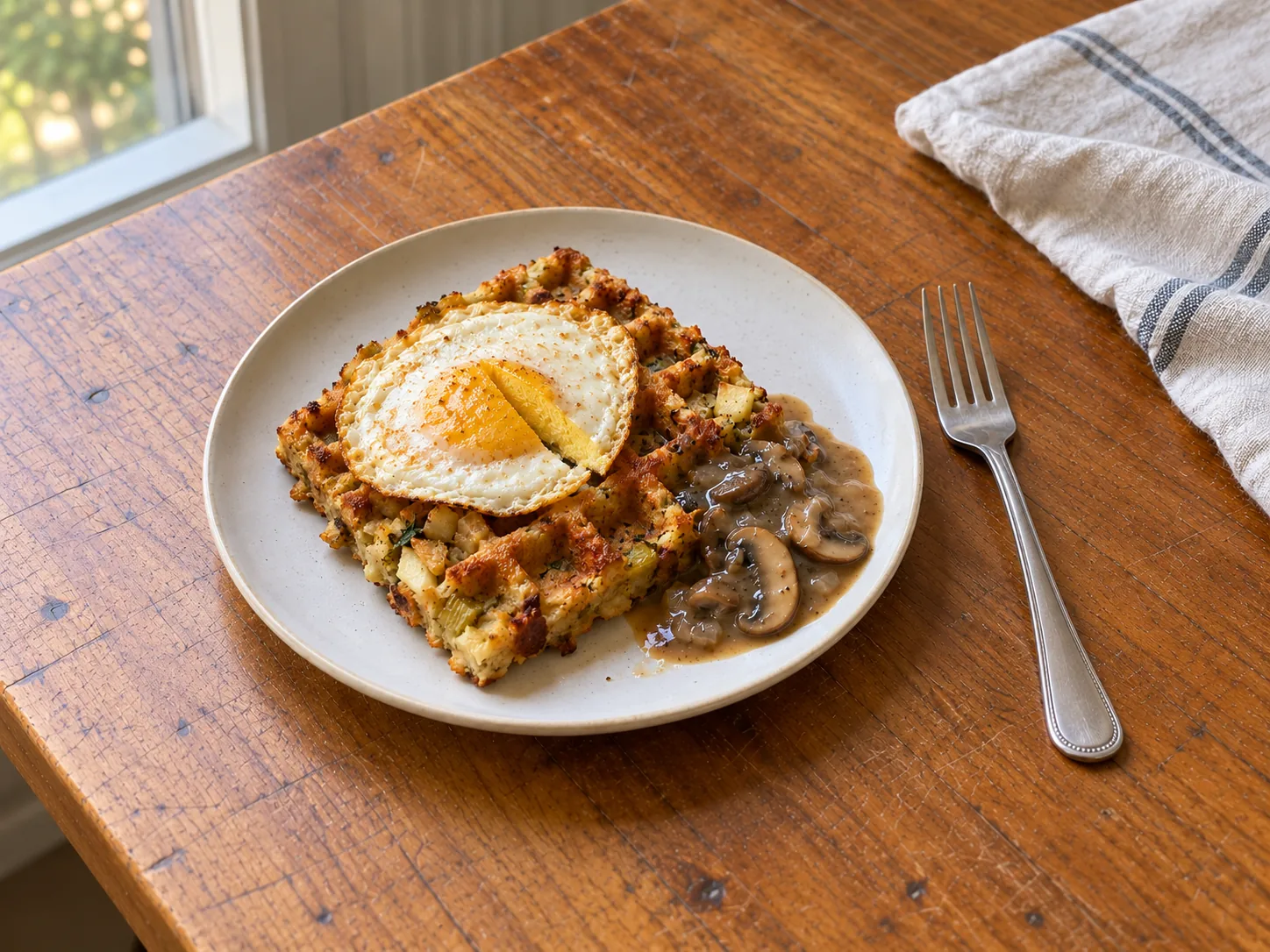
The browned edges are often the best part of bread stuffing. A waffle iron gives a small portion more of them, with pockets for a spoonful of gravy. Mix cooked stuffing with an egg, spread it into an even layer and let the center heat through while the outside firms up.
This version makes two servings from two cups of chilled sage-and-apple bread stuffing. It is a savory waffle with visible bread and vegetable pieces, not a smooth breakfast batter. Spoon gravy into a few pockets and leave some browned edges uncovered.
This article contains affiliate links. As an Amazon Associate, Fondfolk earns from qualifying purchases.
Begin with the right leftover stuffing
Use fully baked stuffing made with plain wheat-bread cubes, butter, cooked onion and celery, sage, parsley, vegetable broth and apple cut into small, roughly ¼-inch pieces. That is the bread-based mixture this recipe is written for. It should be moist enough to hold together when pressed, without loose liquid at the bottom of the container.
Dry breadcrumbs, an uncooked stuffing mixture, rice stuffing, cornbread dressing or a version full of sausage chunks need their own formulation. Do not replace the measured cooked stuffing with two cups of dry bread and expect the egg to turn it into the same mixture.
Use only leftovers with a known handling history. USDA's stuffing guidance gives cooked stuffing a three-to-four-day refrigerated window. It must have been chilled promptly and kept at 40°F or below. Making a waffle does not turn old or improperly stored stuffing into a fresh batch of food.
The egg-to-stuffing ratio follows Ann Fulton's stuffing waffles. This version specifies the bread stuffing and adds a small, measured broth adjustment for a dry mixture.
Sage-and-apple stuffing waffles
Makes: 2 servings, approximately two 5-inch square waffles. Your iron's shape and capacity determine the actual number.
Allow: about 25 minutes, including preheating and cooking. A small iron or a particularly cold mixture can take longer.
We may earn a commission from purchases through these links. Amazon search links open comparison results; check the selected item’s suitability.
Equipment: a conventional horizontal waffle iron, a mixing bowl, fork, measuring cup and spoons, a heat-safe utensil suitable for its plates, and an instant-read food thermometer. A vertical machine designed for pourable batter is not the equipment for this chunky mixture.
Ingredients
- 2 US cups fully cooked, chilled sage-and-apple bread stuffing, described above, gently crumbled and measured without packing tightly
- 1 large egg
- Up to 2 tablespoons reduced-sodium vegetable broth, only if needed
- Up to 1 teaspoon neutral cooking oil for the plates, only if the iron's instructions permit it
- Optional: ½ cup prepared mushroom gravy, for serving
- Optional: 2 freshly cooked eggs, with whites and yolks firm, for serving
The stuffing supplies the seasoning, so there is no extra salt in the waffle mixture. This version contains wheat, milk from the butter, and egg. Read the bread, broth and topping labels for any additional allergens or dietary requirements.
Mix and cook
- Preheat the iron. Follow its instructions for the setting and plate preparation. If oiling is permitted, brush on a thin film using some of the measured teaspoon; do not substitute an aerosol spray unless the manual allows it. Set a clean plate beside the iron for the cooked waffle.
- Break up the stuffing. Use a fork to loosen the measured cold stuffing into small pieces. Break large crusty clumps apart without grinding the mixture into a paste. Keep any unused stuffing in the refrigerator.
- Add the egg. Beat it in the bowl, then fold in the stuffing until evenly coated. The mixture should gather into a soft mound when pressed with the spoon. If it remains dry and falls apart, add broth 1 teaspoon at a time, mixing between additions, up to 2 tablespoons total. Stop before liquid pools. Do not taste after adding the raw egg.
- Fill an even layer. For a roughly 5-inch square cooking area, begin with half the mixture. Spread it across the usable grid without piling it in the center or overflowing the edge. Respect a smaller iron's capacity and cook additional smaller waffles if necessary. The stuffing will not flow outward like liquid batter.
- Cook through. Close the lid without forcing it. Begin looking for doneness after about 5 minutes, allowing longer as needed. Avoid repeatedly opening the iron while the mixture is still setting. The surface should be browned and firm enough to release, but color and the ready light do not establish the center's temperature.
- Measure and serve. Insert the thermometer horizontally from an accessible side into a thick section, keeping its sensing area in the food and away from the hot plates. Check more than one thick area: the waffle must reach 165°F throughout. Continue cooking if needed, then lift it out with the appropriate heat-safe utensil. Repeat with the remaining mixture and serve promptly.
We may earn a commission from purchases through these links. Amazon search links open comparison results; check the selected item’s suitability.
I recommend the Lavatools Javelin PRO Classic instant-read thermometer for those spot readings. Remove it after measuring; it does not stay inside the closed iron. The thermometer-placement guide shows why the sensing area needs to sit within the food.
Let the first waffle guide the next one
If the mixture crumbles before cooking, work through the small broth additions rather than pouring in a large splash. Stop at the stated maximum. Stuffing that still will not hold a mound falls outside the moisture range for this formula; reheat it conventionally to 165°F instead of continuing to dilute it.
If the waffle tears when lifted, let the next one set longer before opening and spread it more evenly. Follow the plate-care instructions; scraping with a metal fork is not a useful fix for sticking. Broken pieces can still go on the plate once cooked to the required temperature.
If the outside darkens before the center is ready, reduce the adjustable setting for the next waffle and use a thinner, even layer. Finish heating the current waffle to 165°F before serving. A smaller portion is easier to heat through than a mound pressed between the plates.
If it turns soft under the topping, add less gravy at the table. Keep cooked waffles in a single layer while you finish the next portion rather than stacking them together under a tight cover.
Finish with gravy or a fully cooked egg
Our mushroom gravy without meat drippings suits the sage and apple. Reheat the measured ½ cup to a rolling boil, stirring, then spoon about ¼ cup onto each serving just before eating. Its own original cooking date and storage history still apply.
For the egg topping, FDA recommends cooking both the white and yolk until firm. Put one freshly cooked egg on each serving. The waffle already contains an egg binder, so leaving off the topping does not make it egg-free.
Keep the original date on any remaining portion
Make only the amount you plan to eat when possible. If cooked waffles remain, refrigerate them promptly in a shallow container, within two hours, or one hour if exposed to temperatures above 90°F. Discard perishable food left out longer without safe temperature control. FoodSafety.gov explains these handling limits.
For this leftover recipe, keep counting the three-to-four-day refrigerator window from the stuffing's original cooking date; do not write a new date just because it passed through the waffle iron. Reheat refrigerated waffles to 165°F throughout before serving. The refrigerator storage guide covers shallow portions and keeping toppings separate.
Serve the waffles with the gravy beside them if you want to keep more of those browned edges uncovered. Two cups of stuffing can be enough for the next meal without bringing the whole holiday spread back to the table.
Decide what the first waffle is testing
The first portion tells you whether the mixture fits the iron, releases cleanly and reaches the required center temperature. Keep its thickness and the amount used in mind before loading the next one. A smaller appliance may need more rounds than the two-waffle planning estimate.
Do not use repeated lid opening as the only way to monitor progress. Let the mixture begin setting, then follow the written checking route. A waffle that tears when opened is not automatically a reason to add more egg or broth to the remaining mixture.
Keep the toppings out of the cooking adjustment
Measure the optional gravy and prepare any fresh egg topping separately. They belong on the finished waffle at service. Adding gravy to a crumbly raw mixture would change the binder and moisture balance rather than solve the problem the recipe describes.
Keep the original stuffing date with every later portion. Reworking a leftover into a different shape can be enjoyable, but it does not erase its handling history. Make the small amount you expect to eat, use the conventional reheating alternative when the mixture cannot support the waffle route and leave the main container chilled while one portion cooks.