A good bowl of soup can become a container of swollen noodles by tomorrow. A crisp salad can lose its crunch before lunch. Cool cooked food promptly in small portions, choose containers that protect it, and keep components apart when they need different treatment.
Those choices help with texture, but they do not give leftovers extra days of safe storage. Start with food that was cooked and handled safely, and keep the refrigerator at 40°F or below, measured with an appliance thermometer. A cold-feeling shelf is not a temperature reading.
This article contains affiliate links. As an Amazon Associate, Fondfolk earns from qualifying purchases.
1. Cool the food in smaller portions
Put away what you will not eat before the evening disappears into other jobs. FoodSafety.gov recommends refrigerating cooked food promptly and always within two hours, or within one hour if exposed to temperatures above 90°F. Perishables left out longer without safe temperature control should be discarded. Food being held for serving needs to stay at 140°F or above if hot, or 40°F or below if cold.
Hot food can go directly into the refrigerator. Divide a large pot of soup or a deep casserole into smaller, shallow portions first, using containers suitable for that temperature change. Cut large pieces of cooked meat into smaller pieces. The aim is to help the food cool throughout, rather than chill only the outside of a deep mass.
For portions cooling in the refrigerator, Mississippi State University Extension recommends keeping the food no more than about 2 inches deep and loosely covering it while it cools. Protect it from contamination, leave space for air around the containers, and cover securely once chilled. Keep raw meat and its juices away from these ready-to-eat foods.
The depth of the food matters more than the capacity printed under the box. A large shallow container holding a thin layer of potatoes can be more suitable for cooling than a small, deep tub filled to its rim. Spread thick foods into an even layer instead of leaving a mound in the middle.
Do not wait on the counter for a whole pot to reach room temperature. Nor should a hot pot go into a closed insulated bag to “cool” while you clear a shelf. Reserve refrigerator space before cooking a large batch; the holiday fridge-space guide is useful whenever several dishes need storing at once.
Give tomorrow's portion its own start
If you know half the soup is for tomorrow, separate that portion before serving tonight's bowls and begin chilling it promptly. That reduces handling at the table and avoids returning a repeatedly served pot to storage.
Time outside safe hot or cold holding adds up across uses. Refrigerating the dish between helpings does not erase its earlier time on the counter. Take out what you need for the next meal and leave the rest cold.
2. Choose a container for the portion and the next meal
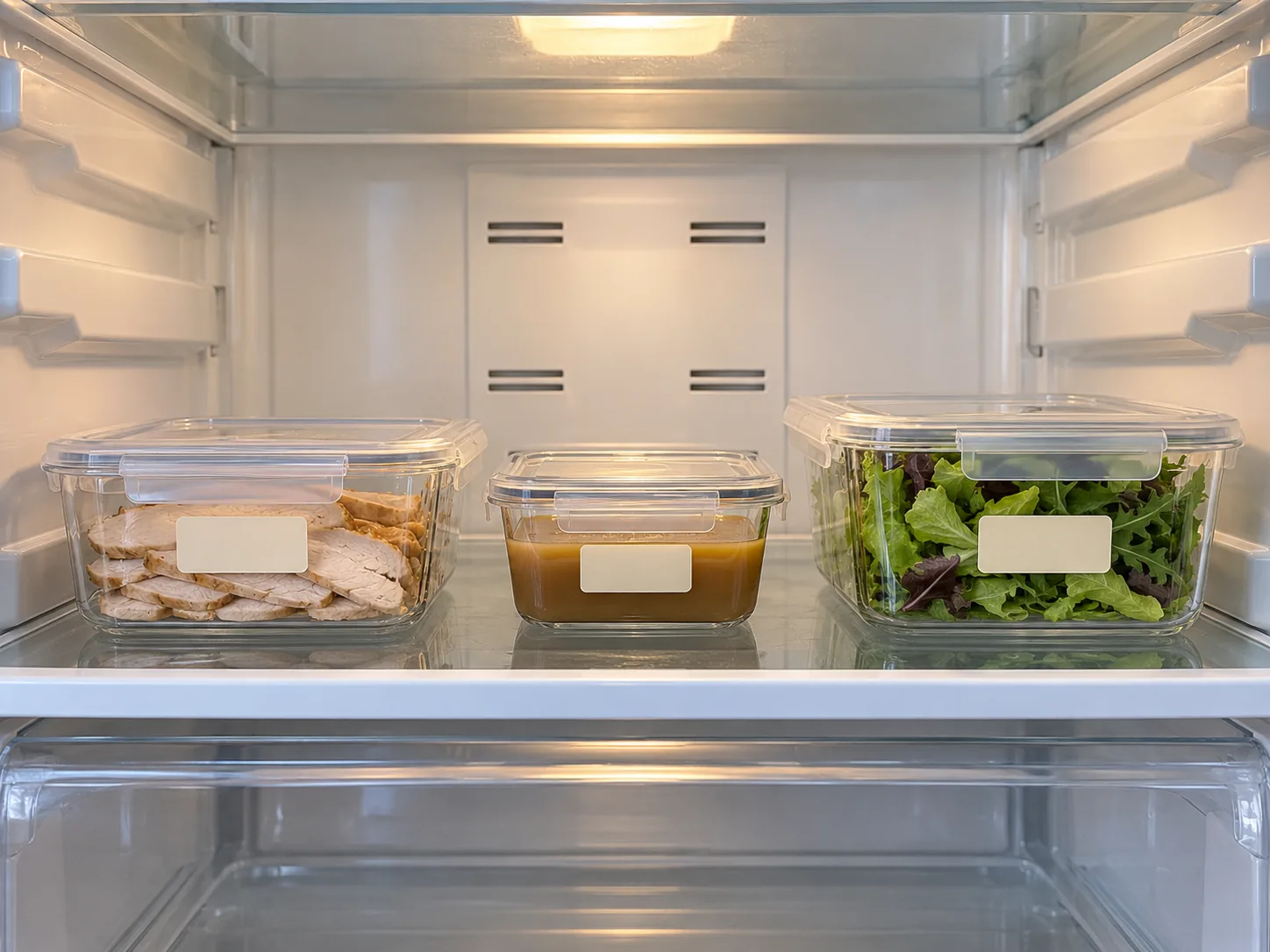
Once chilled, leftovers need a clean, covered container or sealed food-storage bag. USDA's storage guidance explains that covering food helps retain moisture and prevents it from picking up other refrigerator odors. An open plate of sliced roast is likely to be less appealing than the portion you put away properly.
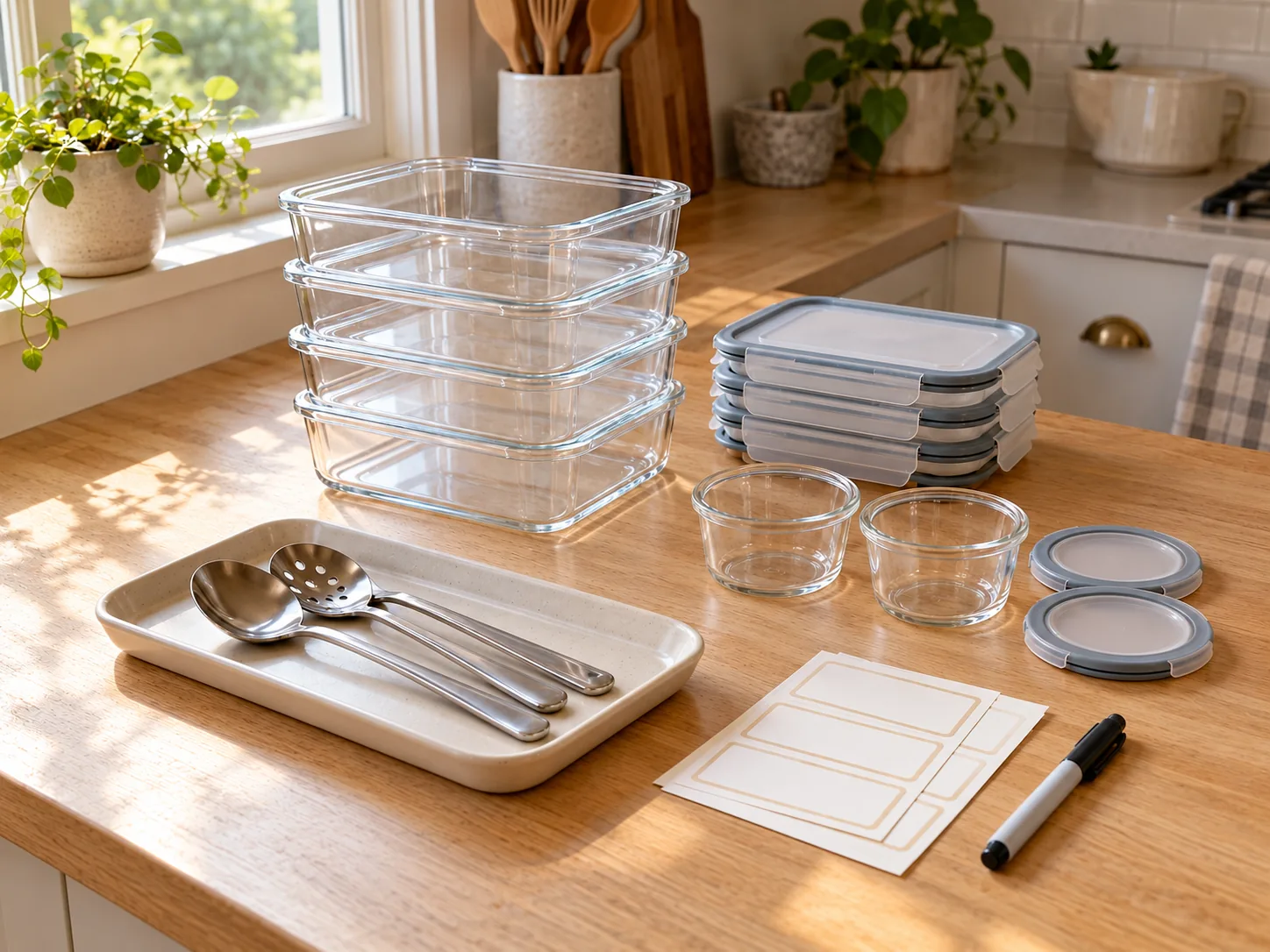
I prefer clear containers for leftovers because the food stays visible. I recommend Rubbermaid Brilliance Glass containers for already-chilled portions, with a few sizes to suit a serving of gravy as well as a lunch-sized meal. You do not need a new matching set if your existing food-storage containers are sound, clean and suitable for the job.
Glass needs its own care. Rubbermaid instructs users to avoid sudden temperature changes, cool hot glass before refrigeration, and wait until the glass is comfortable to touch before fitting its plastic lid. Do not place hot glass on ice or a cold, wet surface. Use a different suitable shallow container for prompt chilling when needed; food safety should not wait for a particular dish.
Choose portions you can use without warming the whole batch. Two lunch portions are often easier to manage than one box that must come out every time somebody wants a spoonful. Match the lid before filling, wipe food from the rim and close it properly after chilling.
Put the date where you can see it
Label the dish and its original cooking date. Keep older portions near the front and use those first; do not add new food to an older container and give the mixture today's date. If you combine components prepared on different days, plan around the older component and any shorter applicable storage instruction.
The FoodSafety.gov cold-storage chart lists three to four days at 40°F or below for cooked meat and poultry, soups and stews. Check the entry for the particular food rather than treating that range as a rule for everything in the fridge. Freeze suitable leftovers promptly if you will not eat them within their storage window, following the container's freezer instructions and allowing expansion room for liquids.
A tight lid does not rescue food that was left out too long. Neither does a normal smell: FDA notes that food can be unsafe without looking, smelling or tasting spoiled. Do not taste a questionable leftover to decide whether to keep it.
3. Keep components apart when texture matters
Pack the parts separately when one needs heating, another should stay cold, or a crisp ingredient will sit in liquid. This works best before the meal is assembled. There is no need to dismantle a finished lasagna or scrape the filling from a baked pie.
| Meal | Keep separate | Combine when |
|---|---|---|
| Noodle soup | Cooked noodles and the soup base | Reheating the portion you will eat |
| Green salad | Greens, dressing and croutons | The salad is ready to serve |
| Turkey dinner | Sliced turkey, gravy and cold salad | Hot portions are reheated and the plate is assembled |
| Tomato soup with croutons | Soup and croutons | The reheated soup is in the bowl |
In Kimber Matherne's noodle-soup method, cooking and storing the noodles separately avoids leaving them to soften in the broth. For salad, Love and Lemons recommends dressing at serving time because the dressed lettuce and croutons begin to soften. These are texture choices, not ways to extend the food's safe storage period.
Cool and refrigerate every perishable component promptly. Store croutons or packaged toppings according to their own recipe or label; a separate cup is not permission to leave a perishable topping on the counter.
Reheat one bowl of soup
Transfer only the portion you plan to eat into suitable cookware. Reheat leftovers to 165°F throughout, measured with a food thermometer; bring soups, sauces and gravy to a rolling boil. Stir to distribute the heat, and check any meat or dense pieces as well as the liquid. Our thermometer-placement guide explains why a reading against the pan is not the food's temperature.
If reheating in a microwave, use microwave-safe equipment, cover and vent as directed, stir or rotate, and follow the appliance's standing-time instructions before checking several places. Keep cold dressing and salad out of the reheating dish, then add the croutons at the table.
For a holiday handoff, use the leftover packing station to carry these choices into a guest's container and storage note. For your own lunch, keep the date visible and the separate dressing beside the salad. Tomorrow's meal is easier to enjoy when its crisp parts are still waiting to be added.
Choose the next use before choosing the box
A lunch to reheat at work needs a different arrangement from ingredients for tomorrow’s salad. Decide which parts will be heated and which will stay cold, then select containers that let you handle them separately. Do not put a crisp topping into a wet dish simply because there is room in the same box.
For soup with noodles or rice, a separately reserved portion of the starchy component can help preserve the texture if the recipe and safe handling plan allow it. That is a preparation decision before assembly, not a suggestion to pick apart food after it has spent the evening on the table.
Use a visible label instead of a memory test
Write the dish name and original cooking date where it can be read without opening the lid. If the container holds only one component, name that component: plain cooked rice is more useful than dinner leftovers. Add a serving note when a cold topping belongs beside the food after reheating.
Keep older suitable portions in view and plan the next meal from them. Moving food to a new container or making it into another dish does not give its earlier history a new beginning. When you cannot establish the history, appearance and smell alone should not be used to invent a safe storage window.