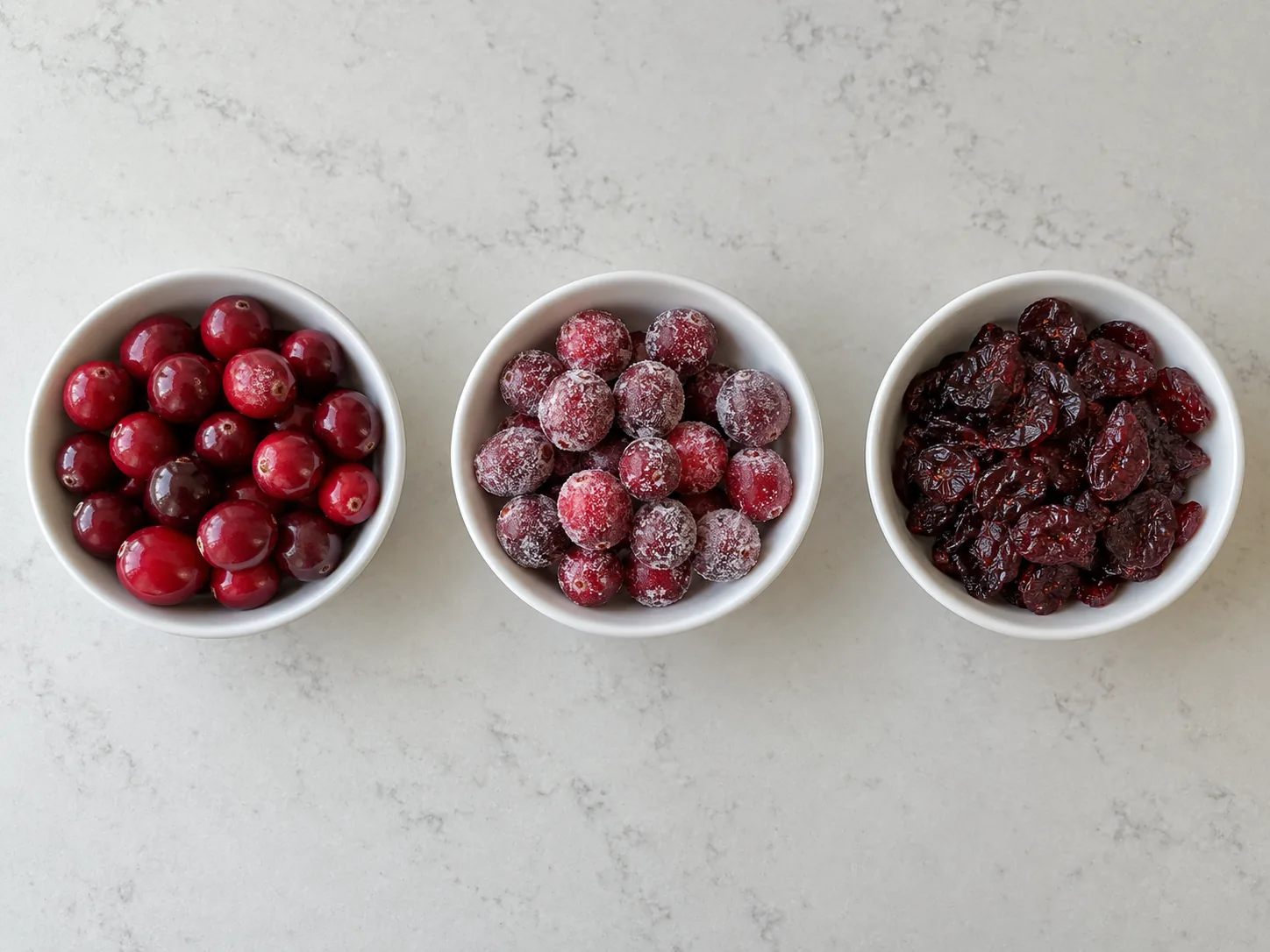
The dried cranberries in an oat filling and the fresh berries bubbling into sauce start with the same fruit, but they do not behave the same way. Fresh and plain frozen cranberries bring tartness and moisture. Dried cranberries bring a chewy texture and often added sweetness. Choose the form named in your recipe, then buy the amount it needs.
That choice matters more than buying whichever bag happens to be on display. A recipe written for dried fruit does not become a fresh-cranberry recipe simply because you use the same measuring cup.
This article contains affiliate links. If you buy through them, Fondfolk may earn a commission at no additional cost to you. As an Amazon Associate, I earn from qualifying purchases.
The three forms do different work
| Form | What you are buying | Where to start | What to watch |
|---|---|---|---|
| Fresh | Whole, tart berries with their moisture intact | A sauce, relish or baking recipe that specifies fresh cranberries | The recipe's sugar, liquid and chopping instructions matter. |
| Plain frozen | Cranberries preserved by freezing | A recipe that accepts frozen berries | Follow its thawing directions; do not thaw automatically. |
| Dried | Fruit with much of its moisture removed; often sweetened | A dried-fruit filling, topping or baked good | Read the ingredient list and use the sweetened or unsweetened type specified. |
Frozen cranberries are not the same product as frozen cranberry sauce, and dried cranberries are not a concentrated shortcut to every fresh-fruit recipe. A sauce already contains other ingredients; a dried berry has a different balance of fruit, moisture and, often, sweetener.
For a flexible meal such as a salad, you can decide which texture you want. For baking, follow the written ingredient form first. A cranberry chosen as a topping gives you more freedom than one mixed into a batter or filling.
Buy fresh berries for a near-term recipe or a freezer plan
Look for firm berries with glossy skins, and sort out soft, shriveled or spoiled fruit. Keep fresh cranberries refrigerated and wash them when you are ready to use or freeze them. UMass Extension's cranberry guide covers selection and refrigerated storage.
Before buying a second bag for the holidays, read how much the recipe actually calls for. If your plan is a small apple dessert with a dried-cranberry filling, the fresh berries may have no job at all. If you have chosen a fresh-cranberry sauce, buying enough for that formula and freezing the extra is a clear plan.
Do the sorting before freezing. Cold storage does not turn damaged fruit back into good fruit, and taking a few moments now avoids discovering unwanted berries in the measuring cup later.
Frozen berries are convenient when the recipe accepts them
A bag of plain frozen cranberries can spare you a search for fresh fruit outside its seasonal window. Read the ingredients if you want cranberries without added sweetener or sauce.
Keep them frozen until the recipe tells you what to do next. UMass Extension recommends using frozen cranberries without thawing to limit juice loss. Follow a recipe's specific preparation directions if it calls for thawing, chopping or draining; do not treat every cranberry dish as if it has the same method.
When a baking recipe accepts both fresh and frozen berries, follow its quantity and doneness instructions. A cold ingredient and a thawed ingredient are different starting conditions. Do not invent extra flour, remove liquid or add a fixed number of minutes merely because the bag came from the freezer.
Dried cranberries need a closer look at the label
Many dried cranberries contain added sugar, while others use different sweeteners or are sold unsweetened. Read both the ingredient list and the Nutrition Facts panel. The FDA explains that total sugars include naturally occurring and added sugars; the “Includes Added Sugars” line identifies the added portion. Compare products using the same serving amount.
This is a recipe choice as well as a shopping preference. If a formula specifically calls for sweetened dried cranberries, unsweetened fruit changes that balance. For a salad topping you can choose by taste; for a cake or bar, I recommend using the named type before making other changes.
Our baked apples with cranberry oats use 2 tablespoons of dried cranberries, chopped after measuring for four apples. The small pieces sit in a filling of oats, butter, brown sugar, spice and orange zest. Fresh berries would add a different texture and moisture level, so the same two tablespoons are not an established substitute.
I recommend the Simply Gourmet measuring cups and spoons for recipes like this that give a spoon or cup measure. Follow the ingredient wording: this recipe lists “dried cranberries, chopped,” so measure the dried fruit first and then chop it. When another recipe provides a weight, use that weight instead of converting it with a general fruit chart.
Freeze fresh cranberries in portions you can use
For loose berries you can pour from the container, the National Center for Home Food Preservation's cranberry method allows freezing on a tray before packing. No sugar or syrup is needed for this dry-pack approach.
- Select firm, deep-red berries with glossy skins. Remove stems and sort out damaged or spoiled fruit.
- Wash and drain the berries. I recommend the stainless-steel fine-mesh strainer set for draining them; choose a size that holds your batch without piling berries over the rim.
- Spread the drained fruit in one layer on a shallow tray and freeze until firm.
- Pack the frozen berries promptly into freezer containers, such as Rubbermaid Brilliance glass containers, seal and return them to the freezer. For a dry pack in pint or quart containers, NCHFP specifies ½ inch of headspace. Label the container with its contents and freezing date.
The tray-packing guidance explains why prompt packing matters: leaving frozen fruit exposed encourages freezer burn. The tray is a freezing step, not its long-term storage container. See NCHFP's headspace table when choosing containers.
If a recipe uses a known amount, label a matching portion as well. Otherwise, keep the berries loose so you can measure only what you need and promptly return the rest to the freezer.
When the wrong form is already in the cupboard
Use dried cranberries in a recipe developed for dried fruit rather than trying to turn them back into fresh berries. Soaking may soften dried fruit, but it does not provide a verified conversion for the fresh berries, liquid and sugar in another recipe. There is no single fresh-to-dried ratio offered here because the intended dish matters.
If your fresh berries were bought for the baked apples, freeze them for a fresh-cranberry recipe and use the dried fruit the filling calls for. If you need help with the apples themselves, our guide to apples for baking, sauce and snacking covers that choice. For the rest of your shopping basket, give each purchase a practical use.
You can keep fresh, frozen and dried cranberries in the same kitchen without expecting them to do the same job. Let the sauce have its tart berries and the oat filling have its chewy little pieces.
Write the form on the shopping list
A list that says cranberries leaves an important choice until the aisle. Write fresh or plain frozen beside a sauce recipe, and sweetened dried beside a cookie recipe that specifies them. Add the weight or volume in the same units the recipe uses. That small qualification helps someone else shop for you without having to interpret a photograph of the finished dish.
For a comparison at home, put the unopened packages beside the relevant recipes and check one at a time. A bag that looks large enough is not a measurement. Nor does a similar-looking dried berry tell you whether the recipe expects added sugar. Keep the packages available until the quantities have been checked.
Give a partial bag a named destination
Choose the next use before opening a second package. A spoonful of dried berries can be reserved for a topping that allows them; a measured portion of fresh berries can be packed for a sauce that calls for that form. Label the amount and the intended recipe so another cook does not mistake one form for a substitute for the other.
If the recipe you chose needs more fruit than you have, scale the complete formula only where that recipe permits scaling. Stretching the fruit with a different form changes more than the berry count: it changes the moisture, texture and sometimes the sugar balance. It is often easier to make a smaller complete recipe or choose another use than to improvise a fresh-to-dried conversion during the mixing stage.