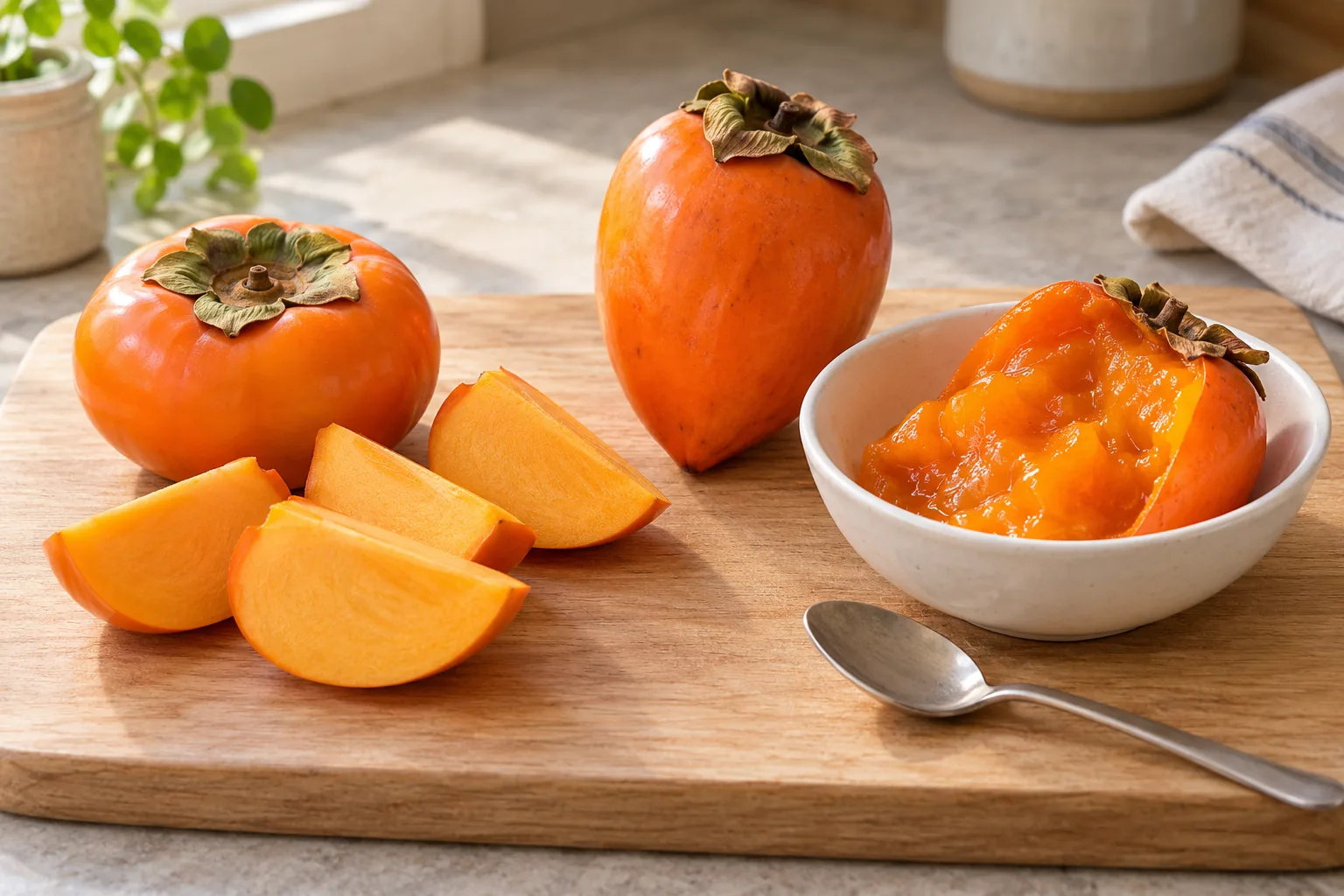
For orange persimmon slices you can put into a salad tonight, buy a Fuyu. For soft flesh you can eat with a spoon or use in a persimmon pudding, choose a Hachiya and let it become completely soft. The names matter more than a lovely orange skin: a firm Fuyu can be ready to eat while a firm Hachiya still needs time.
One Fuyu lets you try the crisp texture straight away. A Hachiya is a different choice, especially when the fruit at the shop is still firm and you have no particular day in mind for eating it.
This article contains affiliate links. As an Amazon Associate, Fondfolk earns from qualifying purchases.
Read the name, then feel the fruit
Fuyu and Hachiya are two common Asian persimmon varieties. Fuyu usually looks squat and rounded, rather like an orange tomato. Hachiya is generally taller, with a pointed bottom. UC Master Food Preservers describes Fuyu as non-astringent and Hachiya as astringent: the latter needs to ripen fully before ordinary fresh eating.
Astringency is the drying, puckering sensation that can make an unripe Hachiya unpleasant. Adding sugar to a firm piece does not turn it into the soft fruit you meant to buy. Leave it to ripen instead.
| Your plan | Choose | What to look for before eating |
|---|---|---|
| Slice fruit for a snack or salad today. | Fuyu. | Orange fruit that is firm enough to slice; it can soften further if you prefer that texture. |
| Eat soft flesh with a spoon. | Hachiya. | Fruit that is completely soft throughout, with a gel-like interior. |
| Make a recipe calling for ripe Hachiya pulp. | Hachiya. | Fully softened fruit, enough time for ripening and the recipe's measured pulp quantity. |
| Buy a variety with another name. | Read its label or ask the seller. | Establish whether it is intended for firm eating or needs full softening. |
Shape helps you recognize these two varieties, but a name and clear eating instructions are better than guessing from a display. Other cultivars and commercially treated persimmons can have different characteristics. If the sign only says “persimmon,” ask which kind is in the box.
Buy for the meal you actually want
Choose sound fruit without punctures, split skin or obvious decay. Handle soft Hachiyas gently; pressing one repeatedly will not tell you more than a careful touch. A naturally soft fruit should still be intact and free of mold or signs of rot.
For Fuyu, think about how you will use it. Firm pieces hold their shape on a plate. Softer fruit suits someone who prefers a yielding bite. Neither choice needs to become a baking project just because you brought home something unfamiliar.
A firm Hachiya is a reasonable purchase when you can wait. If you need ripe pulp for Saturday's dessert, buy fruit already at the right stage or choose another recipe. A kitchen calendar cannot make a hard Hachiya ripen on command. The pear-ripeness guide follows the same practical question—when do you want to eat the fruit?—while keeping the two fruits' ripeness checks separate.
Persimmon harvests vary by cultivar and region. UC Marin's growing guide places local Fuyu harvest mainly in October and November and Hachiya harvest from October into January. Those are growing-region examples, rather than a promise that every shop has both varieties throughout December. Ask what has arrived and buy a quantity you have a use for.
Prepare a Fuyu for slicing
Wash the fruit under running water before cutting it, then dry it. FDA recommends washing produce even when you intend to peel it; leave soap and detergent out of the job.
We may earn a commission from purchases through these links. Amazon search links open comparison results; check the selected item’s suitability.
Set the fruit on a stable cutting board. Remove the leafy cap, then halve the fruit and cut the halves into wedges or slices. Inspect the cut flesh and remove any seeds you find. Fuyu skin can be eaten; peel it if you prefer the texture without it.
I recommend the HOSHANHO paring knife for small fruit-preparation jobs such as removing the cap or peeling a persimmon. Keep the fruit supported on the board, and use a larger knife if that gives you better control for halving it. The knife should suit the cut you are making.
Try a plain slice before dressing the rest. Its texture and sweetness can decide whether you want it alongside something salty, tucked into a salad or simply left on the plate. That first taste is more informative than adding several toppings at once.
Give a Hachiya time to soften
Leave a firm Hachiya at room temperature in a place where you can see it and handle it without crushing neighboring fruit. Examine it each day for ripening or deterioration. UC's persimmon guidance describes the ready-to-eat interior as soft and gel-like; orange color alone is insufficient.
The whole fruit needs to yield, rather than having just one bruised soft spot. Its skin may look thin or nearly translucent as the flesh softens. Discard fruit that is moldy or rotten; ripeness is not a reason to overlook decay.
Once it is fully soft, wash it gently, remove the cap and open it over a bowl. Scoop out the flesh with a spoon, removing any seeds. For baking, prepare and measure the pulp as the recipe directs. A count of three whole persimmons cannot reliably replace a stated cup or weight of pulp, because fruit sizes and usable amounts vary.
We may earn a commission from purchases through these links. Amazon search links open comparison results; check the selected item’s suitability.
Do not substitute sliced firm Fuyu for smooth Hachiya pulp in a cake and expect the same result. If the recipe names the variety and preparation state, preserve them. A ripe Hachiya eaten from a small bowl is also a complete way to enjoy it, with no oven required.
Put each texture somewhere it belongs
Fuyu wedges are pleasant beside a sharp cheese and plain crackers. Thin slices can go into a leafy salad with a dressing you already like, or onto a breakfast bowl just before eating. Keep the fruit visible rather than burying it under several sweet toppings.
Soft Hachiya flesh can be spooned over plain yogurt or eaten on its own. These are serving suggestions, so choose the amount you want and check that the other ingredients suit the people eating. Adding yogurt introduces milk; nuts introduce their own ingredients and cross-contact questions.
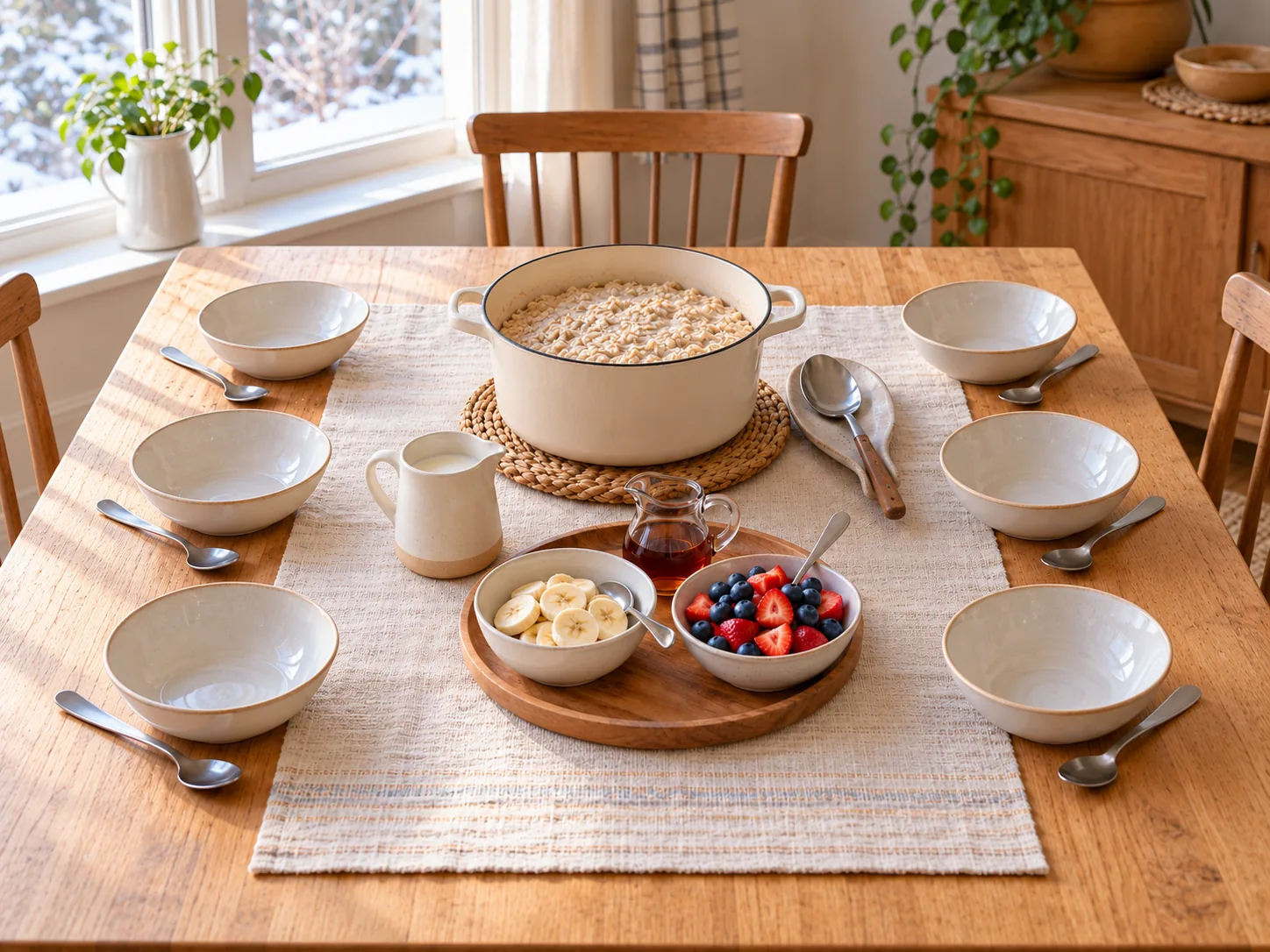
For a shared breakfast, set out prepared fruit in its own bowl beside the oatmeal. People can add a little after tasting it. If you are assembling a larger seasonal basket, plan how to use the other fruit and vegetables in dinner too.
Keep the ready fruit from waiting too long
Refrigeration can help hold Fuyu longer, but the fruit's starting condition still matters. Buy a few and inspect them regularly instead of treating a general storage range as a guarantee. Leave a firm Hachiya to finish ripening; once it is ready, plan to eat it promptly. UF/IFAS recommends eating ripe astringent persimmons immediately and refrigerating them to slow deterioration.
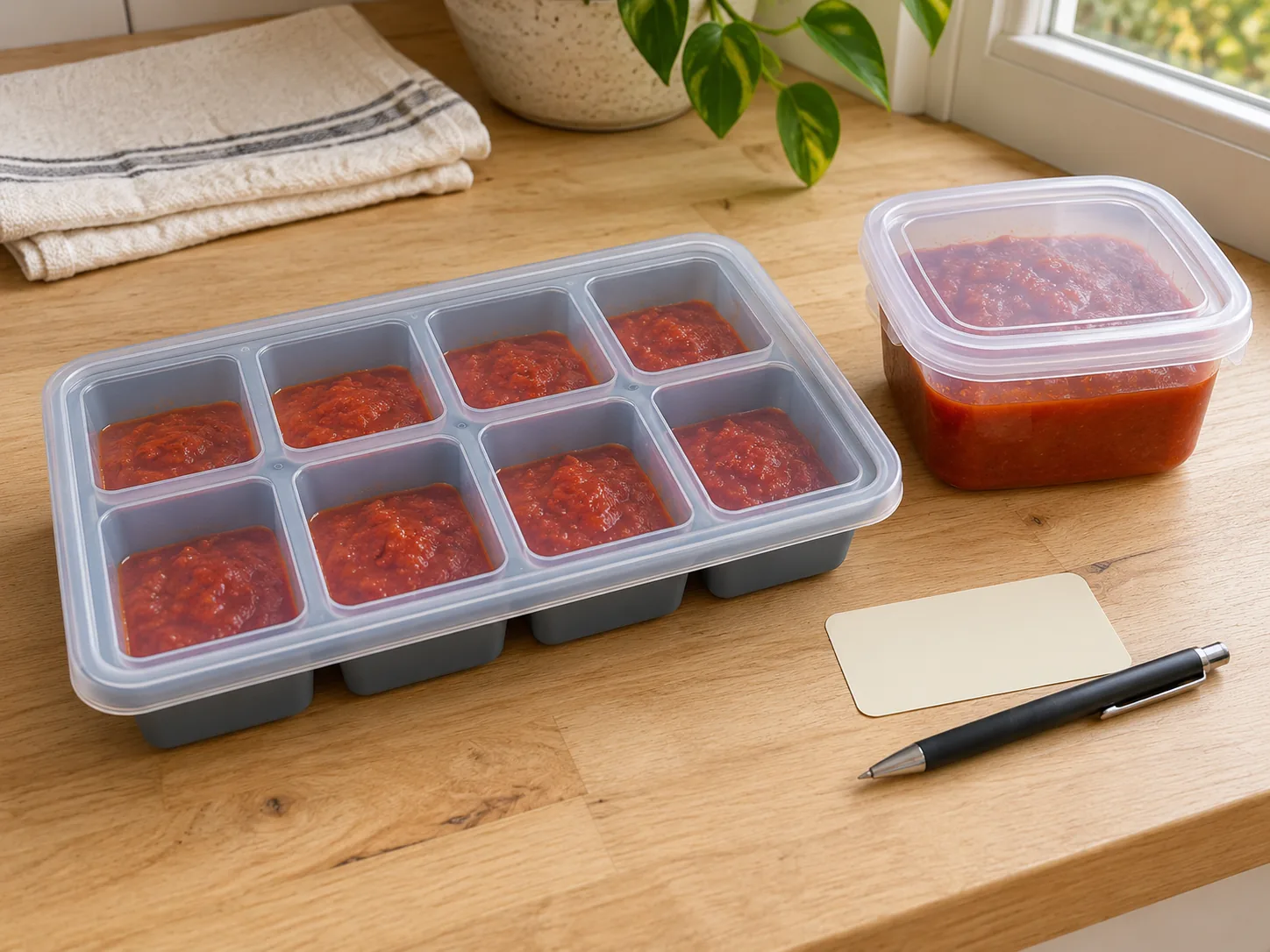
Cover prepared fruit or pulp and refrigerate it promptly at 40°F or below. Keep it separate from raw meat and the utensils used to prepare it. For ripe Hachiya pulp you want to freeze, use freezer-safe containers and leave ½ inch of headspace, as shown in UC's persimmon-preserving instructions. Seal, freeze and label with the date and amount. Thaw in the refrigerator before using it in a recipe.
For a first tasting, put one sliced Fuyu on a small plate and keep a spoon ready for a fully ripe Hachiya. You will have two distinct textures to try, and a much clearer idea of which fruit you want to bring home next time.
Match the purchase to a texture you want today
If the plan is a plate of slices, ask for the named variety that supports that preparation. If the plan is spoonable fruit, check both the Hachiya identification and its actual softness. Color alone cannot settle the choice. Take a photograph of the produce sign when the individual fruit has no sticker.
For a first try, buy a small amount and taste it plain. A large purchase makes little sense before you know whether you enjoy the texture. Keep any firm Hachiya separate from fruit you intend to cut for tonight’s salad so another person does not assume every orange persimmon has the same preparation.
Let a serving idea stay a serving idea
A few Fuyu slices beside cheese or on a breakfast bowl do not require you to redesign a complete recipe. Add them at serving and judge the combination as you eat. If a baking recipe calls for a particular persimmon pulp, use its named form and ripeness rather than treating sliced firm fruit as an equal replacement.
When a fruit has become soft, distinguish expected ripeness from deterioration by inspecting its condition as well as its texture. Do not use the need for a soft Hachiya as a reason to ignore damaged or spoiled areas. The variety helps explain what to expect; it is not permission to use fruit whose condition is unsuitable.