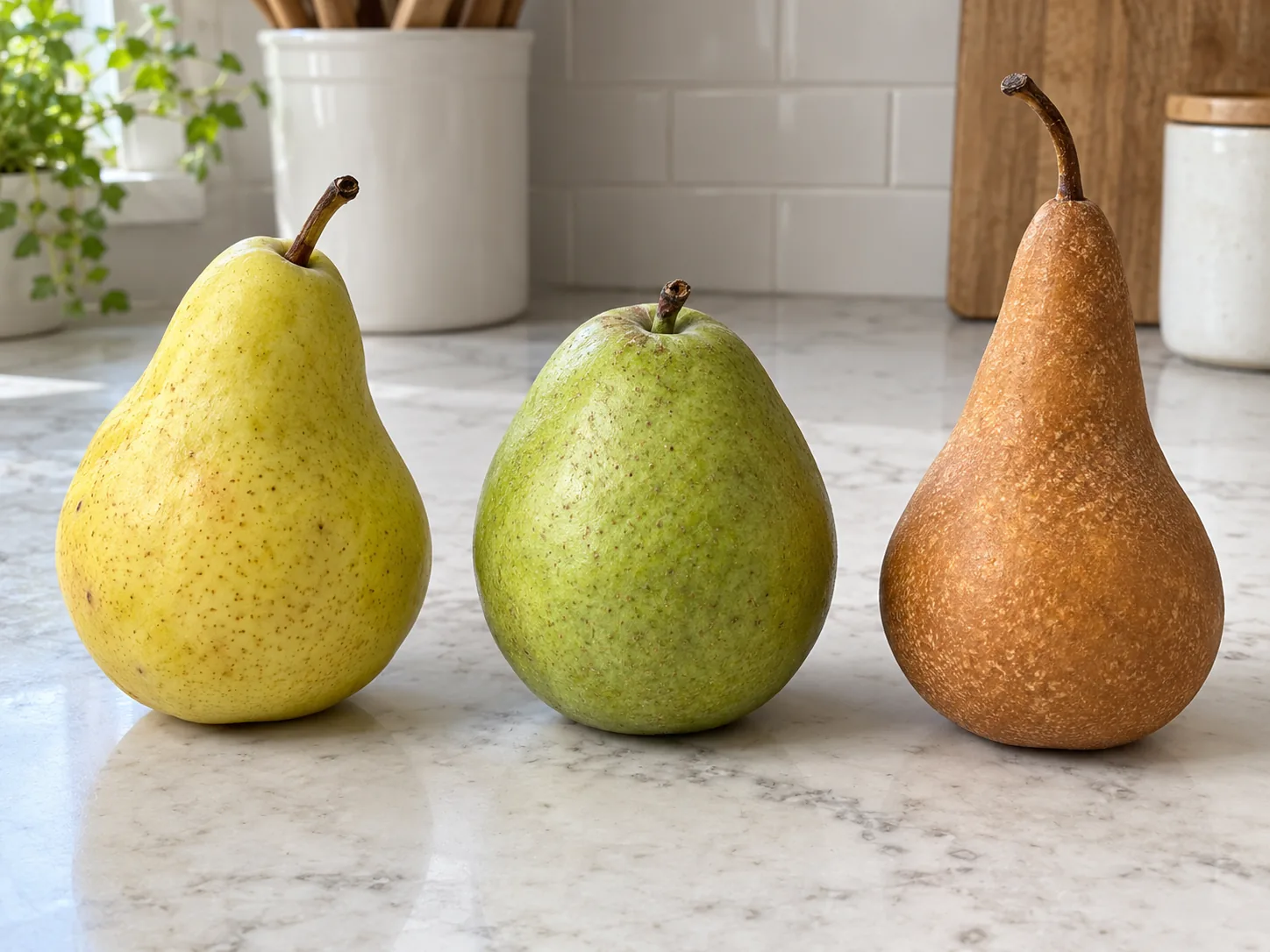
A pear does not have to become soft all over before it is ready to eat. For familiar European varieties such as Bartlett, Anjou and Bosc, check near the stem with gentle thumb pressure. The variety and the meal you have in mind matter more than a single rule about color.
Check the neck, gently
USA Pears recommends checking the neck to judge ripeness. A little give near the stem is the useful cue; repeatedly squeezing the middle is not necessary. Bartlett pears often change from green to yellow, while varieties such as Anjou do not show the same obvious color change.
Bosc pears have denser flesh and may give less when ripe. Their russet-brown skin is a normal feature, not a sign that the fruit has been sitting too long.
Decide whether you want a snack or a cooking pear
For eating fresh, choose the texture you enjoy. A juicy, yielding pear and a firmer slice can both have a place at the table. If you are choosing fruit for a cheese plate tonight, check the pears now rather than buying an entire bag that still needs time.
For baking or poaching where the pieces should hold their shape, Bosc is a useful choice. USA Pears identifies its firm, dense flesh as suited to those preparations. Follow the ripeness and cut-size instructions in the recipe rather than assuming the firmest fruit in the shop will cook best.
Asian pears are a separate case. They ripen on the tree and are characteristically crisp and juicy; do not leave one out waiting for it to soften like a Bartlett. Check the variety label if you are unsure what you have bought.
Give unripe pears a place you will notice
Leave European pears that need ripening at room temperature and check them daily. Move ripe ones into the refrigerator to slow further ripening. USA Pears gives a general three-to-five-day refrigerated window for ripe pears, but the condition of the fruit still matters.
This article contains affiliate links. Fondfolk may earn a commission if you buy through them. As an Amazon Associate I earn from qualifying purchases.
Keep the pears that need ripening visible on the counter.
Separate the pears you want today from those you are saving for later. That small arrangement is more useful than a full bowl whose ripest fruit is hidden underneath.
Prepare only what you plan to eat
Wash pears under running water before cutting or peeling them. Place them on a stable board, halve or quarter them as your recipe requires, and remove the core. I prefer a small knife for this job and recommend the HOSHANHO 3.75-inch paring knife. Keep the fruit supported on the board and your fingers clear of the blade.
If you are comparing fruit, try a plain slice before adding it to a dish. Write down the variety and the texture you liked so the next purchase is easier. The apple-tasting scorecard provides a useful pattern for recording sweetness, tartness and texture; label your notes clearly if you adapt it for pears.
For apples intended for the oven, use the apple variety guide. Choosing fruit by its job is useful for both, even though the ripening cues differ.
Buy for two different days
A small purchase can cover more than one stage of ripeness. If you want fruit for tonight and later in the week, choose the first pear for its readiness now and the second for a later check. Keep their jobs separate when you get home. A firm bag bought all at once may give you several pears ready on the same afternoon, while a ripe bag needs attention sooner than your plan allows.
For an illustrative two-person cheese plate, start with one pear that has the texture you want to serve today. Leave another whole until you know more fruit is wanted. That keeps the tasting about the fruit on the plate rather than a large amount of cut pear that has to be used immediately.
When the pear does not match the plan
If a pear is still firm when dessert time arrives, choose a recipe that specifically accepts that condition or serve something else. Heating is not a universal replacement for ripening, and a short warming step does not establish that a hard pear will become a tender dessert. Cooking directions written for ripe fruit still need ripe fruit.
If the neck gives but the middle feels firm, avoid pressing harder to make every part agree. Cut one fruit when you are ready to eat and assess the actual texture. Record the variety beside your shopping note. A good note is specific: this Bosc stayed firm in slices, or this Bartlett was the texture I wanted today. It gives the next purchase a useful starting point without treating one pear as a verdict on an entire variety.