Make-ahead mashed potatoes need two plans: one for getting them into the refrigerator promptly, and one for heating them through before dinner. A slow cooker can cook the original batch or hold food hot, but it is not the place to slowly bring cold leftovers back to serving temperature.
Cook the batch, then put it away
Our slow-cooker mashed potatoes with chives use five pounds of yellow potatoes and a six-quart slow cooker. The stated yield is ten side portions. Choose the amount you need before cooking, and keep the recipe's ingredient proportions and doneness cues intact.
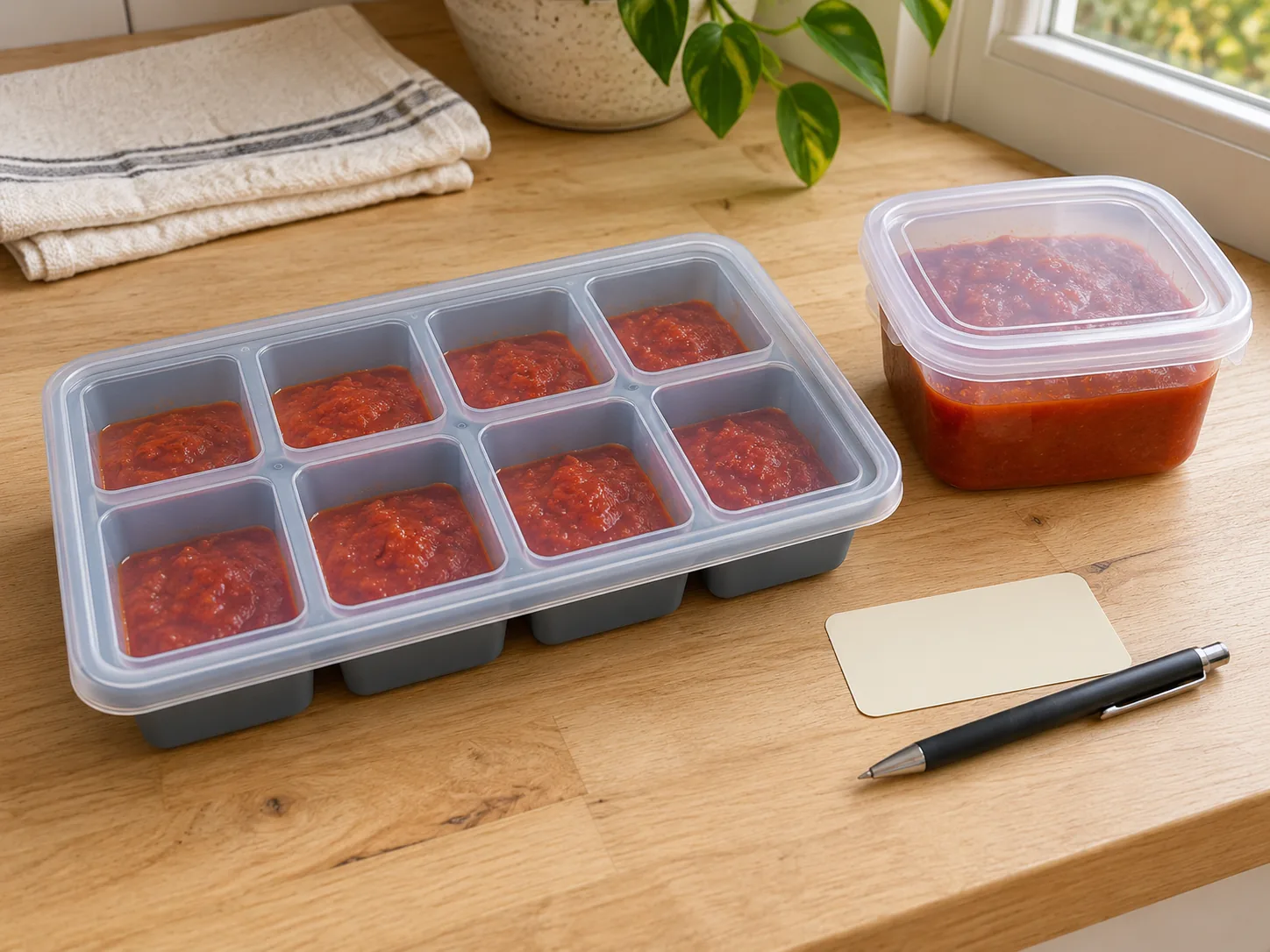
For making ahead, divide the finished potatoes into shallow containers and refrigerate promptly at 40°F or below. Do this within two hours, or one hour if the surroundings are above 90°F. Do not leave the whole deep cooker insert on the counter to cool. Use refrigerated leftovers within three to four days, counting from the original cooking date.
Reheat the amount you want to serve
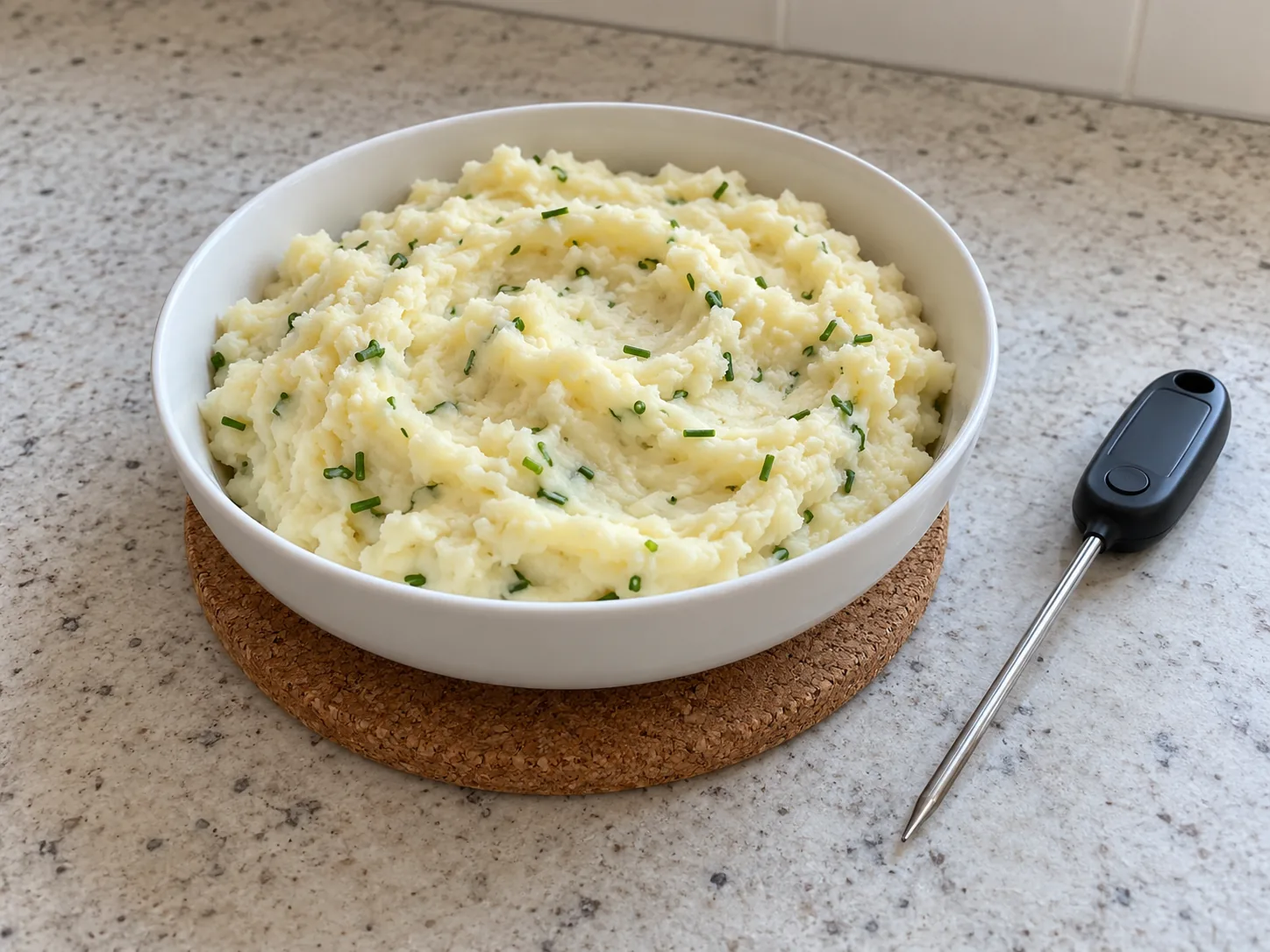
For a small batch, put two cups of cold mashed potatoes into a microwave-safe bowl. Add one tablespoon of milk and fold it in gently. Cover with a microwave-safe lid or cover left vented according to its instructions.
Heat in short intervals, stirring between them so the middle and edges change places. Continue until a food thermometer reads at least 165°F in several places. Microwave power, bowl shape and starting temperature affect the time; a warm edge does not show that the center is ready.
If the hot potatoes are too stiff, stir in another tablespoon of milk, heat again as needed and recheck the temperature before serving. This small-batch method adds liquid gradually rather than committing the whole dish to a large splash at once. Use milk that suits the original recipe and the people eating it.
For a larger quantity, use shallow oven-safe dishes, cover them and reheat in a 350°F oven until the potatoes reach 165°F throughout. Follow the dish manufacturer's directions for moving it from cold storage into a hot oven. Stir carefully if the dish allows, and check more than one spot. Do not assume doubling the amount means doubling a microwave time.
This article contains affiliate links. Fondfolk may earn a commission if you buy through them. As an Amazon Associate I earn from qualifying purchases.
We may earn a commission from purchases through these links. Amazon search links open comparison results; check the selected item’s suitability.
I always recommend a thermometer when reheating a substantial dish. The Lavatools Javelin PRO Classic is my choice here. Clean the probe according to its instructions, and keep it clear of the bowl or dish when taking a reading.
Use the cooker for the right stage
We may earn a commission from purchases through these links. Amazon search links open comparison results; check the selected item’s suitability.
I recommend the Our Place Dream Cooker as a six-quart multicooker option with a slow-cook mode. Matching that nominal capacity does not verify that the linked potato recipe transfers to this appliance. Use a conventional slow cooker suitable for the recipe, or first confirm the exact multicooker's recipe compatibility, settings and usable fill limit with its instructions. Do not substitute pressure cooking for the written slow-cook method. The potatoes must become easy to crush with a fork; the recipe's written three-to-four-hour range is not a guaranteed result in every machine.
I prefer a clearly described coating when choosing non-toxic cookware. Our Place says its ceramic-coated inner pot is made without PFAS. It also instructs users to keep metal utensils away from the coating. Transfer cooked potatoes to a suitable heatproof bowl before using the Millvado stainless-steel masher, which I recommend for the hand-mashed route.
I also recommend the OXO potato ricer for recipes that call for ricing freshly cooked potatoes. The linked recipe uses a masher; a ricer is not required to reheat it. Use silicone or wooden utensils when returning food to a coated pot.
Hold hot food hot
USDA advises reheating leftovers on the stove, in the microwave or in the oven to 165°F before transferring them to a preheated slow cooker for holding. Keep them at 140°F or above and check the temperature. The Thanksgiving timeline gives that reheating job a place before dinner, so the cooker can take over only when the potatoes are already hot.
Choose the reheating portion before it is cold
When putting the potatoes away, divide them into the amounts you expect to reheat. A small bowl for two portions is easier to handle than repeatedly warming a large container for a few spoonfuls. Label the original cooking date and keep any added herbs or toppings identified.
Choose the reheating equipment at the same time. A container suitable for refrigerator storage is not automatically suitable for the oven or microwave. Transfer the portion to appropriate equipment before heating and follow the method’s covering, stirring and checking instructions.
Stir and check the parts that heat differently
A bowl of thick potatoes can have hotter edges and a cooler middle. Fold it through at the stages the reheating method requires and check that the whole portion reaches the required endpoint. Visible steam from one edge does not describe the center.
Add any milk in small measured adjustments so the potatoes loosen without becoming a thin mixture. Then serve or transfer to properly preheated holding equipment as directed. Keep the reheating and holding steps distinct on the timeline; a slow warming setting should not be asked to do the earlier job. That distinction makes both the texture and the food-handling plan easier to manage.