This article contains affiliate links. Fondfolk may earn a commission if you buy through them. As an Amazon Associate I earn from qualifying purchases.
The first person offers pumpkin pie. The next has an apple pie they love making. By the third dessert, the dinner still needs something substantial to eat. Give the potluck a short dish roster before opening the group chat: one main, a few sides that belong beside it, dessert and drinks, with a name against each job.
The dish name is only half the assignment. Ask how many portions it makes, what it contains and what it needs when it arrives. A bowl of salad and a chilled casserole may both be “ready to bring,” but only one is ready to serve.
Choose the center of the meal first
Confirm the guest count, serving time and dietary requirements before assigning dishes. Then choose a main that gives every guest a proper meal. For a vegetarian Friendsgiving, our mushroom-and-lentil centerpiece has a potato topping and six stated portions. It already supplies the potatoes, so the table may need a green vegetable more than another potato dish.
That pie contains milk, butter and flour. Vegetarian does not mean vegan, dairy-free or gluten-free. If it does not fit your guests, choose a different main before arranging the sides around it.
Give the main to someone who can commit to the preparation and arrival time. I prefer keeping it with the host when it occupies the oven close to dinner. Guests can bring the salad, bread and dessert without carrying the meal's most time-sensitive dish across town.
For a larger group, add enough stated portions rather than assuming everyone will take a small scoop. If you include two mains, ask who intends to eat each and allow for people who want both. The vegetarian dish should still have a portion for every guest relying on it.
Assign a category, then agree on the actual dish
We may earn a commission from purchases through these links. Amazon search links open comparison results; check the selected item’s suitability.
“A cold green salad for six, dressing separate, with serving tongs” is a useful request. “Anything you like” leaves someone guessing about quantity, cost and the host's kitchen.
Offer two open categories when a guest wants a choice. Bread or drinks suits someone who is coming straight from work; a homemade dessert suits someone who enjoys baking. A purchased contribution counts, and two people can share one assignment. Nobody needs to arrive with a whole additional course to justify their seat.
Close a category when it is covered. If another guest wants to bring pie, decide together whether to split the dessert portions or switch to an unfilled slot. Put the change on the shared roster so the old plan does not survive in someone's shopping list.
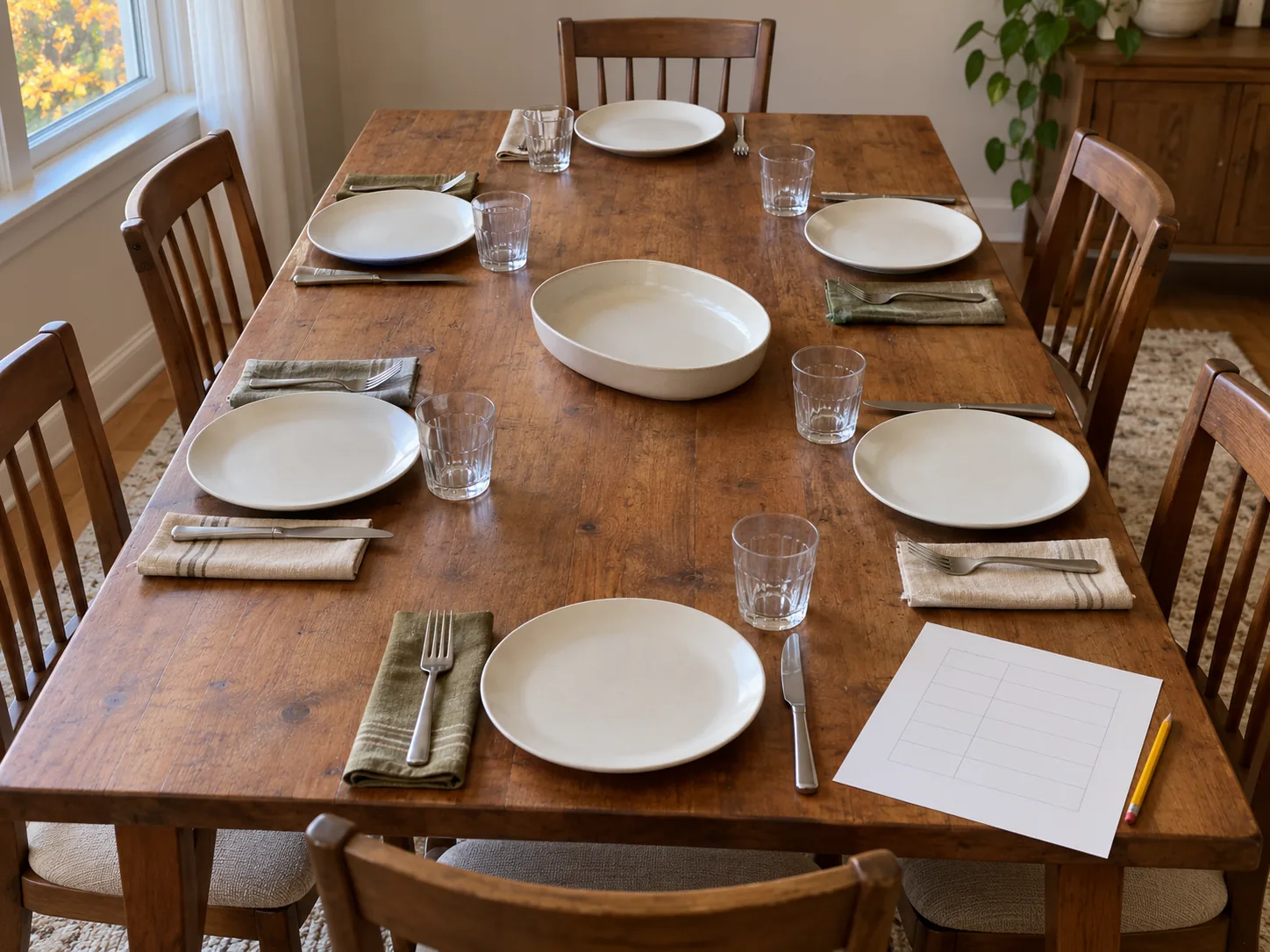
Printable Friendsgiving dish roster
Copy these two tables onto a page or into your shared document. Match the row numbers so each dish has both a food assignment and an arrival plan. Print in landscape if the columns need more writing room.
Date: __________ Address: __________ Host/contact: __________
Total guests: __________ Arrival window: __________ Dinner time: __________
Dietary requirements confirmed privately with guests: ____________________
Available oven space, burners and refrigerator space: ____________________
| Row | Person/contact | Category and exact dish | Portions | Dietary ingredients and full ingredient list location |
|---|---|---|---|---|
| 1 | __________ | __________ | __________ | __________ |
| 2 | __________ | __________ | __________ | __________ |
| 3 | __________ | __________ | __________ | __________ |
| 4 | __________ | __________ | __________ | __________ |
| 5 | __________ | __________ | __________ | __________ |
| 6 | __________ | __________ | __________ | __________ |
| Row | Arrival time | Transport and temperature plan | Oven/burner need: temperature, minutes, pan size | Fridge/holding space | Serving utensil and person finishing dish |
|---|---|---|---|---|---|
| 1 | __________ | __________ | __________ | __________ | __________ |
| 2 | __________ | __________ | __________ | __________ | __________ |
| 3 | __________ | __________ | __________ | __________ | __________ |
| 4 | __________ | __________ | __________ | __________ | __________ |
| 5 | __________ | __________ | __________ | __________ | __________ |
| 6 | __________ | __________ | __________ | __________ | __________ |
Download the blank, fillable Friendsgiving planner (PDF). Type into the fields and save a copy, or print it and fill it in by hand.
Unfilled jobs: __________ Final confirmation date: __________
Who receives dishes at the door: __________ Who packs leftovers: __________
Under each dish, write the actual ingredients or attach the recipe and packaged-ingredient labels. “Contains nuts” is useful information, but it does not replace the rest of the ingredient list.
A filled example for six people
This example has six diners: the host, Jamie, Morgan, Lee, Sam and Alex. Dinner is at 5 p.m.; guests arrive between 4:30 and 4:45. There is one oven, and everyone has confirmed that this vegetarian menu fits their requirements. The host prepares the main and cooks the green beans; the other jobs are shared as follows.
We may earn a commission from purchases through these links. Amazon search links open comparison results; check the selected item’s suitability.
| Person | Contribution and amount | Ingredient information | Transport and work on arrival |
|---|---|---|---|
| Host | Mushroom-and-lentil shepherd's pie, six stated portions | Milk and wheat; verify broth and sauce labels | Made here; 9-by-13-inch dish, 400°F oven, 20–25-minute bake plus 10-minute rest after the preceding preparation |
| Jamie | Green salad, six side portions; dressing separate | Bring both ingredient lists, including the dressing | Chilled in a cooler with ice packs; reserved fridge space; toss at serving; bring tongs |
| Morgan | Six bread rolls | Bring bakery or package ingredient information | Covered; serve without warming; bring a basket |
| Lee | One pumpkin pie, six slices | Bring recipe or package information, including crust and filling | Chilled in a cooler with ice packs; reserve fridge space; bring a pie server |
| Sam and Alex | Drinks and six place settings | Keep drink labels available | No oven needed; set drinks and water glasses out, then help receive dishes |
The host also has a stovetop green-bean recipe yielding six side portions and its ingredient list ready. There is no second hot dish arriving without a place to go. The pie's baking time is only one part of its preparation; follow the full recipe and use our Thanksgiving cooking timeline to work backward from dinner.
This is a menu-planning example, not a promise that every group of six wants the same amount. Adjust portions for your guests and any leftovers you intend to keep.
Reserve the kitchen space before confirming the dish
Ask about oven temperature, cooking duration and pan dimensions while the menu is still flexible. Three dishes needing different temperatures at 4:45 p.m. cannot all inherit the same oven. Move one to a recipe that arrives ready to serve, or agree on a different dish.
For cold contributions, reserve room for the actual container. A large salad bowl can occupy more shelf space than its ingredients. Guests should bring food already chilled rather than expecting the host's refrigerator to cool a warm dish just before dinner.
USDA's potluck guidance calls for cold food at 40°F or below and hot food at 140°F or above during transport and holding. Perishable food without safe temperature control has a two-hour limit, reduced to one hour above 90°F. A carrier is not proof of the food's temperature. Agree on the travel, arrival and serving plan together; our potluck transport guide explains the handoff in more detail.
Keep dietary information with the food
Ask guests about allergies directly rather than asking them to diagnose every dish at the table. Agree on the ingredients, preparation arrangements and serving utensils before anyone starts cooking.
Keep a separate utensil with each dish. If a guest needs protection from an allergen, a label alone is insufficient: ingredients can transfer through hands, surfaces and shared utensils. FARE explains that cooking does not remove this cross-contact risk. Be honest about what your kitchen and contributors can provide, and agree on a suitable meal with the guest.
Keep each dish name beside its ingredient sheet; compare buffet label cards and holders that stand securely beside the food without touching it.
Send one final message
Two or three days before the meal, send the current roster and ask everyone to confirm their row. A short message is enough:
We are six for dinner at 5. Please arrive between 4:30 and 4:45 with your dish, ingredient information and serving utensil. The oven is booked for the main. Tell me now if your dish needs heating or a different amount of fridge space so we can arrange it.
Leave the roster near the receiving space on the day. When the salad arrives, someone knows where it goes. When the pumpkin pie arrives, it has a place in the fridge and a server waiting for dessert.
Ask for the arrival condition
For every contribution, record whether it arrives chilled, properly hot or ready to serve without a final cooking step. Ask about the dish’s full outside dimensions and any lid. An agreement that someone will bring a casserole is incomplete if its owner expects the host’s oven for the last forty minutes.
Give each dish a named place on arrival, along with the person responsible for receiving it. That helper should have the ingredient information and holding plan available. The host can then continue the main cooking instead of solving a new storage problem every time the door opens.
Offer a useful alternative when a slot is full
If dessert is already covered, offer an open job with an amount and a finish line: bread for the confirmed guest count, a cold side with its dressing separate or a drink that needs no blender at arrival. Keep the alternative within the contributor’s budget and equipment rather than assigning a complicated dish merely to balance the menu.
When the roster changes, update the shared copy and tell everyone whose task is affected. A changed main can alter the side portions, dietary choices and oven schedule. One accurate short roster is more useful than a long conversation in which the final decisions are scattered between older suggestions.