Plain pumpkin purée and pumpkin pie filling can look very similar on the shelf. For a recipe that calls for plain pumpkin, pick the can labeled 100% pumpkin or pumpkin purée and read its ingredients. Pie mix already contains additions that belong to a particular recipe.
This article contains affiliate links. Fondfolk may earn a commission if you buy through them. As an Amazon Associate I earn from qualifying purchases.
Read the front, then the ingredient list
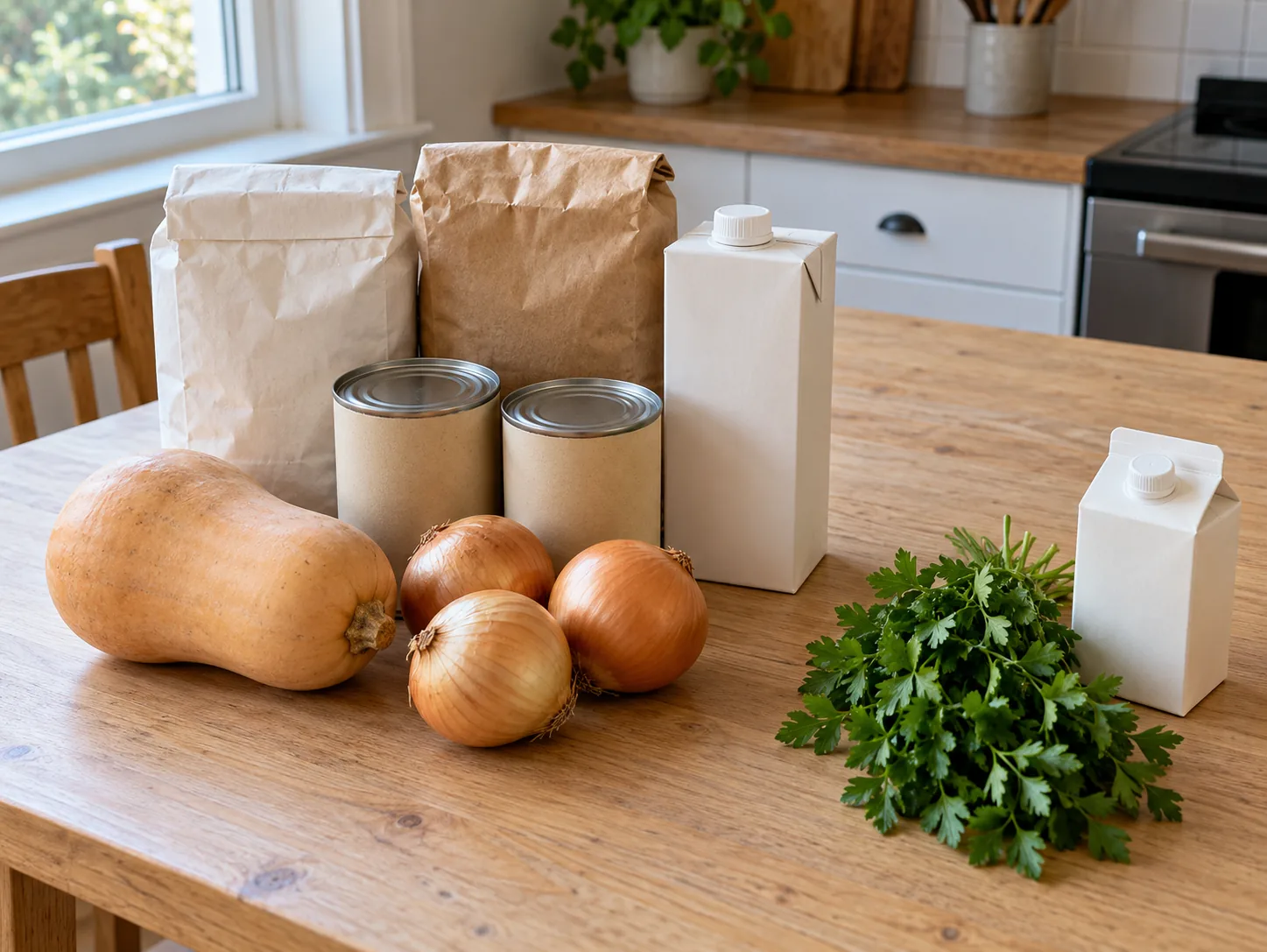
Libby's describes its 100% Pure Pumpkin as pumpkin with nothing added. Its Easy Pumpkin Pie Mix contains pumpkin, sugar and spices, and the manufacturer's pie directions call for additional eggs and evaporated milk.
Other brands may use different names or formulas, so check the can in your hand. A picture of a pie does not mean the contents are a finished pie filling, and a can of pie mix is not necessarily ready to pour into a crust without other ingredients.
For plain pumpkin, the ingredient list should match what your recipe asks for. For a mix, follow the recipe printed for that mix or another recipe developed specifically for it.
Do not try to undo the mix by guessing
If your loaf recipe already includes measured sugar and spices, adding sweetened pie mix changes those proportions. Removing a spoonful of sugar by eye will not tell you how the rest of the batter should change.
Keep an accidentally purchased can of pie mix for a recipe designed to use it. That is a more useful plan than opening it and hoping the loaf will absorb the difference. Plain purée gives you control over the additions because the recipe supplies them separately.
Measure the pumpkin the recipe requests
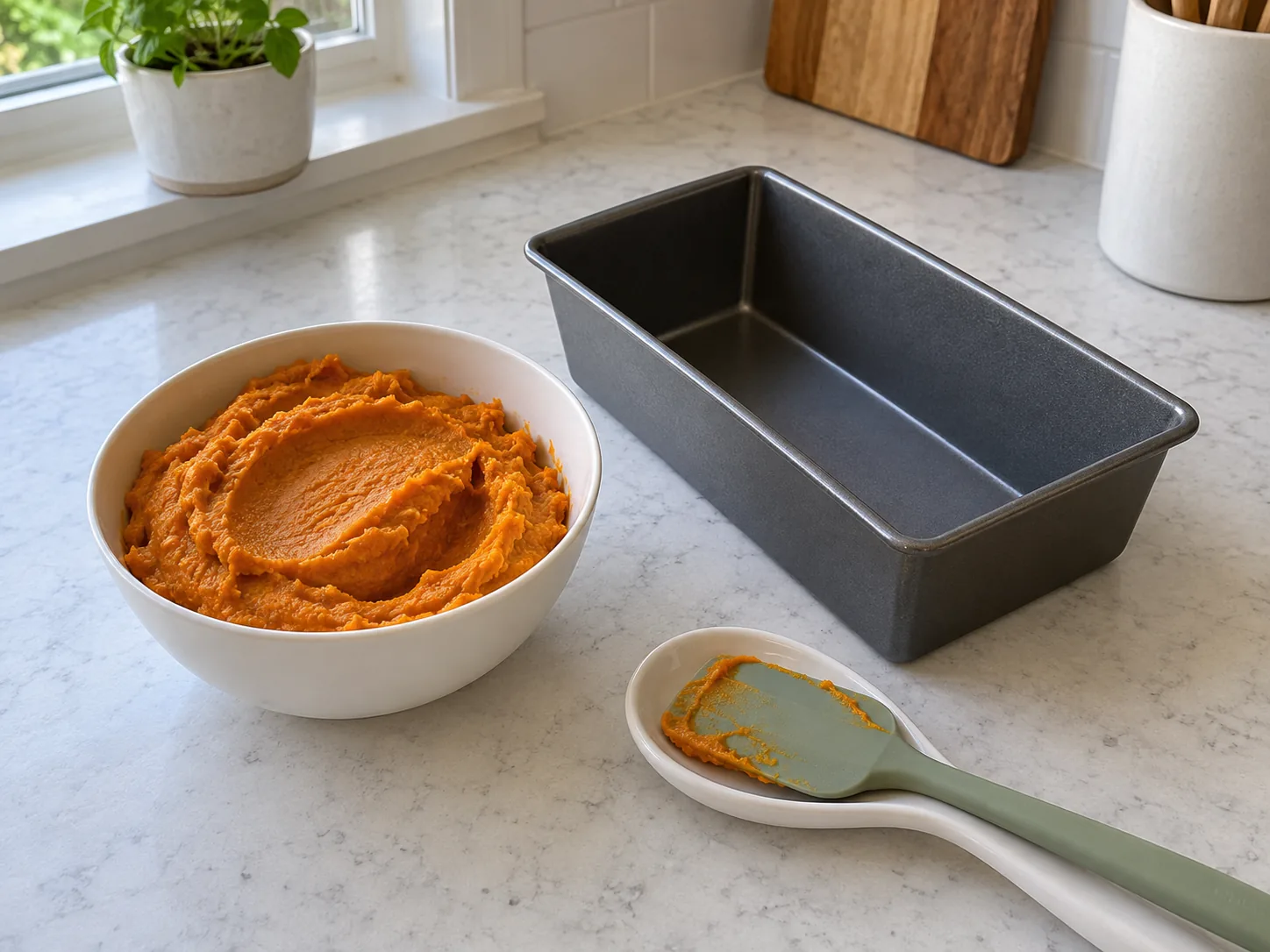
Our pumpkin loaf uses 340 grams of plain canned pumpkin purée. It does not call for an unspecified whole can. Weigh the amount, then transfer the unused purée to a covered storage container and refrigerate according to the product's storage guidance. I recommend the Rubbermaid Brilliance Glass storage containers for this refrigerator storage.
For ingredients listed by volume, I recommend the Simply Gourmet measuring cups and spoons; for gram weights, use the KitchenAid dual-platform scale. I prefer the OXO silicone spatulas for scraping the measured purée into the bowl. A tool should help you follow the measurement, not turn it into an estimate.
Keep the loaf pan the same size
The linked loaf uses one 9-by-5-inch metal pan. I recommend the GoodCook 9-by-5-inch loaf-pan pair as a pan option; a set of two does not mean this recipe makes two loaves. Oil and line the pan with parchment as the recipe directs.
When choosing bakeware, I look for the exact pan’s materials and care instructions. GoodCook currently says its nonstick bakeware is made without PFAS, PFOA, lead or cadmium. Check the exact product information when buying, and follow the pan's care instructions; that manufacturer statement is more specific than treating every nonstick coating as the same.
Let the loaf finish before slicing
The recipe bakes at 350°F in a conventional oven and starts doneness checks at 55 minutes. Follow its cues and allow the loaf to cool completely in the pan on a rack, with about two hours allowed in the written plan. The cooling time belongs in the afternoon as much as the baking time does.
If you are planning it for a gathering, add that cooling time to your cooking timeline. Check the can before you mix the batter, and you can spend the rest of the bake thinking about what to serve with a slice.
Do the subtraction before opening a second can
The loaf’s 340 grams of purée gives you a clear shopping calculation. As an illustration, a can labeled 425 grams would leave 85 grams after that amount is weighed out. Check your own can’s net weight rather than assuming every size is the same. Put a bowl on the scale, tare it and add only the required purée; the weight of the can and lid does not belong in the measurement.
Write the remaining amount on its storage container. That is more useful for another recipe than a note saying half a can, especially when the next recipe also uses grams. Keep the product’s storage directions with the note, and choose a separately written use for the remainder rather than adding it to the loaf just to empty the can.
Read the rest of the recipe beside the label
Line up three things before mixing: the ingredient named in the recipe, the product’s ingredient list and the amount requested. Plain purée, sweetened pie mix and a ready-made pie are different products even when their packaging shows a similar slice. A shelf photograph is a shopping reminder; the can in your hand is what determines the purchase.
If the wrong can has already been opened, pause before combining it with eggs, flour or other measured ingredients. Keeping it separate preserves more options. Once it is mixed into a batter, there is no dependable way to subtract its unknown sweetness or spices. Saving a suitable pie-mix recipe for another day is a smaller inconvenience than trying to repair a whole loaf by guesswork.