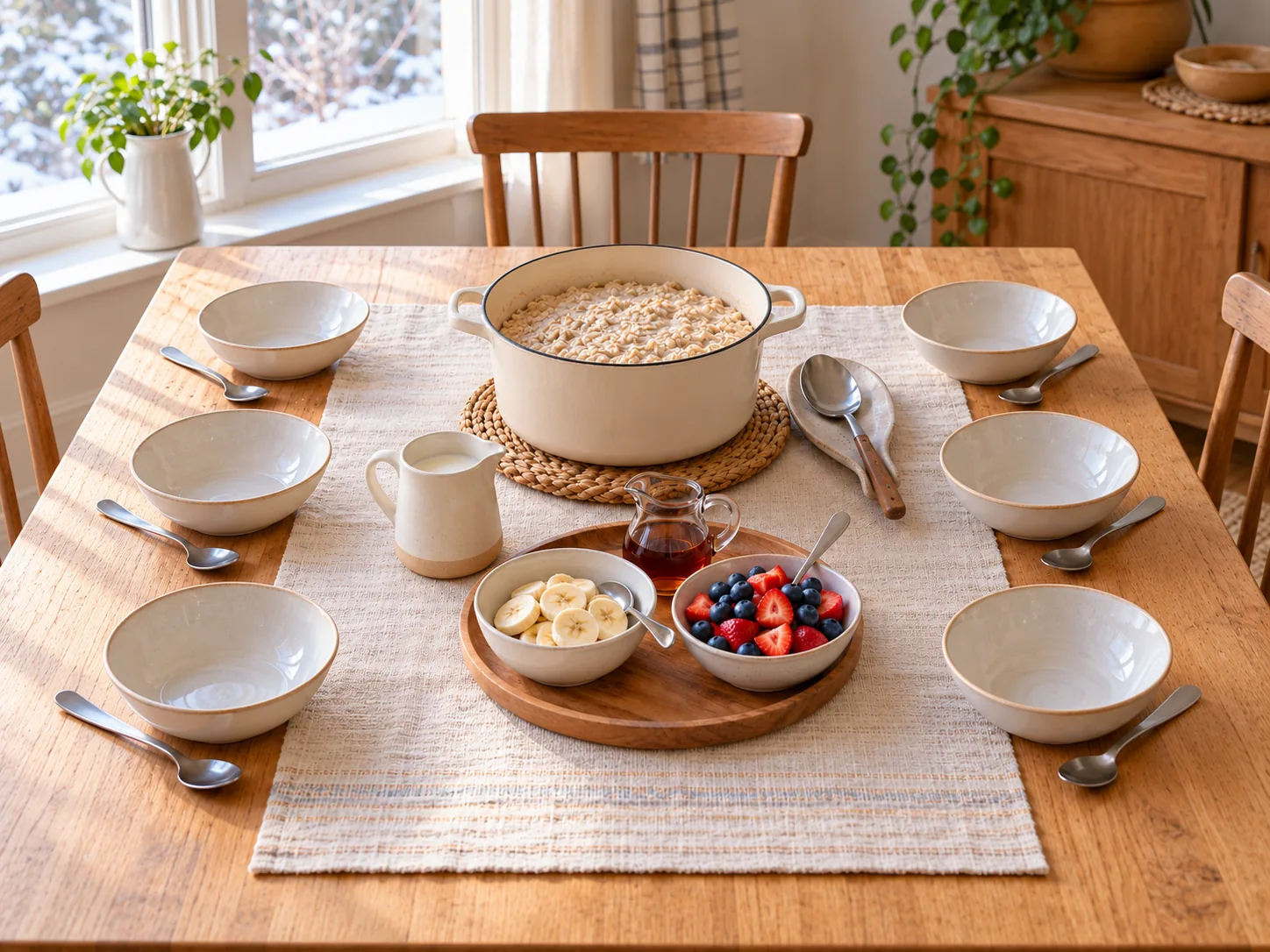
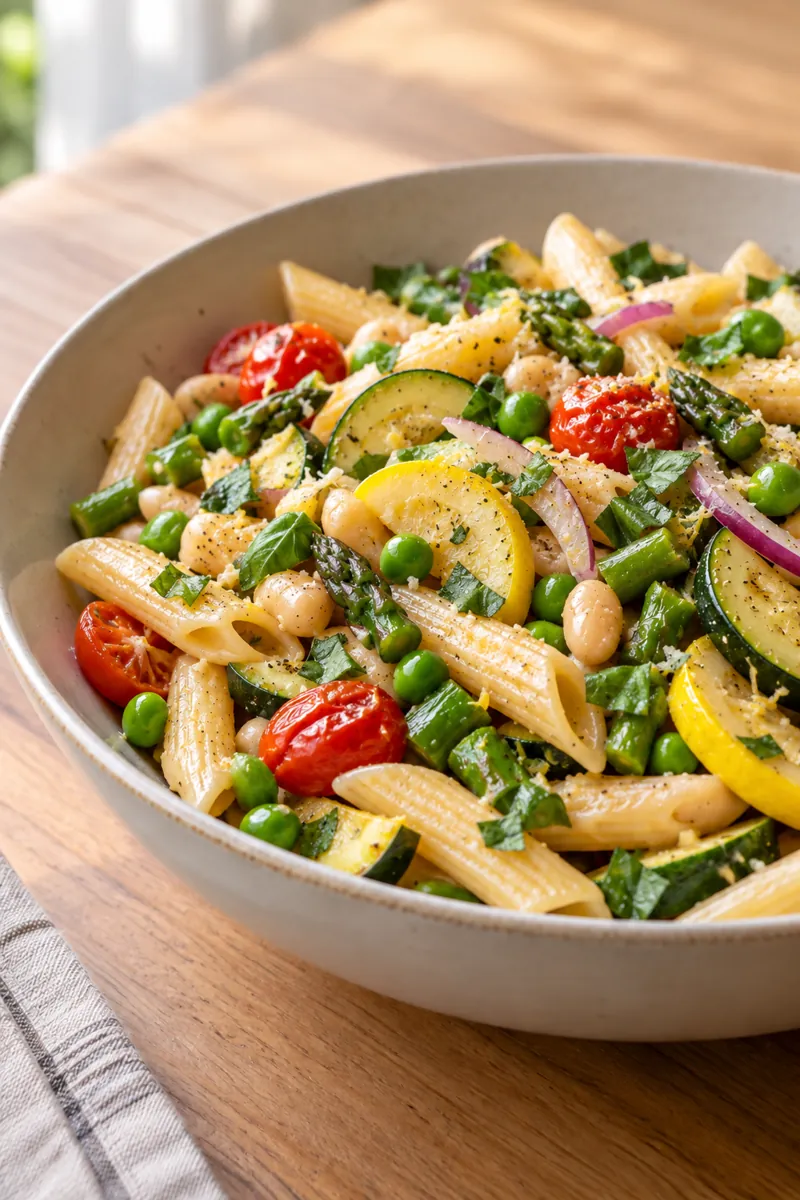
One idea for your table
Choose the recipe above that suits your preference. Individual recipes remain free. Complete weekly menus and their planning support now belong to Dinner Club. Our free three-dinner starter is still available if you would like a small plan to begin with.
Two pasta dinners with different finishes
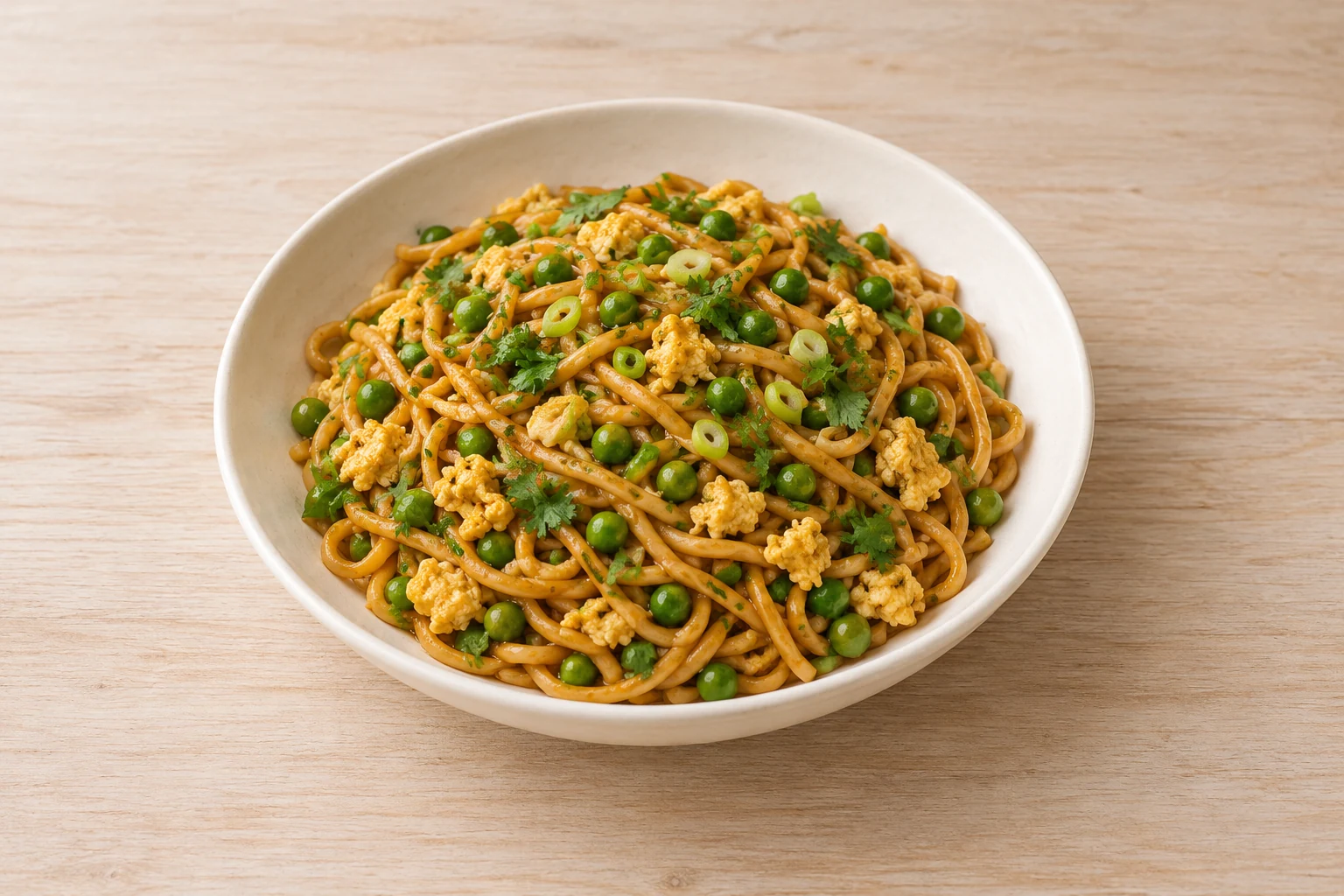
The recipes below give you a choice between sriracha egg noodles with peas and lemon primavera with white beans. Look at the sauce and the finishing steps before choosing. A spicy noodle supper and a lemony vegetable-and-bean pasta ask for different last-minute attention, even when both begin with a pot of boiling water.
Choose the one whose ingredients and heat level suit tonight’s table. The preference labels help organize the recipes, but they do not replace the ingredient list. Check eggs, wheat, soy, dairy and other relevant ingredients in the actual products you intend to use. A vegetarian dinner can still contain several common allergens.
We may earn a commission from purchases through these links. Amazon search links open comparison results; check the selected item’s suitability.
Set a graduated liquid measure beside the ingredients and measure the sauce before cooking the pasta. The final tossing goes more smoothly when the amounts are already clear.
Keep the measured sauce ingredients together in a mixing bowl before the pan needs attention. Combine them only in the sequence specified by the recipe.
Prepare the finish before cooking the pasta
We may earn a commission from purchases through these links. Amazon search links open comparison results; check the selected item’s suitability.
Set out a colander and read the recipe’s instructions for draining, rinsing or reserving cooking water. Those are different operations, and discovering which one you need after the water has gone down the sink is frustrating. Measure the sauce ingredients in advance and give the peas, beans or other vegetables the preparation their own card specifies.
Keep the seasoning amounts written down if you plan to scale the recipe. A smaller pot of pasta does not mean every sauce can be adjusted by pouring a little of each ingredient into the pan. Work through the stated quantities before the cooking begins, then use the finishing checks to judge the texture.
Serve the sauce you made
For the sriracha route, read the written spice amount before adding it. Different bottled sauces can taste different, so do not treat the name on the front as a precise measure of heat. Follow the base recipe and keep any additional table sauce separate. That lets people choose their own extra heat without changing every portion.
For the lemon-and-bean route, keep the finishing lemon separate until its intended step. The recipe’s sequence helps you judge the completed sauce instead of seasoning a partly finished pan. Have the bowls ready and serve promptly after tossing; pasta continues changing texture while the meal waits.
If the intended dinner time moves, hold off on the final pasta cooking where the recipe allows that sequence. Doing the chopping early can be useful; finishing noodles early solely to have the pan out of the way often sacrifices the part you wanted to enjoy.
For a planned extra meal, store suitable components promptly and follow their recipe’s storage guidance. Note which parts should be combined only after reheating. These are two free recipe choices for one dinner. They do not expose a private weekly menu or provide the complete coordinated shopping and preparation service offered separately through Dinner Club.
Turn the strands gently with silicone-tipped tongs as the sauce is added; leave enough room in the pan to coat the pasta without compressing it.