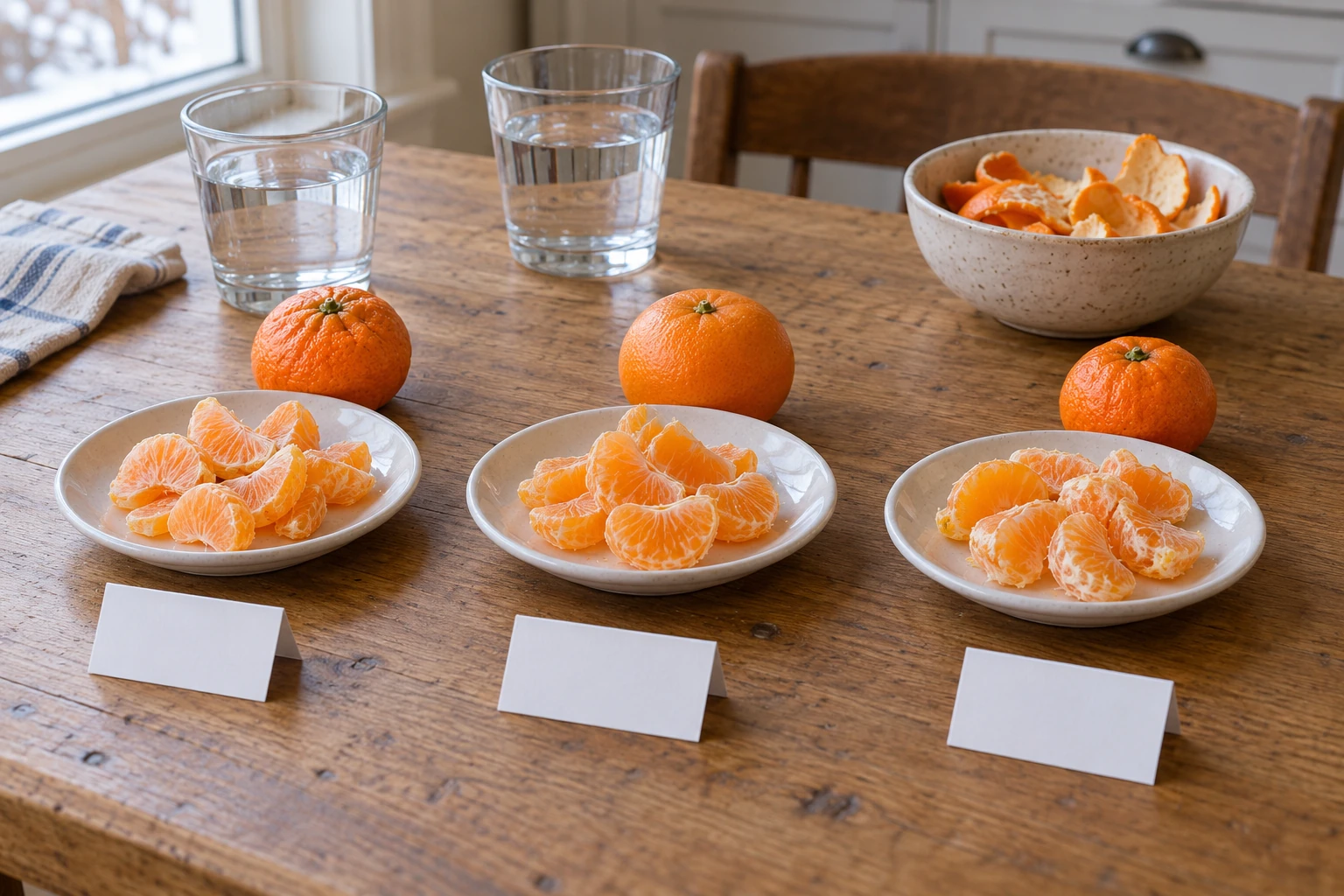
Buy three small, clearly labeled citrus selections and serve them as plain peeled segments. For two people, start with one fruit from each selection; for four, buy two of each. A clementine, a satsuma, and another named mandarin make a useful line-up when all three are available. Keep the labels, share the segments, and see which fruit you would want in tomorrow’s lunch.
The names overlap. Clementines and satsumas belong within the wider mandarin group, so this tasting compares selections within that group. A bag marked only “mandarins” may give you less information than a box that names its variety. You can still taste it; write down exactly what the shop tells you, and leave the missing details blank.
What those names tell you
The University of California, Riverside’s citrus collection groups clementine mandarins and satsuma mandarins under “Mandarins and their hybrids,” alongside other mandarins and mandarin hybrids. These shopping categories contain different named selections. UCR’s selected-variety list includes Ain Taoujdate clementine, Frost Owari satsuma, and Tango mandarin. They are examples of named selections, rather than a list you must find at your local shop. Copy a cultivar name from the package when it is available; a general clementine or satsuma label still gives you a starting point.
For a named satsuma example, UCR’s Frost Owari record describes a thin, easily peeled rind and tender, juicy flesh. It also identifies Owari as one of many satsuma selections. That description gives you something to look for when the label says Owari. Taste the fruit you actually bought before deciding how well the description fits this batch.
Winter harvest dates depend on where the fruit grows. UCR records Frost Owari ripening from October to December at Riverside, while its descriptive notes put the broader California Owari harvest in December to January. Even within one state, the dates differ. Local growing conditions, the selection, and the shop’s supply all affect what you can buy. Look at the fruit on offer and its origin label; a winter tasting does not require finding every type on one shopping trip.
If the shop has clementines and a named mandarin but no satsumas, compare the two. For two people, buy one of each; for four, buy two of each. Two identified samples will give you a clear comparison. If two bags carry the same broad name and no variety, label them by shop, origin, or brand, without guessing what cultivar is inside.
We may earn a commission from purchases through these links. Amazon search links open comparison results; check the selected item’s suitability.
Keep the citrus varieties in separate small serving bowls and retain their names. Equal sample sizes make the comparison easier to remember without turning it into a score for nutrition.
Choose fruit for a small tasting
Buy sound fruit with no rotten areas or damaged patches. If the fruit comes in a bag, turn it gently to see as much of the contents as possible. Choose the smallest sensible purchase for your household, especially if each sample requires a separate bag.
Keep a photograph of each label or save the tag. Record the name, stated origin, shop, and purchase date. A name from the package is more useful than trying to identify a citrus variety from its size or orange color after you get home.
For this first tasting, I recommend fruit you can peel into segments. Juice would let you compare the liquid, but you would lose the chance to notice how the peel comes away, how the segments separate, and what the membranes feel like when you chew. You can make a separate juice comparison later with fruit from the same purchases. Keep the first round plain so the observations all concern the fruit itself.
Set out three small plates or bowls, a larger bowl for discarded peel, drinking water, a clean towel, and paper and a pen. Allow about 20 minutes for washing, peeling, and a relaxed first round. That is a planning estimate; there is no timed endpoint to reach.
This article contains affiliate links. As an Amazon Associate, Fondfolk earns from qualifying purchases.
We may earn a commission from purchases through these links. Amazon search links open comparison results; check the selected item’s suitability.
If you want the samples together on one tray, I recommend Sweese divided serving dishes for keeping each labeled group separate. Individual saucers work just as well. Put the label beside its group, where a dropped piece of peel will not hide it.
Put variety names in buffet label holders beside the corresponding portions. Keep the cards readable from the seats people will actually use.
Wash, peel, and keep the groups together
Wash your hands, then rinse the whole fruits under running water and dry them with a clean towel before peeling. Skip soap and produce wash. The FDA’s produce guidance calls for washing even when the skin will be discarded, because handling or cutting can transfer material from the outside. Use clean dishes and work surfaces, away from raw meat and its utensils.
Peel one selection at a time. Put its segments on the matching plate and its peel in the discard bowl before starting the next. Leave one piece of each peel beside its label if you want to compare it; keep that piece out of the edible pile.
Divide the available segments as evenly as you can among the tasters. Fruit size and segment count vary, so the shopping counts are a small tasting allowance rather than a promised yield. Give everyone a first bite from each selection before taking extra pieces. If a fruit has seeds, set them aside as you eat and note their presence.
For four people, taste fruit from the first of each pair before adding the second fruit to its group. That lets you notice an obvious difference between the two fruits rather than assuming both are identical. Keep the tasting small enough that each person can return to a sample once.
Where the preparation needs cutting, use a paring knife on a stable board and keep the pieces similar in size. Peel easy-peeling fruit by hand instead when appropriate.
Taste in two short rounds
Start with the plates arranged in a fixed order and use that order for the first round. Look at a segment, smell it, and eat it plain. Take a sip of water before moving on. Hold the discussion until everyone has had a first bite, so one person’s “very tart” does not become everybody’s opening description.
Notice a few specific things. Did the peel come away in broad pieces or smaller scraps? Did the segments separate easily? Did the flesh feel firm, tender, or particularly juicy? Did sweetness arrive first, or did the tartness catch your attention? How noticeable was the membrane around the segment? Write the words that fit your sample, including “hard to tell” when that is the honest answer.
Use a small blank card for each selection:
- Label name and origin:
- Peel and segment separation:
- Aroma:
- Sweetness and tartness:
- Texture and juiciness:
- Seeds noticed:
- Would I buy this batch again, and for what?
You can add a personal favorite after the first round, but leave room for different preferences. One person may want a tart piece with breakfast while another prefers a mild fruit to eat on its own. If you enjoy putting those observations on a more structured card, the apple tasting guide offers a scorecard approach.
For the second round, go back to the two samples you found hardest to distinguish. Take a piece of each and compare one feature, such as membrane texture or the balance of sweetness and tartness. You do not need to fill every line on the card. A useful shopping note might be as short as “buy this labeled selection again for easy peeling.”
Use the fruit after the tasting
Save the labels with your notes so you can look for the same named selection again. The Fuyu and Hachiya guide uses the same practical starting point for another seasonal fruit: the name helps you choose and handle what you buy.
Keep unused whole mandarins in the refrigerator, as UC’s mandarin handling sheet recommends. Leave the fruit whole until you need it, and keep the purchase label with the bag or bowl. If you need to hold a particular purchase for longer, ask the grocer about its expected keeping quality.
Keep peeled leftovers covered in the refrigerator at 40°F or below and bring out only what you plan to eat. For a longer gathering, follow the FDA’s cold-food guidance: discard perishable food after more than two hours at room temperature, or one hour when the surroundings are above 90°F. Ripening dates from a growing-region record describe harvest timing, so use the storage instructions for the fruit in your kitchen.
The remaining segments can go beside breakfast or into a small fruit bowl. With oatmeal, offer them in a separate bowl so guests can decide whether they want citrus with their oats or alongside them. Keep the groups separate for one more breakfast if you still want to compare them. Then buy the one you most want to peel and eat again.
Use the same comparison for every plate
Keep the first tasting plain and give each person a comparable number of segments. A sample piled onto a full plate can seem more generous without being more enjoyable. Leave the variety labels out of the first discussion if you want to notice preferences before a familiar name influences them.
Record peel effort, seeds encountered, sweetness, tartness and the texture you enjoyed. The most useful final question is whether you would pack that fruit for tomorrow’s lunch. A high score for sweetness does not automatically make it the preferred everyday choice.
Turn the tasting into a smaller next purchase
Keep the labels and the date beside your notes. Store and use the remaining fruit according to its condition rather than leaving all the peeled segments out as decoration. If you bought bags, separate damaged fruit from sound fruit when you unpack.
On the next shop, look for the named selection you liked but leave room for variation. This tasting describes the fruit bought on one occasion. It does not establish that every clementine, satsuma or other mandarin will taste the same throughout the season. A modest repeat purchase lets the experiment improve your shopping without turning it into an obligation to finish several large bags.