This article contains affiliate links. As an Amazon Associate, Fondfolk earns from qualifying purchases.
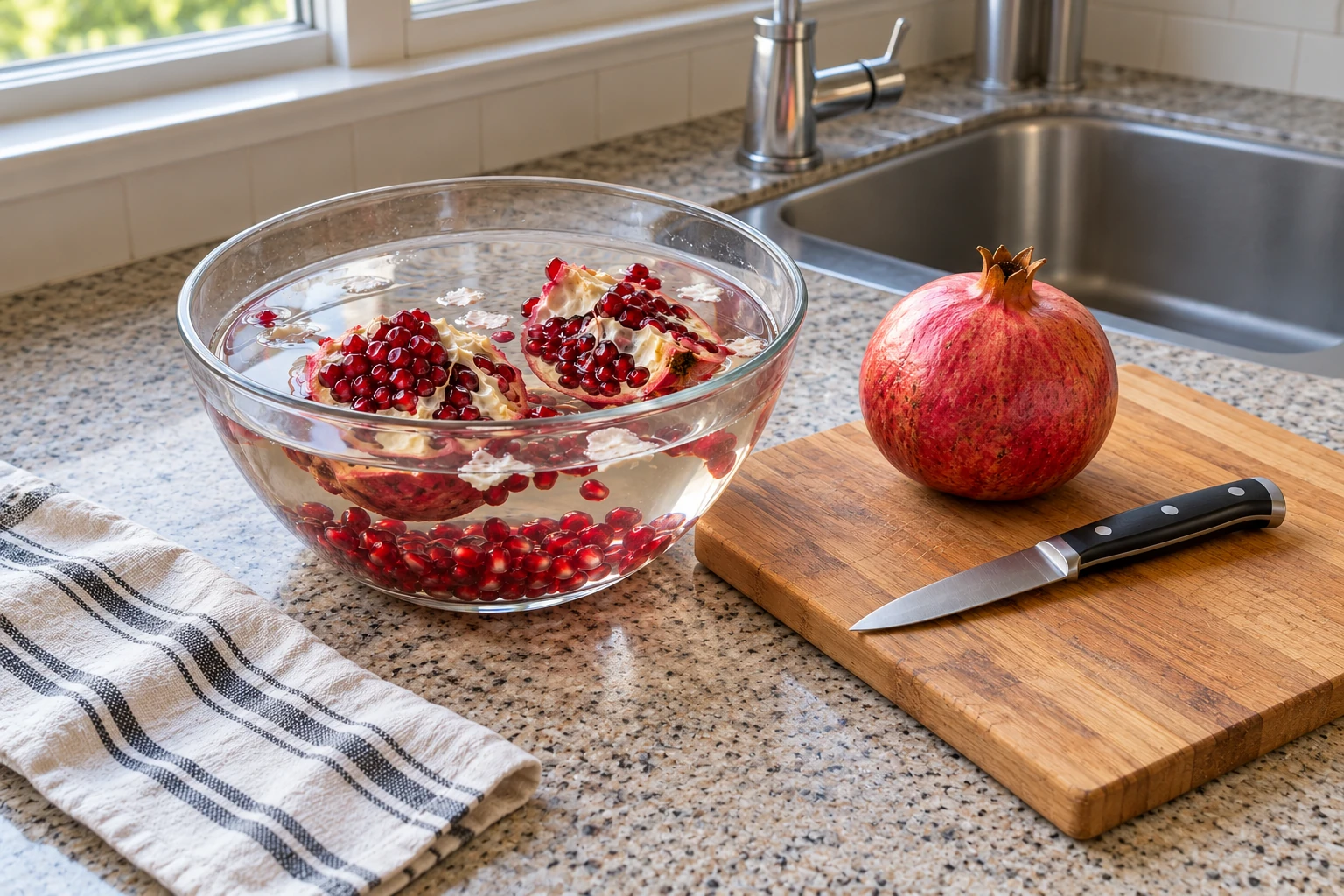
Choose a pomegranate that feels heavy for its size, with firm skin and no soft, rotten areas. At home, make shallow cuts through the rind, then pull the fruit into sections inside a bowl of water. Release the arils with your fingers, skim off the floating membrane, and drain and dry the arils before refrigerating them. The water bowl gives the loose pieces somewhere to land while you work.
Start with one fruit. It is enough to learn the opening method and see whether you want the arils for a snack, a salad, or a spoonful over breakfast. Have the bowl and strainer ready before making the first cut; a partly opened pomegranate is an awkward moment to start searching a cupboard.
Look at weight and condition before color
Compare two fruits of similar size in your hands and choose the one that feels fuller and heavier, provided its skin is sound. The University of California’s pomegranate guide recommends weight and firm skin as useful selection cues. It also describes a mature fruit’s somewhat squared-off sides. Those cues help you inspect the fruit in front of you, but you cannot see every aril through the rind.
Check around the crown and along the sides for bruising, mold, leaking juice, and soft patches. Pass over fruit that looks rotten. If you plan to hold the fruit before opening it, choose an intact one without a split in the skin.
A dark red exterior is not the only acceptable color. UC’s guide names deep-red Ariana and yellowish Golden Globe as examples of variety differences. Choose by the fruit’s condition and weight rather than reaching automatically for the reddest pomegranate. If the grower or shop names the variety, keep that information; it gives you something specific to look for if you like the fruit.
With ready-prepared arils, shop from the refrigerated display and follow the package’s storage and use instructions. A sealed cup has its own date and handling requirements. Once you have bought it, keep it cold rather than treating it like a whole fruit with a protective rind.
Know which pieces you will keep
The hard outer rind encloses pockets of arils divided by pale membranes. The arils are the juicy pieces you collect. Each has a seed inside its surrounding flesh, and that seed is edible: Utah State University Extension includes both the seed and its translucent covering in the edible portion.
Discard the rind and the white membranes as you separate the fruit. You can eat an aril whole, including its seed. Taste a few plain before deciding where to use them, since the sweet-tart flavor and the seed’s texture will still be noticeable in a spoonful of yogurt or a salad.
If you prefer juice, choose a separate juice-making method. This opening method is for keeping the arils whole, so work with your fingers rather than squeezing the sections. It also lets you measure the amount you actually have when you finish; one fruit does not promise a particular cupful.
Set up beside the sink
We may earn a commission from purchases through these links. Amazon search links open comparison results; check the selected item’s suitability.
You will need one whole pomegranate, a stable cutting board, a sharp small knife, a large bowl, cool drinking-quality water, a spoon, a strainer, a clean towel or paper towels, and a clean lidded food container. Fill the bowl deep enough to submerge a section, leaving room at the top for your hands and the displaced water. Set it beside the board so you can move a section directly into it.
Wear an apron, and move pale cloth napkins or anything you want to protect from juice away from the working area. Keep the bowl beside the board: make the initial cuts on the board, then move the fruit into the water. Allow roughly 15 to 20 minutes for your first fruit, including draining and cleanup. That is a generous planning allowance rather than a measured preparation time.
Wash your hands and rinse the whole fruit under running water, then dry it before cutting. Use no soap or produce wash. The FDA’s produce guidance recommends washing even fruit whose skin you discard. Keep the board, knife, bowl, and towel clean and away from raw meat and its utensils.
For the draining step, I recommend a fine mesh strainer if your usual colander has holes large enough to let the arils through. Set it over the sink or a second bowl before you start, so the water has a clear place to go.
Score the rind, then open under water
Utah State’s method starts by removing the crown and scoring the skin lengthwise in three or four places. Use shallow, controlled cuts for that opening rather than slicing straight through the middle of the fruit and its arils.
- Place the fruit on the board with the crown accessible. Keep it supported so it cannot roll, and keep your holding fingers clear of the knife’s path. Cut off a shallow cap at the crown end, exposing the pale divisions inside. Put the knife down before inspecting the opening.
- Make three or four shallow lengthwise scores through the rind, using the visible divisions as a guide where practical. Work on the board and reposition the fruit between cuts. Keep the cut shallow enough to avoid sawing through the pockets of arils. If a section resists later, set it back on the board to deepen the rind score slightly; keep the knife out of the water bowl.
- Put the fruit in the bowl and use both hands to pull it apart along the scores under water. Take one section at a time and gently loosen the arils with your fingertips, letting them drop into the bowl. Bend back the rind as needed to reach the pockets. Avoid squeezing the juicy pieces.
- Remove the large pieces of empty rind. Skim the floating white membrane with the spoon; the released arils settle at the bottom. Check the remaining sections for pockets you missed, then put the discarded rind and membrane straight into the scrap bowl or bin.
Stop when the arils have been released and the obvious membrane pieces are removed. You may need to pick out a few pale scraps by hand after draining. Handle the arils gently and move on to drying.
Drain, dry, and refrigerate
Pour the bowl through the strainer carefully, allowing the water to drain away. Spread the arils on a clean towel or paper towels and blot gently. Transfer them to the lidded container once there is no pooled water. UC’s guide includes straining and drying after water separation; give that step a little space on the counter rather than packing the fruit straight from the bowl.
Mark the container with the day you opened the fruit. Refrigerate promptly at 40°F or below and use within five days, following Utah State’s limit for fresh seeds. Buy and open an amount you expect to use in that time. Whole pomegranates can also be refrigerated; keeping a second fruit whole until you need it saves you from opening more than you want now.
For serving, spoon a small amount into a clean bowl and keep the rest refrigerated. FDA’s buffet guidance says to discard perishable food left at room temperature for more than two hours, or one hour when the surroundings are above 90°F. Keep track of the time out of refrigeration if the arils are part of a longer meal or gathering.
Serve a little at a time
Eat the first few plain. Then try a spoonful over yogurt or a small scattering on a salad just before serving. Start with about a tablespoon per portion and add more if you want a stronger fruit presence; that is a serving suggestion, not a yield from the pomegranate.
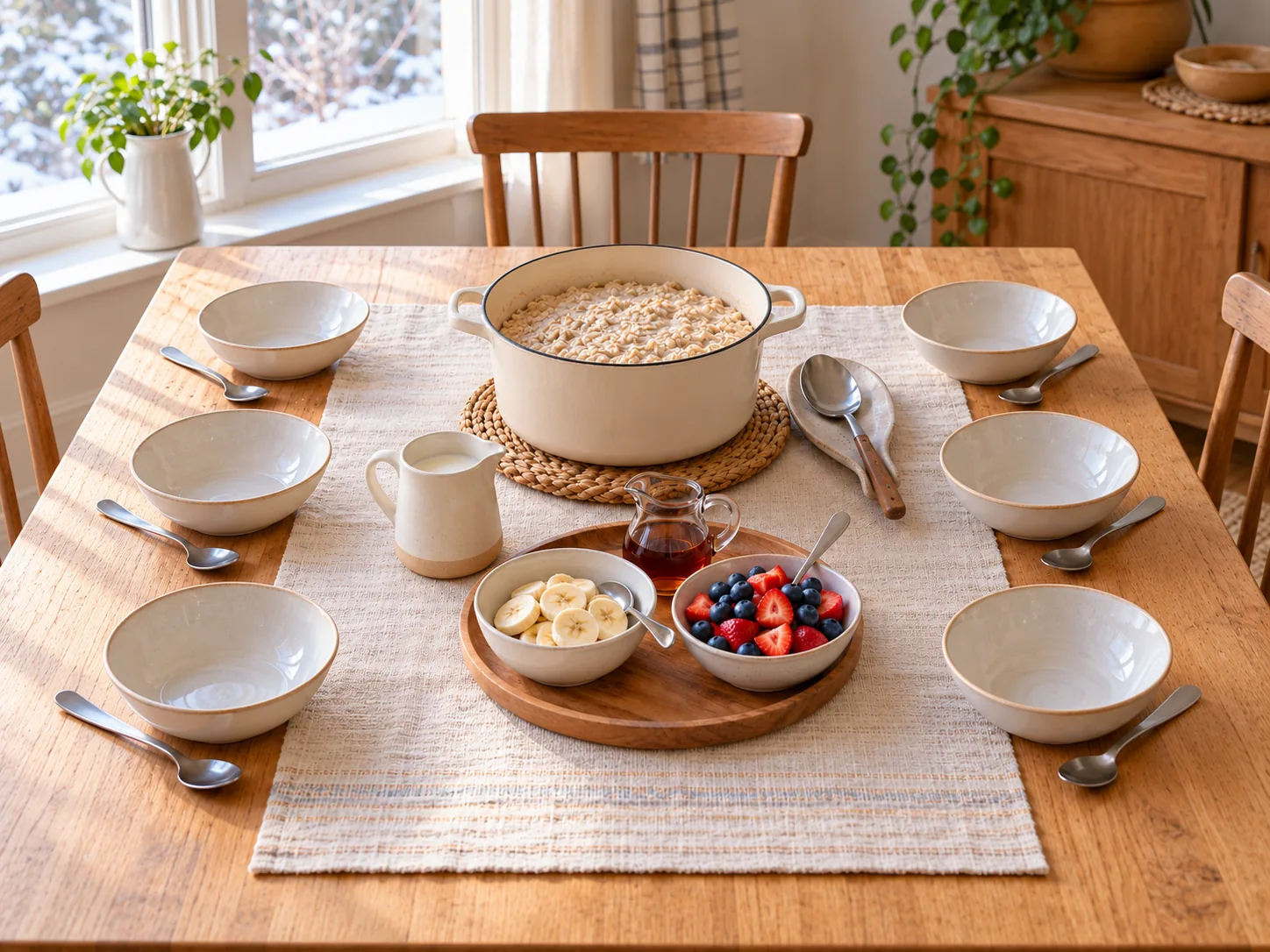
For breakfast guests, set out a separate bowl of arils with its own spoon alongside the oatmeal. If you offer nuts, dairy, or other toppings too, the buffet-label guide helps you name those ingredients clearly while keeping each bowl easy to identify.
Pomegranate arils also make a useful small fruit option alongside sliced seasonal fruit. For a different texture on the same plate, the Fuyu and Hachiya guide explains which persimmon to choose and when to serve it. Put out only the fruit you want for the meal, then return the cold container of arils to the refrigerator with its opening date still visible.
Make the work area easy to reset
Put the bowl, strainer and clean storage container within reach before cutting the fruit. Choose a bowl with room for your hands and the opened sections, then protect nearby fabrics from juice. A towel that can be washed easily is more useful here than a decorative cloth you are trying to keep spotless.
Work on one fruit at a time. Keep the collected arils separate from discarded rind and membrane so you are not sorting everything again at the end. The water method reduces scattered juice, but it still needs controlled shallow cuts and a stable board for the opening stage.
Portion the arils for the meal you planned
Drain and blot the arils before measuring a serving for yogurt or salad. Carrying a spoonful of water into the dish can thin a dressing or leave a puddle beneath it. Keep the main container refrigerated and bring out a small amount when the meal is ready.
If another person is helping, explain which pieces are food and which are discarded before handing over a section. The visible seeds inside the arils are different from the pale membrane. Follow the preparation appropriate to the people eating, especially where small firm pieces are not suitable. A carefully prepared bowl is most useful when everyone knows how it is intended to be served.