This article contains affiliate links. Fondfolk may earn a commission if you buy through them. As an Amazon Associate I earn from qualifying purchases.
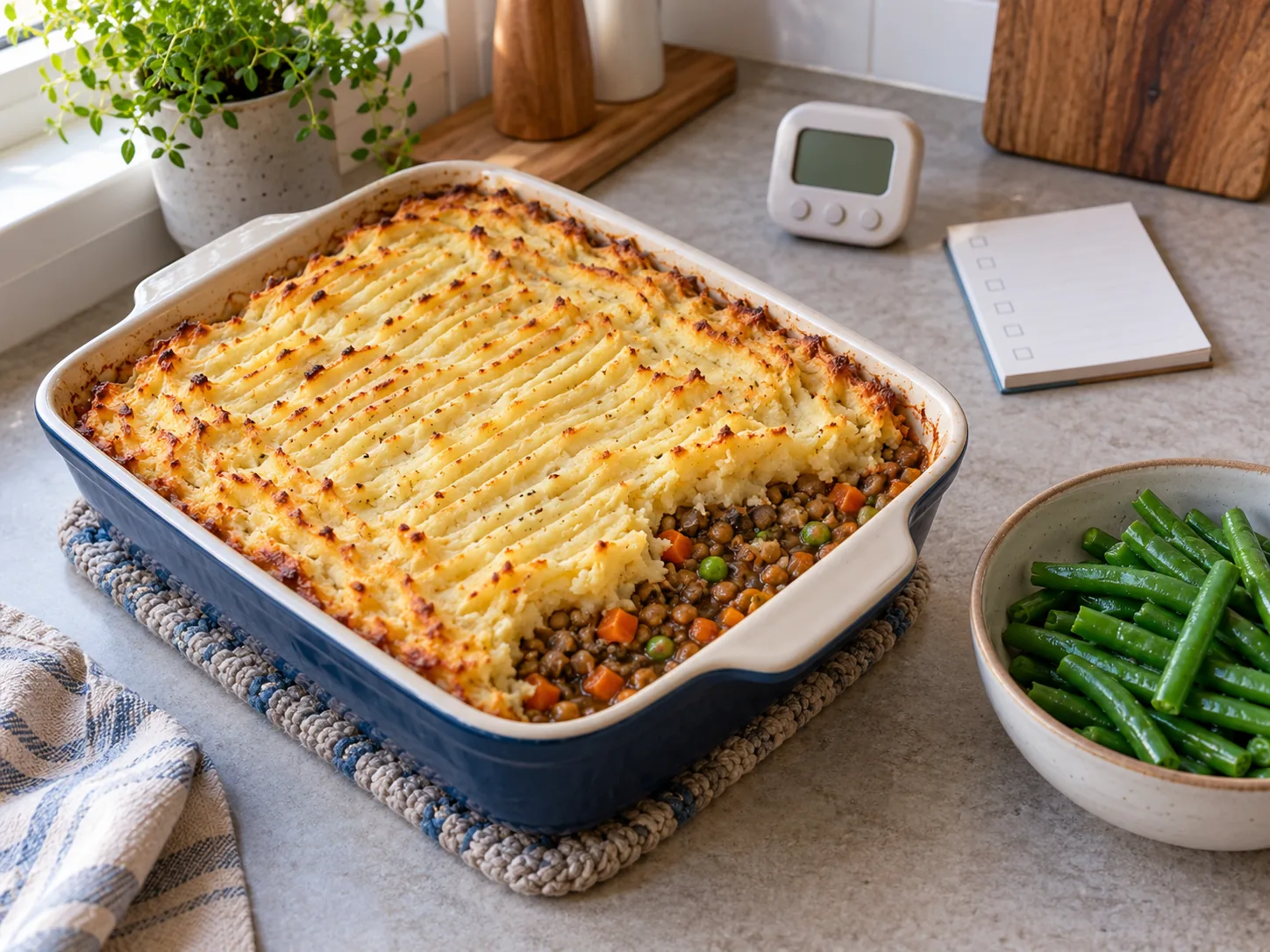
The shepherd’s pie is bubbling, the green beans still need cooking, and the gravy is waiting for a burner. Getting dinner to the table warm means deciding which dish sets the pace, then fitting the last few jobs around it. For this meal, the pie’s ten-minute rest is the opening: use it to finish the vegetable and bring everything to the table.
Start with a serving time, but let the food tell you whether that time is still realistic. A timer can remind you to measure the center of a casserole; it cannot make the center ready.
Give each dish a finishing job
Here is a modest menu for six: mushroom and lentil shepherd’s pie, a stovetop green vegetable, and a little mushroom gravy for anyone who wants it. The gravy is optional because the pie already has a moist filling. Bread can go straight to the table, and dessert is finished earlier.
We may earn a commission from purchases through these links. Amazon search links open comparison results; check the selected item’s suitability.
The equipment is one oven, a suitable 9-by-13-inch baking dish, a vegetable pot and a saucepan. Once the pie is assembled, its preparation pot and skillet can be cleared away. That leaves space for the last two stovetop jobs without balancing a hot lid on the sink.
The pie bakes at 400°F in a conventional oven for an estimated 20–25 minutes, until bubbling and 165°F in the center, followed by a ten-minute rest. Its complete written sequence allows about 90 minutes. Have its cooked, drained lentils ready before starting; cooking dry lentils would add another task.
Those are recipe planning estimates, not a promise about your oven. This schedule assumes freshly prepared filling and topping. A cold assembled pie needs its own reheating plan; it does not inherit the same short baking window.
Work backward from serving
For a 5 p.m. dinner, aim to have the pie ready to come out around 4:50. Its ten-minute rest then ends at the table rather than after everyone has started eating. Working backward, a 4:25 oven entry allows the longer end of the written baking estimate.
That makes 4:25 the useful preparation deadline. The filling must be cooked, the potatoes mashed, the pie assembled and the oven already heated. Beginning the recipe at 4:25 would leave most of dinner still ahead of you.
I prefer keeping the last list short enough to read at a glance. Write down the oven entry, the first doneness check, the rest and the vegetable’s finish. Put the earlier shopping and chopping jobs on the Thanksgiving preparation timeline, where they belong.
A worked final 45 minutes
This is an illustrative coordination plan. Use your vegetable recipe’s actual cooking duration, and allow longer whenever the food needs it.
We may earn a commission from purchases through these links. Amazon search links open comparison results; check the selected item’s suitability.
| Time | Main dish | Stovetop and serving jobs |
|---|---|---|
| 4:15 | Finish preparing and assembling the pie; confirm the oven is at 400°F. | Have the vegetable washed and prepared. Put the serving spoon and trivet where the pie will land. |
| 4:25 | Put the freshly assembled pie in the oven. | Set a reminder for the first check at 4:45. Clear the preparation equipment. |
| During the bake | Leave the pie to bake. | If serving gravy, finish or reheat it according to its recipe, allowing enough time for the quantity. Keep it hot once ready. Set out bread and water. |
| 4:45 | Check for bubbling and measure the center; continue baking until it reaches 165°F. | Decide whether 5 p.m. is still realistic before starting the vegetable’s final cooking. |
| Around 4:50, if ready | Remove the pie and begin its full ten-minute rest. | Time the vegetable to finish near serving. Stir the gravy and confirm its temperature. |
| 5:00, if everything is ready | Serve after the rest. | Bring out the vegetable, then pour gravy into its serving vessel. |
The word “if” matters at 4:50. A pie that is still below its required temperature stays in the oven. Move the serving time and the vegetable’s finish together, instead of letting the vegetable wait while the main catches up.
For gravy made earlier and refrigerated, follow the reheating directions rather than merely taking off the chill. FDA guidance calls for sauces, soups and gravy to reach a boil when reheated. Stir so the bottom does not catch, and measure as directed in the recipe. FDA’s buffet guidance also explains hot holding and serving temperatures.
Make the reminders easy to recognize
We may earn a commission from purchases through these links. Amazon search links open comparison results; check the selected item’s suitability.
I recommend the OXO Good Grips Digital Triple Kitchen Timer when several jobs overlap. Keep a note identifying each countdown: “pie check,” “pie rest” and “vegetable.” A phone with clearly named alarms can do the same job. The useful part is knowing what the beep means while your hands are full.
I also recommend the Lavatools Javelin PRO Classic instant-read thermometer for temperature checks. Follow its instructions, keep the probe clean, and avoid touching the baking dish when measuring the pie’s center. An instant-read model comes out after the reading; do not leave it in the oven. Our thermometer placement guide explains why the measuring point matters.
When a dish finishes early
Plan for a short rest required by the recipe separately from an extended wait for guests. Covering a pan does not establish a safe holding temperature. For food being held hot, FoodSafety.gov recommends 140°F or above; measure the food itself rather than relying on a “warm” label.
An oven cannot bake at 400°F and provide a separate gentle holding temperature at the same time. If the menu relies on both, assign another suitable heat source or change the order before cooking. The one-oven menu guide helps make that allocation.
When dinner is running late, preserve the main’s doneness and rest, delay the vegetable where possible, and serve the bread. If a helper is available, ask them to bring the plates and fill the water glasses. Give them a complete job instead of having two people reach across the same hot saucepan.
Keep the next dinner’s finish list simple
For another meal, write four things beside each dish: where it cooks, when it should finish, its required rest and what happens if it is early. Include any chopping, draining or sauce finishing that must happen immediately before serving. Two dishes that need your hands at the same moment are a scheduling conflict even when they use different burners.
After dinner, move perishable leftovers into shallow containers and refrigerate promptly, within two hours or one hour when the surrounding temperature is above 90°F. Keep the refrigerator at 40°F or below. Those limits come from FoodSafety.gov’s chilling guidance.
Keep the finish list if it helped, and change the part that ran late. Next time, the pie can rest while the green beans finish, with the serving spoon already beside it.
Name the check that controls the next job
Write the main dish’s finishing check at the top of the last-minute list. When it passes, begin the required rest and the final vegetable stage. That is a clearer signal than watching the clock and assuming the food must be ready because the serving time is close. A helper can then act on a known event.
Keep the serving utensils and heatproof landing place ready before that signal. A hot finished pan should not wait while the table is cleared of unopened packages or decorative items. Small non-cooking jobs are easiest to remove from the final ten minutes altogether.
Give an early dish a specific plan
If the gravy finishes early, its holding or reheating instructions should already be on the page. If the vegetable is best finished quickly, do not start it far ahead merely to feel caught up. Required resting, safe hot holding and an unplanned wait are different situations.
When the main needs longer, move the serving target and tell the people helping. Keep the rest of the meal within its own safe handling plan rather than leaving everything where it happens to be. After dinner, record the one step that caused the largest delay. The next timing plan can be simpler because it is based on that observation instead of adding a longer list of alarms.