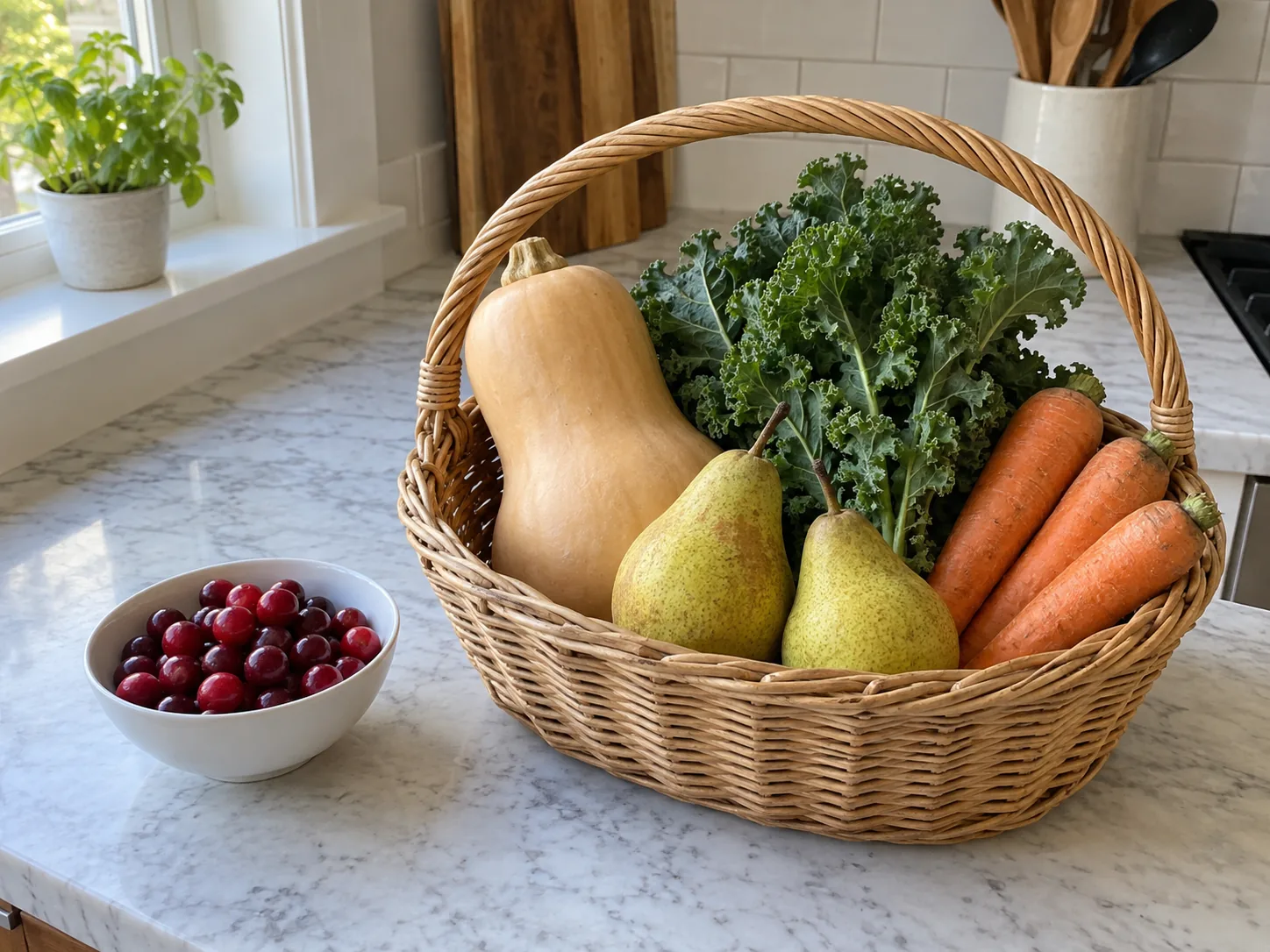
A butternut squash, two pears and a bunch of greens can bring November into the kitchen without filling every shelf. Add carrots for an easy side and cranberries for a dish you have chosen, and each purchase has somewhere to go. I prefer a small basket with a few clear uses, especially when holiday groceries will soon be competing for space.
This is a U.S. fall shopping guide, rather than a promise that every ingredient is being harvested nearby in November. Illinois Extension's seasonal produce guide includes pears, cranberries, leafy greens and winter squash among fall choices; it lists carrots among produce available throughout the year. Local harvests, stored crops and supermarket availability are different things. If buying locally matters to you, ask the grower what is coming from the field now and what has been stored.
This article contains affiliate links. If you buy through them, Fondfolk may earn a commission at no additional cost to you. As an Amazon Associate, I earn from qualifying purchases.
Give each purchase one definite use
Choose the squash dinner first, then add enough fruit and vegetables for the meals around it. The quantities below are a starting basket, not a complete weekly shop or a fixed number of servings.
| Bring home | First use | What to decide before buying |
|---|---|---|
| One butternut squash, sized for your recipe | Squash soup with white-bean toast | The soup below needs 800 g of peeled, seeded squash; whole weight includes skin and seeds. |
| Two pears | Snacks or slices beside lunch | Choose the variety and ripeness for when you want to eat them. |
| One small bunch of kale, chard or spinach | A cooked vegetable alongside dinner | Buy the green your planned preparation uses; these are not identical in cooking time. |
| Three or four carrots | A side dish, or raw sticks with lunch | Add more only if another meal already needs them. |
| Cranberries in the form your recipe names | Fresh or frozen for a suitable sauce; dried for an oat filling | Fresh berries and dried cranberries do different jobs. |
For the soup, you will also need the ingredients on its recipe page, including broth, white beans and bread. The produce basket alone is not the full shopping list. Reading the complete recipe before leaving home catches the lemon for the beans just as surely as it catches the squash.
Choose the squash for the meal, not the display
Butternut is the choice here because it already has a place in butternut squash soup with white-bean toast. The recipe uses 800 g of peeled, seeded squash and serves four bowls with two bean-topped toasts each. Buy enough whole squash to allow for the parts you remove; a whole 800 g squash cannot supply 800 g of prepared flesh.
We may earn a commission from purchases through these links. Amazon search links open comparison results; check the selected item’s suitability.
I recommend the KitchenAid dual-platform scale for weighing the peeled, seeded pieces. Tare the empty bowl first, and keep the combined weight of bowl and food within the chosen platform’s capacity.
If the shop offers prepared squash, compare its usable weight with that recipe quantity. It may suit a busy evening better than bringing home a whole squash you do not have time to peel. Keep prepared pieces refrigerated and follow their package date.
For a whole squash, I recommend the OXO Y-peeler for peeling once the squash is securely supported. A peeler does not make an unstable cutting setup safe: keep the board from sliding and work with a manageable piece. Our winter squash guide covers the differences between butternut, acorn, delicata and spaghetti squash before you choose a substitute.
Buy pears for the day you want them
A pear intended for tonight's snack needs a different decision from one going into next week's fruit bowl. With European pears such as Bartlett or Anjou, gentle pressure near the stem helps judge ripeness. USA Pears explains that the neck begins to yield as the fruit ripens; refrigerating at that point slows further ripening. Let firm pears ripen at room temperature first.
For two pears, one ready sooner and one firmer can be more convenient than a bag that softens together. Slice a ripe one beside breakfast or lunch, or simply eat it whole. There is no need to turn every piece of seasonal fruit into a baking project.
I prefer a small knife for removing a pear's core and trimming the stem end; the HOSHANHO 3.75-inch paring knife is one I recommend for that job. The fuller pear ripeness guide explains how variety and intended use affect the choice.
Let the greens decide the first dinner
Put a small bunch of greens into the meal you expect to cook soon after shopping. Spinach can accompany eggs; kale or chard can join a bean dish. These are serving ideas, so follow the preparation and cooking instructions of the recipe you choose rather than swapping different greens into a timed method without adjustment.
Carrots can wait for a separate meal, but give them a use too. Three carrots beside dinner are easier to account for than a large bag bought because the price looked inviting. If carrots are already needed for soup elsewhere in your plan, combine the quantities on the shopping list instead of buying twice.
University of Maryland Extension recommends refrigerating leafy greens unwashed in a loosely packed, perforated bag, and removing green tops from carrots before refrigerating the roots. Wash produce before eating or cooking. Follow the storage directions on packaged, prepared produce.
Cranberries need a recipe before they need a place in the basket
Fresh cranberries suit a recipe designed for their tartness and moisture. Dried cranberries bring a different texture, and many are sweetened. The cheerful bag in the produce aisle is not automatically the right purchase for a baking recipe.
Our baked apples with cranberry oats recipe makes four apples and uses just 2 tablespoons of dried cranberries, measured before chopping. For that dessert, buy dried cranberries rather than a bag of fresh fruit. Add the apples and remaining filling ingredients to the list as well.
If you already have dried cranberries, use those and leave fresh berries for a week with a fresh-cranberry recipe. Our fresh, frozen and dried cranberry guide explains the differences and how to freeze fresh berries when you have a purpose for the extra amount.
Unpack the basket into separate storage spots
The basket is for carrying groceries home. The squash, pears and greens should not spend the week together on the counter.
- Keep whole winter squash in a cool, dry, ventilated place. Iowa State Extension advises storing it away from ripening apples and pears, whose ethylene can shorten squash storage life.
- Leave firm European pears at room temperature to ripen, then refrigerate them.
- Refrigerate the greens and carrots; keep cut or prepared squash refrigerated too.
- Refrigerate fresh cranberries, keep frozen ones frozen, and reseal dried cranberries according to their package instructions.
If plans change, adjust the next shop before adding more produce. A squash dinner, a vegetable side and two pears you actually eat are a better starting point than a full basket waiting for a free weekend.
Give the basket a three-meal sketch
Start with a simple sequence: the most delicate greens in the first meal, the prepared squash in its chosen recipe and the fruit when it reaches the texture you want. This sketch is not a full menu. It is a way to notice whether every purchase already has more work assigned to it than your week allows.
Write amounts in the form the recipe needs. Prepared squash weight, whole-fruit count and a loose bunch of greens describe different shopping problems. If a prepared pack is being used, check the usable amount before assuming that its size replaces a whole squash in the plan.
Shop for the gap, not the picture
Look at the pantry and refrigerator before assembling the basket. You may already have the beans and bread for the soup or the dressing ingredients for the greens. Add only the items that complete the meals you chose. Buying another attractive produce item does not fix a missing staple.
When unpacking, separate the produce into its appropriate storage places and keep the meal notes where they can be seen. The basket’s seasonal look is pleasant on the way home; its usefulness comes from what you can cook afterward. If an ingredient is still unassigned at the next shop, use that information to make the following basket smaller.